


—
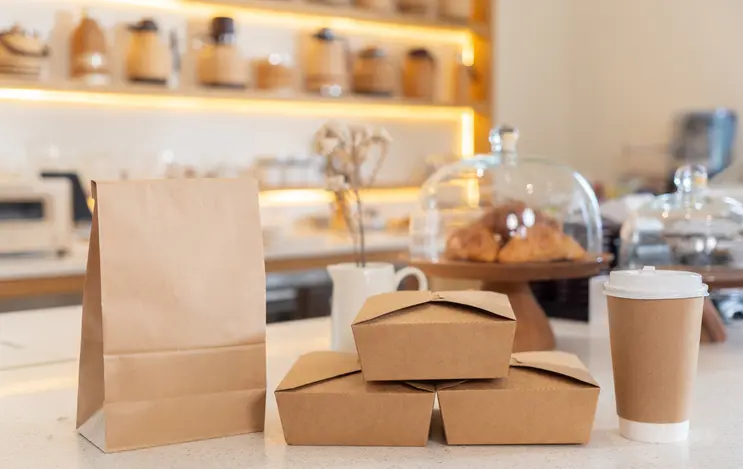
An oven is not turned off, and the environmental impact of a bakery is complete. Another role of the production and the sales cycle is packaging, especially for the businesses with a number of customers of hundreds or thousands in a week. Boxes, cups, wrappers, lids, inserts, and bags involve raw materials, production, transportation, and disposal. In the case of bakeries looking to lower their carbon footprint, the analysis of packaging options can also present significant opportunities for waste and emission reduction without extending the quality and presentation of products.
The carbon footprint of packaging
A packaging carbon footprint is the greenhouse gas emissions of packaging materials through production, transportation, use, and disposal. It is possible that plastic will consume resources based on fossil fuels, whereas paper and cardboard will rely on forestry, processing, water, and energy. Even the light packaging has its share in emissions when made in large quantities. To start with, bakeries can start capturing the type and amount of packaging that they buy every month. This starting point allows the high-impact materials and alternatives to be identified more easily and compared on their overall life cycle (as opposed to their outward look or cost).
The Reason Why Cupcake Packaging Is Worth Considering
Cupcakes can be easily destroyed, frosting, ornaments, and other vulnerable tops can be destroyed easily, and thus, most of the time they need special treatment. Nonetheless, personal packaging would result in massive material use during a count of sales in a day. Proper sizing of the cupcake containers for bakeries would help minimize unnecessary material and also shield products to be used throughout transportation. The reduction of shipping volume can also be achieved through containers that can hold cupcakes safely without any excess shipping space. Evaluations that should be done by bakeries include material composition, durability, recyclability, required quantity of packaging on a single product, and others.
Measure Material Use Before Making Changes
A convenient method to determine the impact of packaging is to gauge the amount of material the bakery consumes within a specified time. Monitor purchases per type and per weight of materials such as cardboard boxes, plastic containers, (paper) bags, wrappers, and protective inserts. Next, think about the frequency of usage of the items and the necessity of the customers in all the components. Here are the examples of these ways in which a bakery could find out: it could find out that it is using oversized boxes or wrapping their wares in multiple layers, and it is not because of necessity but because of habit. One of the easiest methods to decrease environmental impact is to reduce material at the source.
Assess Recycling and End-of-Life
The packaging must also be evaluated on what happens after customers have consumed their food. Having a theoretically recyclable package will have a narrow environmental payback when it cannot be effectively recycled by regional recycling systems. Mixed material packaging can be especially tricky since the constituent parts will have to be disassembled prior to recycling. Recycling potentials in the area should thus be explored by bakeries, which should adopt those packaging options that the customers can easily dispose responsibly of. Specific disposal guidelines can also enhance the recovery effectiveness of the materials and avoid unnecessary recyclable materials being put in wastage streams.
Differentiate Sustainable Packaging
The idea of sustainable packaging is not merely to end up with a situation where all plastic materials are substituted with paper. Various materials make various environmental trade-offs, and the appropriate choice varies based on the product, supply chain, usage pattern, and disposal infrastructure. Reduce transportation emissions: lightweight packaging can cut down on transportation emissions, but recycled-content materials can cut down use of virgin resources. The reusable solutions can also be reasonable in case of some bakery operations. The most effective method is to make comparisons among alternatives through quantifiable variables like material volume, wearability, recycled materials, transportation efficiency, and end-life solution.
Make the Turn Measurement Action
The calculation of the carbon footprint of packaging a bakery is not an immediate and costly necessity. Begin with an evaluation of the current material consumption, finding out which components are redundant, assessing the possibilities of disposal, and the realistic alternatives. Minor enhancements will have a massive difference when done thousands of times on the number of orders made by customers. Bakeries can minimize wastage, enhance resource efficiency, and ensure responsible behaviors in terms of environmental management by considering packaging as a significant aspect of environmental management, not a side effect of the business processes. The best packaging strategy would be one that offers protection to the product, customer satisfaction, and operational efficiency and leaves a smaller imprint on the environment.
—

