


—
Severe weather can change a home’s exterior in ways that are not immediately obvious. Strong winds, heavy rain, and wind-driven debris may loosen components, shift materials, or interfere with normal water movement without causing dramatic visible destruction. A careful inspection after the weather clears can help homeowners recognize changes before another storm places additional stress on affected areas.
The safest approach begins from ground level rather than with an attempt to inspect elevated or unstable surfaces personally. Siding may show displacement along walls and corners, while Gutters can reveal changes through sagging, separation, or unusual drainage patterns. Looking at the exterior as a connected system provides more useful information than focusing only on the most noticeable area.
Documentation is particularly valuable when the property looked different before the storm. Homeowners can photograph unusual conditions and note where they appear before contacting All-Side Roofing & Restoration for a professional evaluation when needed. Clear observations make it easier to explain what changed and which sections deserve closer attention.
Begin With a Slow Walk Around the Entire Property
A quick glance from the driveway can miss changes on side walls, rear elevations, and less visible corners. Walk around the property after conditions are safe and examine each side from several angles. Differences in alignment, color, shape, or position can make disturbed materials easier to identify.
Pay attention to debris on the ground as well as materials still attached to the home. Pieces near walls, downspouts, landscaping, or walkways may provide clues about where storm forces affected the exterior. Do not handle sharp or unstable materials simply to determine where they originated.
Compare questionable areas with unaffected sections whenever possible. Similar components on another side of the house can provide a useful visual reference. This comparison can help distinguish a normal construction detail from something that appears to have shifted recently.
Look for Loose or Displaced Wall Materials
Wind can place pressure on exterior wall coverings, particularly around edges, corners, openings, and other transitions. A section may remain attached while no longer sitting in its normal position. Small changes deserve attention because another weather event may place additional force on an already weakened area.
Inspect Siding for sections that appear lifted, bowed, cracked, separated, or unusually loose. Changes around windows, doors, utility penetrations, and exterior corners can also indicate that a closer assessment is appropriate. Avoid pulling on questionable sections because doing so may increase existing damage.
All-Side Roofing & Restoration LLC can evaluate areas that cannot be understood through a safe visual check. A professional assessment can determine whether the concern is limited to a few components or extends into surrounding sections. That distinction matters when deciding between focused repair and more extensive work.
Examine Corners and Edges for Subtle Movement
Large flat surfaces often receive the most attention, but edges and transitions can reveal storm effects earlier. Corners, trim pieces, seams, and termination points connect different parts of the exterior and may respond differently to wind pressure. A change in one of these locations can affect nearby materials.
Look for gaps that were not previously present or pieces that no longer appear aligned. Even if nothing has detached completely, movement may indicate that fastening or connection points deserve evaluation. Photographs taken before and after a storm can be especially helpful for these subtle differences.
Do not attempt to push elevated or difficult-to-reach materials back into place. A component that looks simple from the ground may be connected to other parts of the exterior assembly. Inspection should determine the cause before repair begins.
Check the Drainage System for Changed Alignment
Storms can affect water-management components through wind, falling branches, or accumulated debris. Gutters that previously appeared straight may develop sagging sections, separated connections, or changes where they meet downspouts. These conditions can alter how rainwater leaves the home during the next storm.
Observe the system from several ground-level positions. Look for sections that appear lower than neighboring areas, connections that have opened, or downspouts that seem displaced. Debris hanging from an edge may also suggest that a section experienced unusual stress.
Homeowners should resist the temptation to judge performance only during dry weather. A system may look mostly intact while directing water differently once rainfall begins. Visible alignment and actual water behavior both provide useful information.
Watch Where Water Travels During the Next Rainfall
If conditions are safe, observing the property during ordinary rainfall can reveal problems that are difficult to identify on a dry day. Water spilling over an unexpected section, running behind a drainage component, or collecting near the house can indicate that something changed. These patterns deserve attention when they appear after severe weather.
Keep observations simple and remain on the ground. There is no need to climb a ladder during or after rain to confirm that water is moving incorrectly. Recording a short video from a safe location can help document intermittent drainage behavior.
Water patterns should be compared with conditions around the property. New erosion, displaced mulch, or concentrated runoff beneath an exterior edge may support what was observed during rainfall. Multiple clues can make the source of the concern easier to evaluate.
Inspect Areas Near Trees and Overhanging Branches
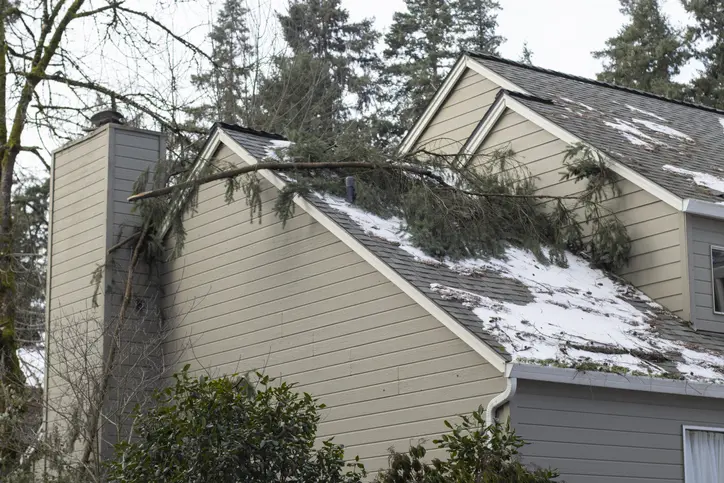
Properties with mature trees may experience additional storm-related exposure. Branches can strike exterior surfaces, scrape materials, or deposit debris in places that are difficult to see from below. Even when a large limb does not fall, smaller impacts can leave localized concerns.
Examine the walls and drainage components nearest overhanging branches. Look for dents, cracks, displaced pieces, or fresh debris around those locations. Damage concentrated on one side of the property may correspond with the direction from which branches or debris traveled.
Tree-related concerns should also be addressed separately when unstable limbs remain after the storm. Avoid working beneath hanging branches or attempting exterior repairs while overhead hazards are present. Safety should come before cleanup or detailed inspection.
Check Downspout Connections and Ground-Level Discharge
Storm inspection should continue all the way to ground level. Downspouts may shift at connections, separate from extensions, or discharge water differently if surrounding components have moved. A problem near the bottom can undermine otherwise effective drainage above.
Look at where water is intended to leave the system and where it actually reaches the ground. Soil displacement, new puddling, or washed-out landscaping can suggest that discharge has changed. These clues are particularly useful when they appear only after recent severe weather.
All-Side Roofing & Restoration LLC may be considered when several exterior symptoms appear together and the underlying cause is unclear. Examining connected components can help determine whether the storm created an isolated repair need or affected a broader section. Coordinated evaluation prevents one visible symptom from becoming the entire focus.
Separate Cosmetic Changes From Functional Concerns
Not every mark left by a storm affects exterior performance. Dirt, leaves, surface staining, and minor cosmetic changes may look concerning without indicating that a component has failed. Functional problems are more likely to involve movement, separation, cracking, altered drainage, or repeated moisture exposure.
Homeowners should document both types rather than trying to diagnose them immediately. A photograph taken soon after the event preserves useful information even if the significance is uncertain. Changes can then be evaluated according to their location and effect on the surrounding system.
Avoid making permanent repair decisions based solely on appearance. Similar-looking damage can have different implications depending on the material and installation. A closer assessment provides the context needed for an appropriate response.
Turn Post-Storm Observations Into a Practical Repair Plan
A systematic exterior check helps homeowners move from uncertainty to useful information. Walking the full perimeter, documenting displaced materials, checking drainage alignment, and observing water movement creates a clearer picture of how the property responded to severe weather. This process is more reliable than focusing only on the first visible problem.
The next step should reflect the seriousness and extent of what was found. Small isolated changes may require limited attention, while recurring drainage problems or widespread displacement can justify a broader professional assessment. Conditions involving unstable materials or active water entry deserve timely evaluation.
Storms cannot always be predicted, but the response afterward can be organized. Careful observation helps identify changes while they are still fresh and makes future comparisons easier. With a consistent post-weather routine, homeowners can address exterior concerns based on actual conditions rather than waiting for minor damage to become more disruptive.
—

