


—
Please Note: This is a guest post that is presented for informational purposes only and is not meant to diagnose or treat any illness. If you have any health concern, see a licensed healthcare professional in person. This article does not constitute an endorsement or approval of this product or any claim, statement or opinion used in promotion of this product.
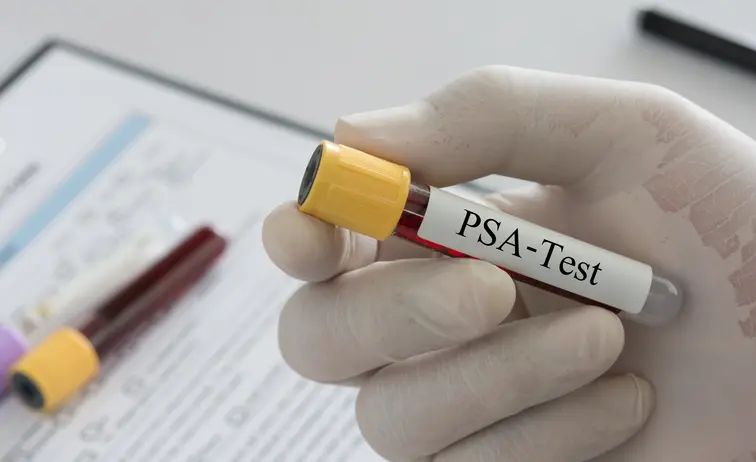
My uncle waited eleven years to get his PSA checked. Not because he was scared of the number. He was scared of what came after the number: the biopsy, the diagnosis, the decisions. He finally went at 61, and the whole appointment took twenty minutes. If you’re in the same waiting room he was in, here’s the short version. A PSA blood test is a starting point, not a verdict. It can come back high for reasons that have nothing to do with cancer, and it can miss cancer that’s actually there.
What matters is what you do with the result, and how well you understand the menu of options in front of you, including alternative prostate cancer treatment approaches that some men pursue when standard care isn’t the whole story for them. This piece walks through the three things most men never get explained clearly: what screening can and can’t tell you, when watchful waiting is genuinely reasonable, and what a diagnosis actually means for your daily life. If you’re trying to figure out your next step, read the whole thing before you decide anything.
What the PSA Test Actually Measures
Prostate-specific antigen is a protein your prostate makes whether or not you have cancer. That’s the part that trips people up. A high number doesn’t equal a tumor, and a “normal” number doesn’t rule one out. Things that push PSA up without any cancer involved: an enlarged prostate, a recent ejaculation, a long bike ride, a urinary tract infection, or a digital rectal exam done right before the blood draw. Things that can push it down: certain medications, including some common hair-loss drugs. So a single reading in isolation is close to useless. What doctors watch is the trend over years, plus how fast it’s moving.
Here’s my honest take, and it won’t match what every urologist says. If you’re 55 to 69 and you’ve never had a baseline PSA, get one. Not because the test is great. Because you can’t interpret a number later if you don’t have an earlier number to compare it against.
The Centers for Disease Control and Prevention lays out the standard screening picture clearly, and it’s worth reading before your appointment rather than after, so you show up with questions instead of just answers.
Biopsy, Then What
A rising PSA usually leads to a biopsy, which is a dozen or so tiny samples taken through the rectal wall. It’s uncomfortable. It’s also the only way to actually confirm cancer, because imaging alone can miss small tumors. If cancer shows up, the word you’ll hear next is Gleason score, or its newer version, the Grade Group. This is the number that matters more than anything else on your report.
A Gleason 6 means the cancer looks close to normal under a microscope and tends to grow slowly. A Gleason 8, 9, or 10 means the cells look disorganized and the cancer is more likely to spread. I’d rather you leave the biopsy conversation knowing your Gleason number than knowing your PSA number, because the Gleason is what drives every treatment decision that follows.
Watchful Waiting vs. Active Treatment
This is where I’d push back on the men who assume the answer is always “cut it out.” For low-grade, slow-growing prostate cancer, doing nothing aggressive for a while isn’t giving up. It’s a legitimate strategy with a name.
- Active surveillance means regular PSA tests, periodic biopsies, and imaging every year or two. You’re watching closely, and you’re ready to act if the picture changes.
- Watchful waiting means fewer tests and a focus on symptoms rather than cure, often chosen by older men or men with other serious health conditions.
- Immediate treatment with surgery or radiation makes sense for higher-grade cancers, younger men, or anyone whose numbers are moving fast.
Neither path is automatically right. It depends on your grade, your age, your other health conditions, and how you personally weigh the side effects of treatment against the risk of the cancer advancing. Those side effects are real: urinary leakage, erectile changes, bowel issues. They’re not guaranteed, but they’re common enough that you should hear about them before you sign anything.
The Questions Worth Asking Before You Decide
Bring these to your next appointment. Write them on your phone or a piece of paper, because it’s easy to forget them once you’re sitting in a gown.
- What’s my Gleason score or Grade Group, in plain terms?
- Is my cancer low, intermediate, or high risk, and what does that mean for my timeline?
- If we watch it instead of treating it now, what would make you change your recommendation, and when?
- What are the realistic side effects of each option for someone my age with my other health conditions?
- What would you choose if this were your own diagnosis?
That last one tends to unlock the most honest answer in the room. Ask it.
Where Integrative and Alternative Options Fit
Some men, after surgery, radiation, or a stretch of active surveillance, look for approaches outside the standard menu. That’s a real conversation worth having with your care team rather than keeping to yourself, because the risks of a hidden interaction or a delayed treatment are bigger than most people assume. Nutrition, stress management, and immune-supportive therapies get talked about a lot in cancer circles. What they don’t do is replace proven treatment for a high-grade tumor. What they can do, for some men, is improve how they feel through treatment and give them a sense of control over something during a stretch of time when control is hard to find.
If you go that route, tell your oncologist everything. Not because you need permission. Because they need the full picture to keep you safe. Prostate cancer survival rates in the United States have improved substantially over the past several decades, and the American Cancer Society publishes baseline statistics and staging information that’s genuinely readable, not buried in jargon. If you want to understand what stage means before your next conversation, start there.
A Concrete Example
A guy I know, 64, went in for a routine physical and his PSA came back at 6.8. He spent two weeks convinced he was dying. Then he had a repeat test six weeks later (4.2), a biopsy that found Gleason 6 in two of twelve cores, and a sit-down with a urologist who recommended active surveillance. He’s been on that plan for four years. His numbers haven’t moved. He plays golf twice a week and takes a medication for an enlarged prostate that accounts for most of that original spike.
His story isn’t proof of anything. It’s just what the process actually looks like when nobody panics too early. One more resource worth bookmarking: the National Institutes of Health maintains public information on prostate conditions and ongoing research, and it’s a cleaner starting point than most of what shows up in a general search.
What to Do This Week
Look up your last PSA number. If you don’t have one, schedule a physical and ask for the blood draw while you’re there. If you do have one, find out when the previous one was taken so you can see the direction it’s heading.
Then write down your Gleason number if you have one, and if you don’t, ask what it would take to get that answer. That’s the whole assignment. Everything else flows from those two pieces of information. You don’t have to know your full treatment plan today. You just have to stop avoiding the number that unlocks the next honest conversation with your doctor.
—

