


—
Tacoma owners are swapping universal mud flaps for custom-fit Tacoma splash guards because they protect paint better, look cleaner, and usually install without drilling. The Toyota Tacoma is built to be used. It hauls gear to job sites, climbs gravel roads to trailheads, and handles wet commutes in every season. All of that sends rocks, mud, road salt, and water flying off the tires and into the lower body of the truck.
For years, the answer was a generic set of flaps from the auto parts store. Today, more owners are choosing guards molded to the exact shape of their wheel wells and body lines. The change is not just about appearance. It is about protecting a truck that is meant to last for hundreds of thousands of miles. This post explains what custom-fit means, why owners are making the switch, and what to check before you buy.
What “Custom-Fit” Actually Means
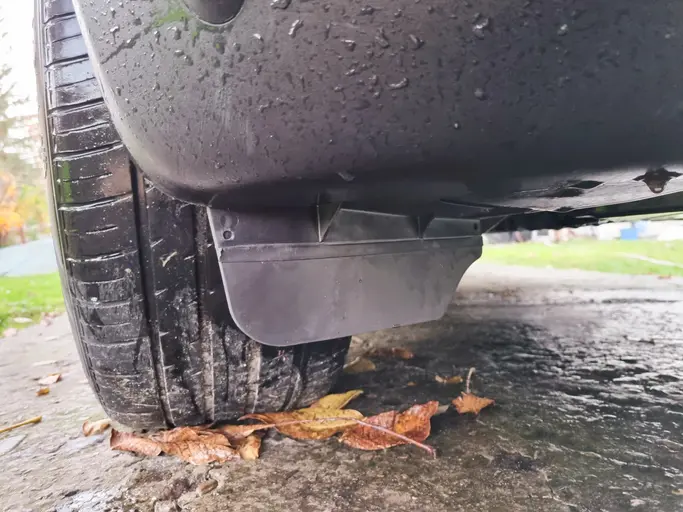
Custom-fit splash guards are designed for a specific Tacoma, not for a wide range of trucks. Universal flaps are cut to be roughly the right size for many vehicles, so installers bend, trim, or drill them to make them work. Custom-fit versions are engineered around the exact curve of your wheel opening, the position of your factory mounting points, and the shape of your fender or fender flare.
That difference matters because the Tacoma has changed over the years. Cab configuration, bed length, trim level, and model year can all affect how a guard should sit. A TRD Off-Road with factory fender flares, for example, does not have the same wheel well profile as a more basic trim, and a good custom guard accounts for that.
Here is how the two approaches compare in practice:
- Fit: Custom guards follow the contour of the wheel well. Universal flaps often leave gaps or hang at an awkward angle.
- Mounting: Custom guards use factory holes or existing hardware in most cases. Universal flaps often need new holes.
- Coverage: Custom guards are sized to block spray where your tires actually throw it. Universal flaps are sized to fit many vehicles at once.
- Appearance: Custom guards look like they belong on the truck. Universal flaps can look like an afterthought.
When owners talk about upgrading, this is usually what they mean. They are moving from a one-size approach to Tacoma splash guards that were designed with their truck in mind.
Better Protection for Your Paint and Body
The biggest reason owners upgrade is paint protection. The lower edges of the doors, the rocker panels, and the rear quarter panels take constant abuse from small stones and grit. Over time, that leads to chips, scratches, and eventually rust, especially where road salt is common.
A well-fitted guard sits close enough to the tire to catch debris before it reaches the body. A poorly fitted one leaves gaps where rocks can slip through or swing wide so spray escapes around the edges. Custom-fit Tacoma splash guards are shaped to reduce those gaps, which means more of the debris is stopped where it should be.
The areas that benefit most include:
- Rocker panels and the bottom edge of the doors
- The rear fender area behind the front wheels
- The lower bed sides behind the rear wheels
- Brake lines, wiring, and other components exposed in the wheel wells
There is also a resale angle. A Tacoma that has been driven hard but still has clean lower body panels is easier to sell and often holds its value better. Paint repair and rust treatment cost far more than a set of guards, so many owners treat this as simple preventive maintenance.
One more point is worth mentioning. Guards also protect the people around you. Driving on gravel or a freshly chip-sealed road can throw a surprising amount of material toward the vehicle behind you, and guards help keep that debris on the ground.
A Cleaner Truck, Bed, and Trailer
Splash guards keep more mud and water off the truck, and owners notice the difference after the first rainy week. Without them, the sides of the cab and bed end up coated in a gritty film that is hard to wash off and easy to scratch into the paint when you do. With properly sized guards, much of that spray stays low and falls back to the ground.
This matters even more if you tow. A Tacoma pulling a camper, a boat, or a small utility trailer sends spray toward everything behind it. Guards help keep that mess off trailer fenders, running lights, and the finish of whatever you are pulling.
Owners also mention these everyday benefits:
- Fewer trips to the car wash during wet or snowy months
- Cleaner doors, so mud does not rub off on clothes when you step out
- Less grime on the tailgate and rear bumper
- A tidier look for work trucks that need to make a good impression
None of this is dramatic on its own. Together, though, it adds up to a truck that stays presentable with less effort. For people who use their Tacoma every day, that convenience is a strong reason to choose Tacoma splash guards that fit the truck properly.
Built for Off-Road, Winter, and Daily Driving
Tacoma owners put their trucks through conditions that would damage a flimsy accessory. A guard that cracks on the first gravel road or warps in the summer heat is a waste of money. That is why material and design matter just as much as fit.
Quality guards are typically made from durable polymers such as polyurethane or thermoplastic blends that flex instead of snapping. This lets them absorb the impact of rocks and brush, and it helps them survive freezing temperatures without becoming brittle. Good materials also resist fading and warping, so the guards keep their shape and color over many seasons.
Different driving habits call for different priorities:
- Off-road and trail use: Look for guards that flex around obstacles and do not hang too low, so they are less likely to catch on rocks or ruts.
- Winter and salt exposure: Choose materials that stay flexible in the cold and hardware that resists rust.
- Highway commuting: Prioritize full coverage and a tight fit to cut down on spray at speed.
- Towing and hauling: Favor wider coverage that reaches the area behind the rear wheels.
Custom fit also helps durability in a quieter way. When a guard follows the contour of the truck, it is supported along more of its length. That reduces flapping at highway speeds, which lowers stress on the mounting points and the guard itself.
A Factory Look With Simple Installation
Custom-fit guards look like they came with the truck. The edges line up with the wheel opening, the lower contour follows the body, and the mounting hardware sits where it should. Universal flaps often stand out because they hang unevenly or sit at an angle that does not match the Tacoma’s lines.
Appearance is a real factor for many owners. A Tacoma is a truck people personalize, and a clean set of guards finishes the look the same way a good set of wheels or a bumper does. Many brands offer a black finish that blends in with most trim packages, and some include a subtle logo or textured surface.
Installation is the other big draw. Most custom-fit sets are designed to bolt on using factory holes, which keeps the process simple. A typical installation looks like this:
- Park on level ground and gather basic hand tools.
- Remove the existing screws or clips in the wheel well liner or fender area, as directed by the instructions.
- Position the guard and line it up with the mounting points.
- Fasten the hardware and check that the guard sits snugly against the body.
- Repeat on each wheel and confirm that nothing rubs the tire at full steering lock.
Most owners with basic tools can finish the job in an afternoon, and many do it in less time. Always follow the instructions that come with your set, since steps can vary by model year and trim. Because the guards use factory points, they can usually be removed later without leaving permanent marks, which is a plus if you lease or plan to sell.
What to Look for Before You Buy
Not every set sold as custom-fit is equal, so a little research pays off. Start with compatibility, then look closely at materials and hardware.
Use this checklist when comparing options:
- Exact model year and trim: Confirm the guards are listed for your Tacoma’s generation, cab, and trim. Fender flares and body differences can change the fit.
- Material quality: Look for flexible, impact-resistant material that holds its shape in heat and cold.
- Coverage: Check how far the guard extends and whether it matches the way you drive.
- Mounting method: Prefer sets that use factory holes and include all needed hardware.
- Ground clearance: If you drive off-road, make sure the guard does not hang so low that it catches on obstacles.
- Finish and color: Choose a finish that suits your truck and resists fading.
- Warranty and support: A clear warranty and responsive customer service are good signs.
- Real owner feedback: Reviews from people with the same model year are the most useful.
It also helps to think about how you use the truck. A weekend trail driver, a daily commuter, and a work-site hauler will weigh these points differently. Spending a few minutes matching the product to your habits is the best way to end up with Tacoma splash guards you will be happy with for years.
Price deserves a quick word. The cheapest option is rarely the best value if it cracks, fades, or fits poorly. A moderately priced set from a reputable maker that fits well and lasts is usually the smarter buy.
Frequently Asked Questions
Are custom-fit Tacoma splash guards worth it? Yes, for most owners. They protect paint, keep the truck cleaner, and look better than universal flaps, usually for a modest price.
Do I need to drill holes to install them? In most cases, no. Many custom-fit sets use factory mounting points. Check the product listing for your model year to be sure.
Will splash guards fit my specific Tacoma? Only if they are listed for your model year, cab, and trim. Fender flares and body styles vary, so confirm compatibility before ordering.
Can I install them myself? Yes. Basic hand tools and an afternoon are usually enough. Follow the manufacturer’s instructions for your truck.
Do they hurt off-road performance? Not when chosen well. Look for flexible material and a design that does not hang too low, and they should handle trails without trouble.
Will they reduce rust and chips? They cannot eliminate them, but they block a large share of the debris and salt spray that cause damage to lower body panels.
Do they affect fuel economy or noise? The effect is small for most drivers. A snug fit helps prevent flapping, which keeps noise down.
How long do they last? Quality guards often last for many years. Lifespan depends on the material, your driving conditions, and how they are installed.
Should I choose front guards, rear guards, or both? Both are best for full protection. If you can only buy one pair, choose based on where your truck gets dirtiest, which is often the rear.
Final Thoughts: A Small Upgrade With a Big Payoff
Tacoma owners are choosing custom-fit guards because they solve real problems in a simple way. They protect paint and rocker panels, keep the truck and trailer cleaner, hold up to rough conditions, and look right on the truck. They also install easily, which makes the upgrade approachable for almost anyone.
If you want your Tacoma to look good and stay protected for the long haul, Tacoma splash guards that are designed for your exact model are a smart place to start. Check compatibility, choose durable materials, and match the product to how you drive. A few minutes of research now can save you from paint repairs, constant washing, and regret later.
—

