


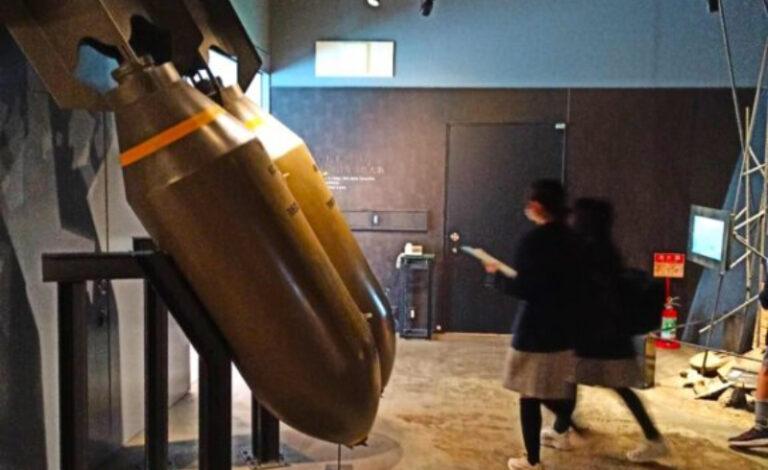
Aerial bombing which killed civilians was commonplace in World War II; over 1,000 cities were bombed either because they had some military significance or because attempts were made to “demoralize” the civilian population. These bombings, in fact, helped establish new ethical norms or rules of war used as guidelines to determine whether civilian deaths might be justified. The humanitarian goals of the Geneva Convention of 1949 were established specifically due to the bombing campaigns of World War II (many by the Allies against civilian populations). Yet, there is a clear need to review these standards, given the nature and results of more recent crises. We may, however, have reached a point where rules of war can no longer have much effectiveness, and we are faced with either working more conscientiously, resolutely and effectively for peace or continually and helplessly witnessing cruelty inflicted on civilian populations in wartime.
I recently visited a Peace Museum in Osaka that documents the destruction done to that city and the deaths exacted on the civilian population in World War II. At that time there were no protocols or guidelines to protect civilians, and US policy makers felt very little restraint was needed to be shown given the fact that Japan was the aggressor and had committed its own share of atrocities. Looking at Osaka as a representative city devastated by Allied aerial bombing in World War II, we can view it as a type of meaningful precedent. It was this type of precedent that led to our current norms meant to protect civilians in wartime. We can also see why the norms created from this type of horror may be an insufficient guide for contemporary circumstances.
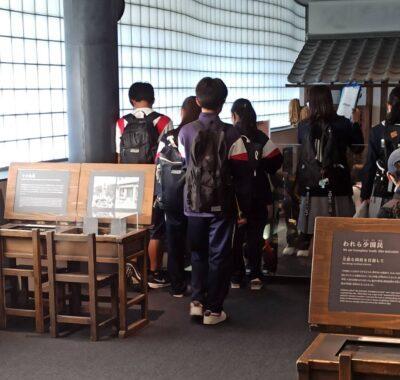 In light of Osaka, Tokyo, Dresden etc. it was recognized that such destruction 1) did not distinguish between civilians and combatants and 2) the death toll of civilians was grossly disproportionate to those of any combatants. It did not matter that the Allied actions were retaliatory in nature. That one country starts a war does not give the defending nation carte blanche in regard to retaliation. Rules of war demand restraint, they do not accord license to brutality. The principles of distinction and proportionality became the backbone of Geneva protocols to protect civilians.
The militarization of Japan, which precipitated the start of World War II in Asia, was a tragedy for the Japanese people and their democratic government. The more economically prosperous a country becomes, the stronger its military can become. Japan, a new democracy, did not have sufficient safeguards and its military grew to such a level of power that it became semi-autonomous of the government. The military thus took over Japan and transformed the country into a war machine. Right-wing elements in the officer corps pushed the military to become independent of government decision making and it began the aggression against China which pulled the entire nation into a self-destructive conflict. To a great extent, the Japanese people were also hapless victims of this war.
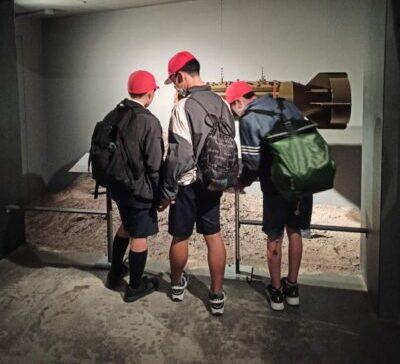 Before the militarization of the country, the hard-working and industrious people of Osaka had turned their city into one of the world’s premier commercial and industrial centers. This was done within a matter of decades after Commodore Perry’s black ships appeared in Yokohama harbor, compelling Japan to modernize. Before the war Osaka had become the largest city in Japan and the sixth largest city in the world. When their military government turned to war, it had the authority to turn peaceful manufacturing centers into production centers for the war effort.
Osaka had been known as the Manchester of the East due to its rapid industrialization. Due to its production capacity, Osaka became a major center for the production of munitions for WWII. As an invasion of Japan seemed necessary and started looming in 1945, the US government began to bomb Osaka mercilessly, to destroy the munitions that might be used against American soldiers in the invasion. No significant regard was given to the civilian population and due to the use of incendiary bombs, one could argue that the civilian population was also being targeted. At the museum there are accounts of women and children relating stories of the deliberate strafing of civilians by American P-51 Mustang pilots.
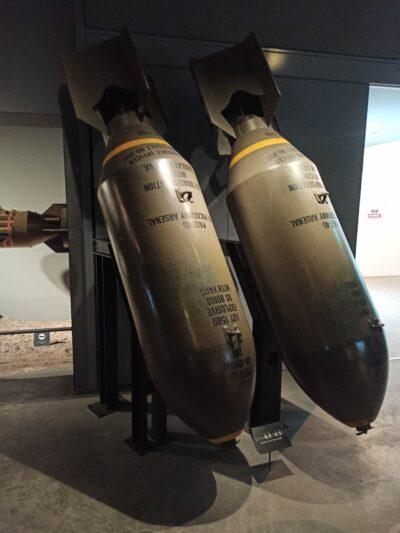 One-third of the city was bombed and burned to the ground and thousands of innocent people died. The need to minimize American casualties in the invasion subsumed any ethical concern for Japanese civilian life, and there could be no denying that a malicious intent was shown in addition to the practical bombing considerations. A de facto principle or protocol was created which is not reflected in the Geneva Conventions: The loss of enemy civilian life is justified if it means the lives of your own soldiers might be saved. There is no Geneva protocol that says otherwise. Every country seems to acknowledge this principle.
Thus, it also became possible to maliciously kill members of a civilian population under the pretext of targeting military installations. Was it necessary to burn down huge swaths of the city of Osaka as well as strafe civilians? No. Was the US motivated to inflict as much pain on the enemy population as possible due to previous atrocities endured by the enemy’s military? Yes. The justification was simple to understand: If Japanese elderly, women and children were going to die while we bombed military targets, so be it – the alternative was for American soldiers to die. This also became the dubious justification for dropping two nuclear devices on Japan. The lives of enemy civilians were not going to be spared at the expense of young American men. It is often argued, “We had to kill 200,000 Japanese civilians to stop the need for an invasion of Japan which might have killed 1,000,000 US soldiers.”
The enemy had committed atrocities throughout numerous Asian cities on innocent civilians and on American POWs, and it was only to be expected that disproportionate retaliation would occur if it could. There was no world body which had said it should not. Many rules of war, thus, should probably apply to retaliatory situations, but they do not. These situations carry immense emotional impact and deliver immense moral and emotional gratification. It is difficult to establish restraint under these circumstances. Rules of war must deal with this issue of civilians lost due to retaliatory action. Ethical standards and guidelines for restraint should be established, if they can be.
Any time an enemy targets your citizens, especially those who are especially vulnerable, you are going to be predisposed to strike back with extreme and merciless vengeance of a nature which often ignores the distinction between civilians and combatants and the disproportionate death tolls among the innocent. This will often be done in the name of deterrence or to protect your own soldiers and civilians.
We can also, therefore, draw this conclusion: When an existential threat is perceived, this threat supervenes any concern for innocent lives that might be harmed in removing the threat. This is a commonly accepted premise: innocent lives of the “others” may be sacrificed for the sake of one’s society’s safety. No Geneva protocol says otherwise. If we say, “Civilians had to die or our soldiers would have died!”, the argument quickly ends. Also it is found to be compelling to argue, “Some of their civilians had to die to stop them from killing more of our civilians.”
Indeed, objective judgment is often lost as rival sides battle endlessly for propaganda victories and the moral high ground. In Gaza it seems that Israel is claiming that yes, civilians had to die because Hamas uses them as human shields – Hamas makes it impossible for Israel to clearly distinguish between civilians and militants. The principle of distinction does not work here. Yet, people around the world are deeply moved and aggrieved by the images of dead children being pulled out of rubble and strongly impute malicious intent on the part of Israel. Israel states it wishes to remove, once and for all, a malevolent threat to its civilian population (one which initiated the latest conflict through a vicious surprise attack on innocent civilians); others claim that Israel is using the October 7 attack as a pretext to engage in ethnic cleansing.
Hamas apparently felt it had a right to kill and capture innocent Israelis due to its claims of systemic and historic abuse. Israel feels it has the right to take military action which incidentally results in the deaths of Palestinian civilians as a form of deterrence and as a way to eliminate Hamas as a threat. We are no longer functioning in a realm where rules of war work.
In Gaza everything is complicated if civilians are being used as human shields and Hamas terrorists and terrorist leaders live scattered among the general population. The humanitarian Geneva protocols set because of World War II bombing campaigns do not tell a modern state what to do if terrorists are embedded among a population and are using people as human shields while they continuously launch missiles. The demand that a warring party distinguish between civilians and combatants falls apart here because one side is deliberately blurring the lines to win an advantage. This is such a significant flaw it may invalidate contemporary rules of war completely. Hiding among a civilian population while attacking an enemy is now to be expected from any urban, militant organization built around hate.
So what do we do if the principle of distinction (that one distinguish between military objectives and civilian targets) is now completely illusory? What if you cannot distinguish between civilians and soldiers? And what do we do if the principle of proportionality (that the loss of civilian life not be excessive in relation to the military objectives to be met) is also no longer possible? Will Geneva admit that in an attempt to eliminate a malevolent entity, which is a threat to one’s own innocent people, perhaps more innocent civilians than combatants will have to die? It would be absurd to expect a country to refrain from actions that might lead to civilian deaths on the other side if it means that will cause deaths to its own civilians. Who would suggest that the “bad guys” be left alone to pursue their malevolent schemes if they hide among civilians? We are in a situation where, under current rules of war, the “bad guys” can push the “good guys” to do things which make them look horrible, while their sole intent is to protect their own society and civilians.
Another Geneva guideline: Wherever possible, precision-guided munitions must be used. Advance warnings should be given about attacks and no-strike lists established for hospitals and schools. Again, does this not entail that from now on terrorist militants will deliberately move into hospitals and schools and that advance warnings of attacks will make it impossible to target any of them? One could argue that Geneva Convention protocols, in fact, severely hamper the efforts of states to fight terrorism while giving terrorist organizations greater opportunities to survive retaliatory action and cause further harm to their enemies.
The principles of distinction and proportionality have to be reconsidered since they are no longer even relevant to a contemporary conflict. One side may actively “push” another to violate these principles for the sake of its very survival. Of course, the best-case scenario is for justice to be done and a workable solution pursued so that Palestinians and Israelis can co-exist in peace, mutual respect and harmony. Given that we can only expect more horror and more of the slaughter of innocents, justice and co-existence must be pursued with utmost diligence.
—
References/Further Reading:
The Geneva Conventions of 1949 and their Additional Protocols – ICRC
Protocols I and II additional to the Geneva Conventions – ICRC
—
This Post is republished on Medium.
—
Photo credit: Author

