


I wonder if Marilyn Monroe was wrong.
She once said, “A career is wonderful, but you can’t curl up with it on a cold night.”
Of course, I know what she meant. A career can’t possibly replace loved ones. The companionship and affection of your spouse curled up in bed together at the end of the day is a wonderful thing.
And yet, whenever I get together with retired, senior friends, we often discuss our past careers.
Sure, spouses and family come up here and there. But career exploits and stories about work get brought up more often. And usually, there’s a sparkle in my friends’ eyes as they reminisce about their past jobs.
If you think about it, for a good part of our lives, we spend nearly as much time with work colleagues as we do with our families.
Yes, there are exceptions—people who work from home, or who run a business with their spouse. But most people leave home and go to work somewhere.
That’s what I did for over 26 years.
I left home daily and drove a short distance to the police department. In the early years, I was a patrol officer and worked various shifts.
Sometimes I was gone all day. Other times I worked all night. Then, in later years, as a police administrator, I worked all day, Mondays through Fridays, with weekends off. Later, as police chief, even my weekends were interrupted by special events.
There were times I resented work.
It took me away from my family. It could be exhausting and stressful. There were so many responsibilities and challenges to handle. Toward the last few years of work, I fantasized about being retired.
About the freedom.
Retiring is just practicing up to be dead
I wasn’t alone.
Most senior law enforcement professionals I worked with also talked about retirement. They envisioned more family time, golf, fishing trips, travel, and immersion in their hobbies. “I can’t wait,” so many of them said.
And sure enough, those who retired before me would call and send emails celebrating their newfound freedom.
Retiring is just practicing up to be dead. That doesn’t take any practice. —Paul Harvey
But the calls and messages eventually leveled off. And then, sometimes, these retired colleagues would pop by the police department for visits. They wandered the halls, stopped by various offices, and chatted with those of us still in the career trenches.
They asked us if we had time for coffee or maybe lunch.
Usually, the answer was no. Meetings awaited. Emergency calls to handle. Deadlines to meet. “Maybe next week,” we’d say, knowing it wasn’t likely.
Our retired friends would say, “Sure, I understand.” But there was often a glint of melancholy in their eyes. They felt the distance between what was and where they are now.
They would smile, leave the police department, and disappear back into the obscurity of retirement.
Back to the relentless freedom they once longed for.
Purpose and companionship
The police department where I worked had a volunteer program for civilians.
Most of our volunteers were older, retired folks, looking for something meaningful to do. They did all kinds of jobs for us. Some helped clean and repair police equipment. Others scanned old police reports and files into the computer system. Several worked on special events.
We held an annual awards dinner to celebrate the work of our volunteers and to thank them for their service.
They appreciated the dinner and accolades, but that wasn’t why they volunteered their time. Most of them wanted purpose and companionship.
Purpose and companionship.
We overlook the importance of purpose and companionship during our working years. We get lost in the minutia and stress of work and fail to see how the challenge of work gives our lives meaning.
The esprit de corps and impromptu conversations and laughs at work benefit our emotional well-being. The battles won as part of a professional team contribute to the memories we’ll share in retirement.

During my years as Chief of Police, I took great joy in celebrating the successes of my colleagues and subordinates. The pleasure of work was not about money or status.
It was about purpose and companionship.
Your work there will last forever
No doubt our spouses and families give us a deep purpose and companionship, which is important to our health and well-being.
But, career purpose and companionship are somewhat different. We need colleagues and professional associates to challenge us, hold us accountable in ways our loved ones don’t, and share insights and perspectives we may be blind to see on our own.
Quality professional colleagues help us grow and become better people.
My career forced me to confront challenges, hone my skills, deal with personal shortcomings, and work effectively with others. We may grow in our intimate and family relationships, but we also grow in our work relationships.
Even though your time on the job is temporary, if you do a good enough job, your work there will last forever. —Idowu Koyenikan, Wealth for All: Living a Life of Success at the Edge of Your Ability
Cynics say that we will soon be forgotten at work, as new folks are hired and replace us.
That might be true, but only because our most important contributions exist below the surface. The positive mentoring we give young colleagues lives on after we retire. The lives of people we help through our work contribute to the betterment of society, even if we are no longer remembered for our efforts.
But sometimes, if we’re lucky, we are remembered.
Earlier this year, I got a phone call from a detective who used to work for our police department. He is a talented police professional who left our agency to become a district attorney investigator.
He told me that he took to heart my advice to pursue an advanced degree. He said he admired me and our department’s Captain, because we both had master’s degrees and were advocates for lifelong learning and education.

And then he told me that he successfully defended his doctoral dissertation, and was now a PhD. He plans to retire soon from his work as a DA Investigator to teach full-time.
What a joy to play some small part in the success of a work colleague.
Peace, meaning, and beauty
I watched a delightful movie recently titled, “Perfect Days.”
The film is about Hirayama, whose job is to clean public toilets in Toyko. Some might view such a job as not very distinguished, but they’d be wrong. My father once said, “There is dignity in all work.”
Hirayama takes his job seriously.
He arrives early for work and cleans thoroughly, without complaint. When pedestrians show up, he stops what he’s doing and waits outside while they use the toilet.
On his breaks, he eats lunch and takes black-and-white film photographs of the trees in the park. Away from work, he tends to his bonsai trees and enjoys music cassettes. And, he frequents humble restaurants where the staff know him and make him feel welcome and appreciated.
Hirayama has purpose and companionship in his life.
In one scene, Hirayama discovers a lost child and helps find the child’s mother. The mother takes the child’s hand, scolds the child, and walks off without thanking Hirayama.
But the child looks back and waves at Hirayama, which makes him smile.
Hirayama takes his work seriously, and even though he might seem invisible, he is contributing to the well-being of society. Hirayama sees the peace, meaning, and beauty in the world around us.
Peace, meaning, and beauty.
If you’re still in the working years, try to find peace, meaning, and beauty in your work. Don’t take for granted the purpose of your work, and the companionship of coworkers, who just might help you grow as a person.
And when retirement arrives, enjoy the greater family time and personal freedom.
However, if and when the novelty of your freedom wanes, try to find new ways to celebrate purpose and companionship in your life. Whether that’s starting a new career, part-time job, or volunteering.
The key is not to give up.
Don’t subscribe to what Paul Harvey said above about “…practicing up to be dead.” There is still purpose and companionship out there for you to find. And there’s tremendous peace, meaning, and beauty in the world.
Find whatever purpose and companionship works for you. Contribute. Encourage others. Make people smile.
If you do a good enough job, your work will last forever.
Before you go
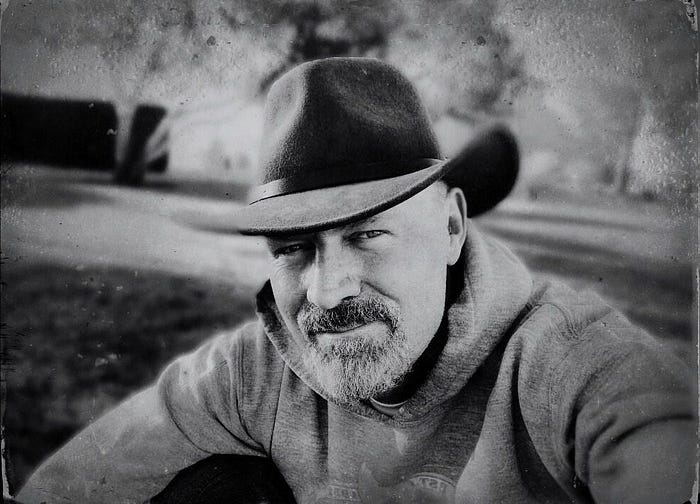
John Patrick Weiss writes stories and essays about life, often illustrated with his black and white photography. Visit JohnPatrickWeiss.com.
—
This post was previously published on Medium.com.
—
The Good Men Project is a mission-driven men’s media platform. A major platform for stories about men, identity, fatherhood, and emotional intelligence—and a trusted home for the national conversation about masculinity.
The Good Men Project accepts paid guest posts and provides bulk guest post packages for SEO agencies and resellers.

If you believe in the work we are doing here at The Good Men Project, please join us as a Premium Member today.
All Premium Members get to view The Good Men Project with NO ADS.
Need more info? A complete list of benefits is here.
Photo credit: Chief John P. Weiss with wife and son at a police department event

