



Dr. NerdLove challenges the idea that nerds are an exception to privilege.
We’re two weeks into the new year and it seems to me like the perfect time to talk about an old topic: nerds and male privilege. Last week I talked about MIT Professor Scott Aaronson’s emotionally vulnerable comment about being terrified of women growing up. While this was an excellent example of the problematic Nice Guy attitude, there was another issue that Aaronson brings up that I wanted to touch on: the idea that nerds are an exception to privilege. Quoting from his post:
Alas, as much as I try to understand other people’s perspectives, the first reference to my “male privilege”—my privilege!—is approximately where I get off the train, because it’s so alien to my actual lived experience. […]But I suspect the thought that being a nerdy male might not make me “privileged”—that it might even have put me into one of society’s leastprivileged classes—is completely alien to your way of seeing things.
Shortly afterwards Scott Alexander wrote a long defense about how nerds were unfairly put-upon by the outside world (especially by feminists) and having “privilege” wielded against them like a bludgeoning weapon:
I live in a world where feminists throwing weaponized shame at nerds is an obvious and inescapable part of daily life. Whether we’re “mouth-breathers”, “pimpled”, “scrawny”, “blubbery”, “sperglord”, “neckbeard”, “virgins”, “living in our parents’ basements”, “man-children” or whatever the insult du jour is, it’s always, always, ALWAYS a self-identified feminist saying it.
[…]
Read any article from the appropriate subfield of feminism, and you may well run into the part with the girl walking into a comic book store only to beaccosted by a mouth-breathing troglodyte (Dr.’s Note: Oh hey, guess who he’s referring to?) followed by a “lesson” on nerd male privilege.
This idea – that nerds and geeks are unfairly maligned, that we’re the low-man on the social totem pole and we’re misunderstood, slandered and persecuted(!) – is a common one. We’re the underdog! We’ve been bullied, picked-on and insulted, how can we have privilege?!
Don’t get me wrong: I’m beyond sympathetic to my geeky brethren. I’ve written before about growing up with the same fears, self-limiting beliefs and identity problems that come with being a pasty, awkward ball of anxieties. But the problem is that we’re not the underdog; we just keep telling ourselves that we are. The stories we tell ourselves shape how we see the world, and the idea that nerds and geeks are weak, powerless and socially undesirable ends up blinding us not only to our true position in the world, but the effects of our own behavior. When you tell yourself that you’re the hero for long enough, you tend to not see when you’re acting like the villain.

Now let’s be clear: I’m not calling geeks the bad guy. But by mythologizing the nerd as downtrodden and powerless, we end up not seeing how we treat others badly… acting, ironically enough, in much the same way that the jocks and bullies act towards us.
You Keep Using That Word. I Do No Think It Means What You Think It Means
Before we get deep into this, let’s talk a little about privilege and what it means. Privilege, quite simply, are the social and societal benefits that come from being part of a certain class within society. It’s about how society treats and accommodates you as a member of said class. Male privilege refers to the benefits and advantages that men have, especially in relationship to women. Privilege is about the way society is set up to give dominance to certain people over others – even of the people benefitting from it don’t immediately recognize it. All things being equal (and we’ll get to that in a minute), being a man in Western society means having distinct advantages over women.
To be male is to be the default in just about everything, from hygiene products to clothing to representation. Men (especially straight, white, cisgendered men) can expect to find themselves represented as the television, to movies and to video games. We get so used to it that we assume that it’s the natural order of things – and society responds accordingly. One example is that male voices are prioritized over female ones – literally and figuratively. Teachers call on boys far more in school, while girls are ignored. Women are perceived as talking more – the old urban legend of how women use 20,000 words a day while men use 7,000- when in reality, not only do they talk less, but are perceived as “dominating the conversation”, even if they contribute less than 1/3rd as men do. Men are taken more seriously than women as well – to give a personal example, I get far more credit and taken more seriously for writing on feminist topics than women do on the exact same subject.
To put it another way: it’s Hermione doing all the hard work and Harry Potter getting all the credit for it.

The pay gap and the glass ceiling are other perennial examples. But let’s take some examples from nerd culture. One of the ongoing discussions in society right now is how women are under-represented in STEM1 fields and whether this is a systematic problem embedded within the culture or simply a “pipeline” problem – that not enough women want to enter into STEM. Of course, it doesn’t help when even products that are supposed to be encouraging women to get into, say, computer programing, carry the message of “step aside and let the men do the real work“…

However, studies have now proven how men are prioritized over women in STEM jobs. In a randomized study, scientists were presented with resumes and applications from grad students seeking employment as a lab manager. The resumes were exactly the same, with half having a male name and half having a female one. Across the board, the resumes with female names were rated as being less competent and less hirable. Not only were the scientists less interested in mentoring the female applicants, but they also low-balled their potential starting salary by $4,000. And yet despite increasingly glaring evidence, men still don’t believe in their privilege.
One of these reasons is simple: we misunderstand what it means to be privileged.
“But I Don’t FEEL Privileged”
One of the most common responses men have to discussions about privilege – especially when being asked to acknowledge their privilege – is to deny it exists. “My life hasn’t been easy,” they may say. “Look at all the ways my life hasn’t been fair! Look at all the ways I’ve been screwed over!” And let’s be fair: they’re not wrong. Yes, men, even straight, white men, get dealt shitty hands in life. They may be poor. They may be sick or handicapped. Their entire life may well be one long series of Lucy pulling the football away from Charlie Brown. The gods themselves may very well seem to have singled them out to be the eternal buttmonkey, doomed to suffer for other the amusement of the uncaring cosmos.
You know… basically how you treat your Sims.
But here’s where privilege kicks in: as bad as things may be, how much worse would they be if he were gay? If he were trans? If he he were an ethnic minority?
If he was a woman?
Very few people pay conscious attention to the advantages they have in life; because they’ve been there all along, we rarely even notice them unless they’re pointed out to us. Men don’t recognize their advantages because… well, it’s just the way it’s always been. If they’ve never lived without it, then why would they notice? People with money rarely tend to think about the challenges of living on a tight budget. A white man is rarely conscious of how he’s less likely to be randomly stopped and frisked by the police (or to be shot by them, for that matter.) Men rarely think about the risks that women live with every day just by virtue of existing.
But not being conscious of those advantages doesn’t mean that they don’t exist.
Sci-fi author John Scalzi has an excellent metaphor for privilege for the geeky set: straight, white male is playing life on the easiest difficulty setting. This doesn’t mean that there aren’t still challenges, just that you get better starting stats2 and that the behaviors from others (NPCs) will be more likely to be to your benefit (or at least not actively hostile).
Nobody denies that there aren’t levels of privilege within groups, mind you. Privilege isn’t a single absolute axis; it’s multi-dimensional. Race, gender presentation, sexual orientation, being neurotypical, physical appearance, social class, nationality, education – all of these are forms of privilege and all of them affect how we’re treated by the world. This is referred to in feminist circles as intersectionality – how different areas combine to affect levels of social advantages and disadvantages. A straight, cisgendered male nerd may be taunted, teased and bullied in school, but he’s still afforded advantages that a gay, female or trans nerd is not. Nerd or geek isn’t a privilege trump card, no matter how much some nerds may feel it is.
And part of the reason for that is that we still buy into the myth of the nerd as underdog.
Vi Scholaris Absurdus Universum Vivus Vici (or: Nerd Invictus)
Both Scott Aaronson and Alexander place nerds at the bottom of the social heap – the “least privileged class” in Aaronson’s words. Ignoring the sheer number of ethnic and sexual minorities who might take issue with that, both Aaronson and Alexander are perpetuating the story that we geeks tell ourselves: that we’re the scrappy dark horse, the downtrodden victim, the rag-tag rebels fighting against an implacable enemy. And that’d be great… if that were true.
Except it’s not. Frankly, the nerds have won. Nerd culture is culture, period. Of the top 50 highest-grossing movies of all time only one of them – Titanic – isn’t a cartoon or geek property. Guardians of the Galaxy was the highest grossing movie of the year. The Avengers: Age of Ultron and Star Wars: The Force Awakens are 2015’s most anticipated blockbusters. TV Guide’s list of the most popular shows in America include Marvel’s Agents of SHIELD, Game of Thrones, The Walking Dead, The Originals, Sleepy Hollow, Reign and Arrow. Every Barnes and Noble is stuffed to the gills with Doctor Who toys, calendars and plushies. Video games have gone from being the province of “basement dwelling man-children” to something everyone does – the jocks are playing as much Call of Duty, Destiny and NFL 2015 as the geeks and everybody and their goddamn dogs are playingAngry Birds, Bejewelled and Candy Crush Saga. Our entire lives – from work to friendships to romance – take place online now. Joss Whedon is in charge of one of the most ambitious and profitable movie franchises of all time; Elon Musk is positioning himself as a real life Tony Stark; Bill Gates dominated our computers; Steve Jobs redefined how we consume music, televisionand put the Internet in all of our pockets; Bill Nye the Science Guy is on Dancing With the Stars; Neil deGrasse Tyson is a goddamn rock star, and Mark Zuckerberg knows when you masturbate controls your social life.
San Francisco has gone from being synonymous for “commie pinko values” to becoming synonymous with “tech startups”, when it hasn’t been completely annexed by Google. Geeks and nerds are the engine that run the economy. We’re not the misunderstood outsiders we used to be, we’re the mainstream.
So why are we still laboring under the idea that nerds, geeks, gamers and the like are this oppressed minority? This isn’t hyperbole, mind you – Scott Alexander specifically conflates the two. Although outside of the Revenge of the Nerds movies, I seem to have forgotten when nerds were forced to live in ghettos separate from the bros, when geeks had to wear clothing signifying their geekdom, when science dorks were forbidden from voting, having bank accounts, denied lines of credit, faced hiring freezes or having been rounded up into internment camps for fear of being 5th columnists…
(Incidentally, it ain’t feminists who’re creating those nerd-mocking memes. They aren’t coming from Jezebel or Feministe or Alas, A Blog. They’re coming from /b/, /rk9/, 9gag, eBaum’s World and Something Awful. You know… from nerds.)
We are still in the mindset of the unappreciated heroes, beset on all sides by a world that hates and fears them. We’ve defined ourselves in opposition to our supposed enemies – the jocks, the bros, the Queen Bees and Mean Girls – and we’ve never stopped to ask ourselves whether that’s even still true any more. We take being a nerd as proof of our virtue on faith.
But this is an insidious form of willful blindness. I love my nerdy brothers, but we have a nasty tendency to disappear up our own asses at times. Just because bros act a certain way doesn’t mean that we’re incapable of acting the exact same way. Just because we’ve been bullied doesn’t mean that we’re incapable of being bullies ourselves. We’ve been rejecting what the world thought about us for so long that we’re unwilling to see that criticism isn’t necessarily an insult and that sometimes they’re right and we’re wrong. Aaronson may have been too terrified of women to ever think of harassing them, but that doesn’t mean that geeksare incapable of harassment. Alexander equates a call for greater representation in genre fiction as an insult to geeky men and complains about posts on Jezebel about harassment and boorish behavior on online dating sites as an attack on Nice Guys. But people on Tumblr saying mean things and think-pieces about the fact that geek culture still has shitty attitudes towards women doesn’t add up to persecution. Having been bullied doesn’t make us martyrs and saints. Being uncomfortable and awkward around women doesn’t make you a good guy by default. There’s nothing wrong with being a nerd or a geek and wearing that like a badge of honor, but let’s not pretend that it’s a magic shield of Protection From Douchebaggery or the Mark of Cain.
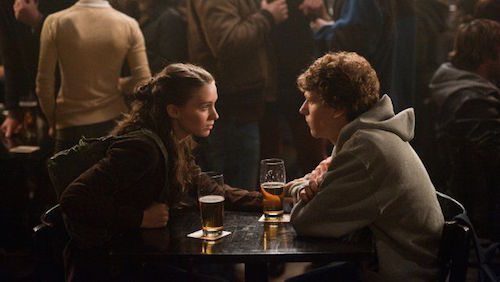
(Incidentally, it’s telling that both Aaronson and Alexander equate “nerd” with “male”. As much as they decry how geeks are treated by women, they’re denying women the chance to even be part of the club…)
Deeds, Not Words
One of the privileges of being a man – even a nerdy man – is that we’re shielded by virtue of our gender from what so many geeky women go through… but that doesn’t mean we don’t try to claim the same level of injustice. In his article for Salon, Arthur Chu points out that Aaronson’s fears are about what people may think of him while Amy, the woman he’s responding to, is talking about what others have done to her – yet people are giving the two equal weight. Alexander equates “creep-shaming” and feminist blogs being mean about socially awkward guys with systematic oppression in a culture that has and continues to actively discriminate against women. And while Aaronson and Alexander are handy examples, this belief runs rampant in the geek community. NerdBros will insist that everyonegets harassed online3 but women get singled out because they’re women. Men get insulted while women get sexually harassed and even stalked.
In On Nerd Entitlement, Laurie Penny points out that female nerds have many of the same emotional issues as male nerds, but compounded by structural misogyny and oppression. Radical feminists4 insulting male sexuality frankly isn’t deserving the same level of consideration as women who are harassed, stalked, threatened, chased from their homes and even SWATted over opinions about video games. Nerds aren’t harmless by virtue of being nerds.
It’s the famous Margaret Atwood quote all over again: men are afraid that women will laugh at them while women are afraid that men will murder them.
As I said earlier: being a man doesn’t negate you from all harm, nor does it mean that you’re not going to be threatened, harassed, doxxed or otherwise risk harm However, men, even nerdy men, simply don’t face the same issues as women do; the price of being a woman in our culture still means bearing a disproportionate amount of risk and harm.
And we need to recognize this.
What Does This Mean To Us?
Whenever I write on anything touching on feminist issues or critiquing geek culture, I get people demanding to know why I’m attacking men and/or nerds. And the reason is simple: I love nerds. I love geek culture. I want to see it grow, I want to see it thrive and I want to watch it become the amazing force of creativity and culture and community that I know it can be. And it’s because I love it that I tend to be so damn hard on it. We can be so much better than we are if we’re only willing to recognize and address our own shitty beliefs and behaviors.
Believe me, as harsh as I sound, I have nothing but sympathy for my fellow nerds. I’ve dealt with the same fears, doubts and anxieties. I know damn good and well what they’re going through. But at the same time, I also know it’s a problem we have to fix for ourselves. Yeah, it may bruise the ego to be told that we’re acting like entitled shits. It’d be nice if people would phrase it more delicately or be more considerate of our feelings. At the same time however, it still speaks to our level of privilege and entitlement to insist that women nurse us through these issues. With great power comes great responsibility. It’s time we started trying to measure up to our own role models and living up to our own potential.
–
Originally appeared at Paging Dr. NerdLove
–
Photo: Flickr/Jason Brennan


Can’t say I’m disappointed in you, because I never expected much. But it’s still sickening to watch you dogpile a man for talking about emotional vulnerability, and rationalize away ever actually listening to him as a human being.
What is this “we” you keep talking about? You certainly aren’t one of us. Your “privilege” of speaking for nerds is hereby revoked. Beat that drum somewhere else.
O”Malley really needs to find a different topic to write about. He has become like Maury doing the same show over and over again on “whose the daddy?” He also should do a column with Amanda Marcotte since their views are so similar.
This insistence that nerds are asking women to “nurse them through their issues”, rather than simply stop abusing, misrepresenting, and manipulating them, is neither sympathetic nor fair. I have never heard of someone with social anxiety, or someone who involves himself with nerd culture, requesting anything like that from women generally.
I have an 11-year-old girl. I teach her not to bully her younger brother. She gets it; why don’t you?
“All things being equal (and we’ll get to that in a minute), being a man in Western society means having distinct advantages over women.” So says the man who probably lived his life in an all white suburb. You and the feminists can take it from a bi-racial guy who looks white. You don’t know jack about “privilege”. Try being the white looking guy in an Asian club or dojang and see how much “privilege” you have relative to the ethnoc minorities (read: they’re not the minority there). As long as you’re not trying to get child custody in family… Read more »
The issue with his fear of making a woman uncomfortable I can understand, although I never had it to that degree. There are so so so many times males are told what NOT to do with regard to women and safety whilst rarely men are told what TO do. Tell someone over n over don’t do this, don’t do that, but fail to tell them what is ok to do might make some simply give up because it really sounds like walking blind through an unflagged minefield. Creepiness is subjective and avoiding making someone feel that way can be quite… Read more »
People who are socially awkward will earn less money, have a harder time finding friends, their quality of life will be less than that of others. Those whom are bullied often have issues such as social anxiety and depression. “Nerds” do get bullied quite often, and when I was in school the “smart” kids got bullied hard including myself. The Nerds pretty much never had a gf and that wasn’t due to some poor attitudes towards women because of all the groups I knew at school, the nerds held the women with high regard but probably made the mistake of… Read more »
@ Archy “Something Awful was apparently “taken over” by many feminists, so it potentially was some feminists who have done that. I’ve seen plenty of nerd-mocking on Jezebel. You may be lucky as to not see the shaming and bullying that goes on by SOME feminists but I’ve seen it, many others have seen it.” I think it might be because he uses the same double standard / double speak common to feminist discourse. I suspect that when he looks at signs of mocking on feminist sites, he only considers the article, but when he looks for signs of mocking… Read more »
Thank you Mr. Belden I appreciate your voice. I felt weak and people took my kindness for a weakness. I had to learn to stand up for myself and that is always going to be the struggle of guys like us because people want to test you. I really appreciate your article which made me feel so much better. So I tell people I am gentle, but I can be as vicious as as wolf . thank you again sir.