



—
This content is for informational purposes only and is not intended to provide medical advice.
Allergies in pets can be a terrible problem for many pet owners. These can cause many health issues in your companions, affecting their lives and yours. Like humans, your pets can develop allergic reactions to just about anything.
To help you prepare for allergy attacks in your pets, let’s discuss the causes, symptoms, and ways to support them while they recover from allergies. Through this, you will better understand how to manage your companion’s allergy issues.
What Are Allergies in Pets?
An allergy is the body’s immune system’s response to certain substances, also known as allergens. These are typically harmless in humans and animals.
However, when your pet’s body overreacts to the allergens it comes in contact with, it may cause symptoms impacting their daily life and health.
In severe cases, a pet might have serious reactions, so it’s important to have the contact information of a local emergency vet clinic on hand.
This is why it’s important to know emergency vets in your area and have them on speed dial if possible. If you live in a city like Dubai, where vet care is accessible almost everywhere, you don’t have to worry too much.

Common Types and Causes of Allergies in Pets
Allergy triggers vary from pet to pet. Your pet might be allergic to some food items, while your neighbor’s pet might be allergic to a particular shampoo ingredient. However, there are common types and causes of allergies in pets that occur for the majority of the pet population.
1. Food Allergies
Food allergies are some of the most common allergies that pets have. There are certain dog breeds, like English Bulldogs, that are more susceptible to food allergies.
The most common food allergens for pets include chicken, beef, grains, and dairy. If your pet is allergic to one or more food items, it can experience symptoms like vomiting, diarrhea, and skin irritation.
Your pet may develop respiratory symptoms that need prompt vet attention.
2. Environmental (Atopic) Allergies
Atopy or environmental allergies in dogs and cats happen when a pet’s body overreacts to natural substances like pollen and mold spores. In some cases, dust mites can also cause a reaction in your pets.
Most environmental allergies occur when pets inhale the allergens. If you notice your cat or dog is constantly stretching or sneezing, it may have an atopic allergy.
3. Flea Allergy Dermatitis
Keeping fleas away from your pet might be difficult, especially if it loves going outdoors. For most pets, fleas can only cause discomfort and itchiness.
However, some pets can have hypersensitivity to flea saliva, causing flea allergy in dogs and cats. So, when they get bitten by fleas, they could experience symptoms like intense itching and even hair loss.
4. Contact Dermatitis
Contact dermatitis happens when pets’ skins are exposed to irritants. These allergens are typically plants, like poison ivy, shampoos, soaps, or cleaning products used in your home.
Many contact dermatitis incidents happen when pet owners use cleaning products that aren’t pet-friendly in their houses. Accidents may also happen when hiring cleaning services.
When living in a busy city like Dubai, it might be common to hire cleaning services since you won’t have enough time to do it yourself. But, if you are looking into these services, inquire about their cleaning products to ensure they are safe for your pets.


Symptoms of Allergies in Pets
Allergy symptoms may appear in different ways depending on what type of pet you have and the root cause. Here are the common allergy symptoms in pets you should watch out for.
● Skin Symptoms
Pet skin allergies can be easily seen in most allergy attacks in pets. You’ll notice your pet scratching, biting, or licking the affected area when a skin allergy occurs.
Because of this behavior, you’ll notice your pet’s skin becoming reddish, inflamed, swollen, and sensitive when touched. At this stage, consulting with a pet dermatologist can help assess what your pet needs.
Over time, the continuous irritation may cause your pet to lose fur on certain parts of its body and create open wounds. Bacterial infections can easily occur due to the wounds.
● Gastrointestinal Symptoms
Gastrointestinal issues are common signs and symptoms of food allergies in dogs and cats. Your pet may experience diarrhea and vomiting, both of which can be mild to severe. You’d also notice discomfort and bloating in your pet.
These symptoms can lead to restlessness and a decrease in your pet’s appetite. You must monitor and manage these symptoms immediately to avoid dehydration and complications.
● Respiratory Symptoms
Respiratory symptoms are common in pets with environmental allergies. The usual signs include constant sneezing, discharge from their noses, and coughing.Pets can also show rapid breathing, snoring when asleep, and wheezing.
● Ocular Symptoms
Your pet’s eyes can also show symptoms of allergies. Redness, discharge, and excessive tearing are common signs you should monitor.
These symptoms are uncomfortable for your pet. You’ll notice it squinting, rubbing, and blinking rapidly. There will also be signs of sensitivity to light. When left untreated, these allergy symptoms can become more serious, like an infection or corneal ulcer.
● Behavioral Changes
Understandably, a pet with allergies will show changes in its behavior. Due to the itchiness, it’ll be scratching or licking more often. Cats with allergies may also groom themselves more often than usual.
You’ll notice changes in your pet’s appetite, like increased thirst or refusing to eat. Your pet may also become irritable or may not engage in playtime or usual activities it likes.

How Allergies in Pets Are Diagnosed
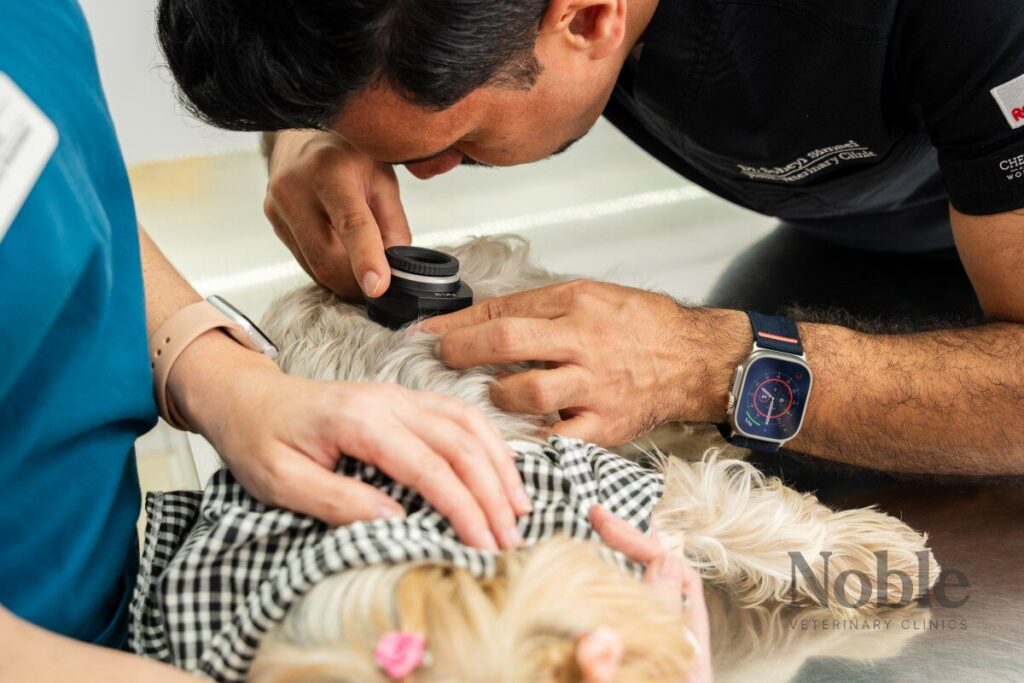
Diagnosing allergies in your pet will need the help of a pet allergist, a specialized vet that focuses on allergies in pets. Here’s how veterinarians may typically assess a pet’s allergies:
- Veterinary Examination: The first step is a physical examination. The pet allergist may check your pet’s symptoms and medical history.
- Dietary Elimination Trials: When your pet shows gastrointestinal symptoms, a controlled diet may be used to identify its food allergens.
- Allergy Testing: Vets may also use various tests to identify allergens accurately. A vet clinic in Dubai conducts skin testing, blood tests, and environmental assessments to diagnose allergies in pets accurately.
- Flea Identification: Another step in the process is checking for any signs of fleas to determine whether your pet has flea allergy dermatitis.
- Patch testing: For signs of contact dermatitis, patch tests may help identify the cause of your pet’s allergy.
Once the cause of your pet’s allergy has been identified, the vet may recommend appropriate options for managing symptoms
Overcoming Allergies in Pets
Understanding allergies in pets is an act of a responsible pet owner. Early diagnosis and awareness of allergy symptoms can help you manage your companion’s comfort and avoid emergency situations.
Remember to monitor your pet for symptoms of food, environmental, contact dermatitis, and flea allergies. Any signs of unusual habits, behavior, and physical appearance should be your signal to take it to the vet as soon as you can.
Frequently Asked Questions About Allergies in Pets
Do vets recommend coconut oil for dogs?
Yes, some veterinarians suggest coconut oil for dog skin allergies because of its potential benefits. However, it must only be used by consulting your vet first since your dog may have allergies.
How to find out what your dog or cat is allergic to?
Consulting a dog or cat allergist can help identify what your pet is allergic to. The vet may conduct allergy tests and or recommend dietary eliminations to pinpoint your pet’s allergens.
How do I stop my dog’s allergies?
Helping your dog manage allergy symptoms may require you to prevent it from getting in contact with known allergens. Your vet may also recommend specific dietary changes or other adjustments based on your dog’s needs.
What food can cause allergies to dogs?
The common food allergens in dogs often include proteins like beef and chicken. However, dairy and grains like wheat and corn are also common causes of food allergies in dogs.
What causes skin allergies in dogs?
Several factors, including environmental allergens, food, flea bites, and home cleaning products, can cause skin allergies in dogs.
What are the symptoms of chicken allergy in dogs?
Chicken allergy in dogs will show symptoms, including vomiting, diarrhea, itchy skin, ear infections, and thinning fur.
—
This content is brought to you by Dr. Soheyl Simaei
Photos provided by the author.

