


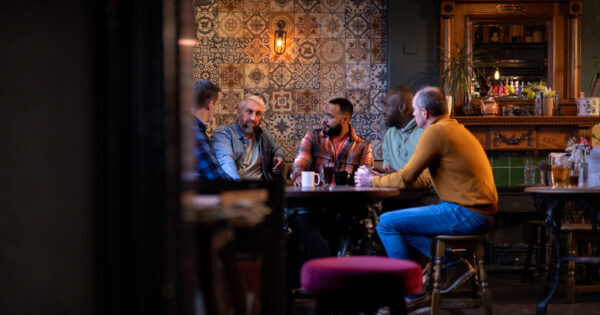
It’s great that there is now a growing awareness that men are in crisis, and an emerging consensus that something must be done. The list of remedies required to solve this multi-variate problem is long.
In fact, we have been working on some solutions for a long time. To reduce the harm that men have caused women, specifically, we have now invested heavily in sexual assault and domestic violence prevention programs, sexual communication and consent trainings for college men, anger management therapy, harassment in workplace initiatives, gender discrimination programs. All these investments, so necessary and overdue, have deepened our understanding of the issues, and dare we hope, are having a material impact on today’s men. But much more work needs to be done.
The question is, what are we doing to address the underlying culture of masculinity that encourages men to exhibit these behaviors? I worry that the “thought leaders” who have grabbed the national mic have a tendency to pathologize men in three ways.
First, they tend to lump all men into a homogenous group, implying that we are all, in some way, large or small, guilty. That has created pushback and sidelined some men who might have rallied more into action. Second, many thought leaders tend to focus on the negative behaviors of men and their impacts, as if there were a defective gene associated with our sex. And third, they often fail to acknowledge that some men, indeed, I would like to think most men, are not bad actors, just imperfect guys trying to do their best given the conditioning of their upbringing and culture. A more nuanced approach and a stronger push to make men allies and authors of their own and others’ healing is in order here.
Which brings us to the reality that good men of all ages are struggling. Why? We are having difficulty expanding our expectations and behaviors to meet the requirements of a more egalitarian system where men and women (and other marginalized populations) share power so that all may thrive.
It is this silent majority of men, not the bad actors, that worries me the most. Some of the bad actors are being “outed” and forced to account for their crimes. They are not the men who are falling through the cracks, falling behind, falling down, stumbling to find their place in a world that no longer follows the rules that they grew up with.
As enlightened national pundits and policy makers continue their public debate about what to do, too often offering one-note diagnoses and whack-a-mole solutions, I think it might be useful to hear from rank-and-file leaders across the nation – men and women whose names you will never know, who have been engaged for years in supporting men – the workshop leaders, life coaches, counselors, therapists, researchers, non-profit execs who are on the frontlines of the crisis that has unfolded before us.
Buoysclub, a group of two hundred or more such individuals from across the U.S, has been meeting on a regular basis now for eighteen months, in-person and online. On January 8, we gathered again to check in. During our break-out sessions (about 20 or so) we were asked to discuss the following question: What do the men and boys in your community need right now? If you had a magic wand, what would be created?
AI tracked all the discussions and generated the following summary of our conversation. Men want/need:
- Permission to Drop the Mask: This came up as exhaustion with posturing and bravado — even among men doing men’s work. Men need explicit permission to stop performing strength, admit confusion, fear, grief, loneliness, and to be unfinished.
- Real Friendship (Not Networking): A deep hunger for friendship vs programming, and the need for non-transactional male friendships. Consistency matters over intensity, as the need is “someone to walk with me, not fix me.”
- Third Spaces (Beyond Home & Work): Strong longing for modern equivalents of VFWs, lodges, barber shops, more places with low rules, low pressure, high belonging. Need spaces that don’t require ideology, therapy language, or productivity.
- Embodied Connection (Not Just Talking): Men want connection that happens through walking, sports, movement, shared activity, talking while doing something feels safer, more masculine-coded, and more sustainable.
- Better Models of Masculinity (Visible + Relatable): Not “anti-toxic masculinity,” but something to move toward. Role models who are imperfect but integrated, men who are emotionally literate and grounded. “Don’t just tell us what not to be — show us what to be.”
- Language That Doesn’t Shame or Pathologize: Strong resistance to clinical framing, moralizing, being treated as a problem to fix. Desire for: plain language, humor, dignity, invitations, not indictments.
- Guidance Across Life Transitions: Men named moments where they felt unaccompanied. Not crisis-only support — companionship through transitions like divorce, fatherhood, aging, career loss, grief, identity shifts.
- Connection Across Difference (Especially Gender): A desire — cautiously held — for spaces where men and women can talk with structure. Need for better mutual understanding, and reduced projection and fear. Yet also paired with: “men need to learn with men first, then together.”
- Belonging Without Ideology: Repeated yearning for spaces that are not political, not spiritual unless you choose, not therapy unless you opt in, not performative, and focus on belonging before belief.
- Hope That This Is Worth Doing: Underneath everything there’s grief about loneliness, a fear it’s “too late”, a quiet hope that connection could still be rebuilt. Several moments where people named joy — laughing, walking, fandom, shared experiences — as the missing ingredient.
These are not the solutions that journalists, pundits, and policy makers are debating right now. What we need more than ever are more people actively engaged in holding space for men as they sort things out. I suggest that we listen to men and women who are in the line of battle as we consider what we are going to do about the crisis that men are in and get involved in their important work.
■ ■ ■

I hope that the book provides insights that advance the current conversation about what it means to be a 21st-century man. My deepest wish is that Getting Naked inspires generations of men to develop their innate capacities to engage with their wives, partners, children, colleagues, and friends in an open-hearted way that will enable them to experience the grace, power, and joy of being alive, connected, and unabashedly male. https://www.instagram.com/mark_grayson_/reel/DTi4I2xgdGq/
—
This Post is republished on Medium.
—
Photo credit: iStock


Correction- What men need it to be less competitive and more caring- expressing genuine interest IN both their fellow men and women. Mark, Thank you for the understanding and advice. Richard badmalebehavior.com
What men need it to be less competitive and more caring- expressing genuine interest both their fellow men and women. Mark, Thank you for the understanding and advice. Richard badmalebehavior.com
I’m going to buy the book. Looking forward to the read. We have to stop fighting the evolution of our gender. The move to gender parity has been happening for the past 50 years or so and we are still fighting it. It’s harming us and the world around us. Stop it!
We simply want to be ourselves, no stereotypes, roles, or expectations except for our own path chosen. It’s about being real, honest with yourself. Society, culture, and traditions suck. We prefer to be only responsible for ourselves. Society and all the other stuff are a pain that needs to be transformed as soon as possible to equal responsibility and cost