


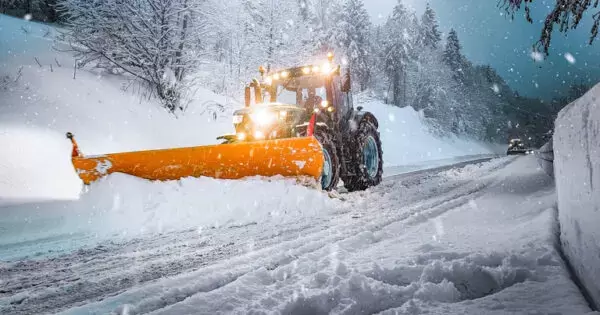
For the past month, the weather in my area near Baltimore has been horrible. We got about a foot of snow in the mid-Atlantic, but much of it did not melt for about three weeks because temperatures were so low.
Life has been on hold quite a bit in the last several weeks, as a huge blizzard, Winter Storm Fern, left about a foot of snow in the area. It was not the foot of snow that completely disrupted daily life — it was the freezing temperatures for the next two weeks that left the snow and ice unable to melt.
As a marathon runner, I could not run outside for a whole two weeks. The day it snowed, I was able to run. There were no cars on the roads, and most of my neighbors were shoveling the snow or clearing off their cars. I was able to help some neighbors shovel snow to get their cars out or clear their walkways, but the day it actually snowed was much more doable than any other day. After that, no sidewalks were plowed, so I had to run on the street. There was not enough room on some streets for me and the cars, and weaving in and out of traffic was a bit too dangerous.
Unfortunately, we do not have a treadmill at home, and I have to go to the gym for the treadmill. I would go to the gym and spend 20 minutes trying to find a place to park the car, which was very difficult. I go to a gym with various locations, where my wife was participating in some swimming-related exercises, which did not have as many treadmills.
There were people waiting for the treadmills, and I was there trying to run 20 miles or longer for more than two hours at one point. I felt incredibly rude and lacking gym etiquette as a result, which I probably was, but I did cut my run short at a crowded gym where I was taking up too much time.
As for clearing the sidewalks and roads in my neighborhood, I “shoveled” for an entire week and a half after the storm. I put that in quotes because after the first day, it was rarely shoveling anymore. The snow had turned to mixed snow and ice chunks, so solid and hard that the best thing I could do was try to break it up and throw it somewhere.
I tried to do this in chunks and increments, but one day, I did this for a long time, and my arm hurt badly. I live on an alley and am a pretty able-bodied person, so with my neighbor, we used his metal shovel to break up the ice and other shovels and our arms to throw the ice elsewhere. This cleared the alley enough that cars would not slide and skid (as much) when they leave the alley, so I made some contributions to my neighborhood before just moving on with my life.
My car has all wheel drive, so once I could shovel out my car, I did. Only my car could leave the house and driveway, but my wife’s could not for a whole week. It did not have all wheel drive either. Thus, we were left with only one car that could drive around the city covered in snow and ice. Since my wife still works as a teacher, she had to drive to and from work. I could take the week to work from home due to my commute from Baltimore to Washington, D.C. being too challenging.
Since we never lost power, the only things I would leave the house for were going to the gym and shoveling. Unfortunately, my work-from-home environment was not comfortable at all due to poor insulation in the house and the house only getting to 60 degrees Fahrenheit on some days, but it was nothing a jacket and another layer of pants couldn’t alleviate.
. . .
The week or two after got better, but slightly. Most of the snow did not melt, and had largely turned into ice. I was eventually able to get my wife’s car out of our alley, but it slid and skidded quite a bit, so I had to be pretty careful. Say what you want about gender roles, but as the husband, I did feel a bit obligated to assume the risk of driving the less safe car in the snow.
I had to drive slower, be more careful, and largely avoid exercising outside, but life went 75% back to normal. I was supposed to run a five-mile race the week after the storm. Unsurprisingly, given the snow and ice, it got rescheduled for two weeks later. When we did run it, the course got modified significantly. The same happened the next week, even when the snow was almost gone.
Now, the moment almost all of it melted, and the snow and ice finally cleared the sidewalks, it started snowing again. It seems to be about a few inches of snow, much better than last time, and fortunately, all of it melted a few days later. This is much better than much of the northeast.
But we’re still feeling the aftereffects. Last week, I went over a pothole that was so bad it damaged the bottom bumper of my car. The snow and ice had dried up a bit, and most of the road had dried up at this point, but, like any blizzard, many potholes were left on the road. I felt a huge bump going over this point of the road, and I saw a new rip in the bumper paint and a dent at the bottom of my bumper the next day.
I was pretty mad about this pothole, so I went to the scene of the pothole and took about a dozen photos of it from different angles to file a claim to possibly be reimbursed for the damage. In Baltimore, the local Department of Transportation made a campaign to repair the potholes, called Operation “Pothole Blitz,” which made me realize there could be thousands of people trying to file claims about pothole damaging their cars, and that my chances of success would be slim. Still, I insist that I have to shoot my shot and try.
In my area, school was canceled at almost all public schools for a whole week. It made sense — some of the sidewalks were plowed, but the roads were not. There was ice everywhere, so it would not have been safe for kids to walk to school.
Even the week after, roads were mostly plowed, but many sidewalks remained covered in snow and ice, so I saw a lot of outrage over the decision to open a week later. Photos circulated on the local subreddit of kids walking across bridges on sheets of ice. I get why the school systems decided to open — life had to go on, and due to the temperatures that week, the ice and snow were not going to get any better, but I also get that commuting to school was not safe for so many students.
My area is the type that is prepared for a few inches of snow, but not a foot of snow, and it also usually relies on the weather being above freezing to clear most of the snow and ice. Thus, this type of consistent freezing weather was an anomaly for the area. While the Northeast may have done a better job plowing sidewalks, our region was not as well-prepared.
Thus, nothing for the past month or so has been normal, and this is the most disruptive a major weather event has been in my life for a long time.
. . .
Only Hurricane Sandy in 2013 interfered with daily life as much as this last snowstorm. I grew up in New York, and my dad and I stayed home in New York at the time. My mom and my brother were on a Caribbean island when he was attempting medical school. Stupidly, a friend and I went on a run while the hurricane was going on. We ran maybe a mile or two before we heard a big snap from nearby tree, and then both agreed it would be a good idea to run home.
Once there, things were fine, except, like a lot of hurricanes, a ton of wind and rain that we could hear from the house. Some time in the afternoon, we heard a huge pound and shaking in the house, and I looked outside and saw that a tree had fallen on the roof of the garage. It seemed like staying upstairs was too risky at that point, so we moved to the basement.
Soon, we lost power, so we mostly survived on flashlights for a bit. We went without power for about two weeks. I remember that during that time, I ate an absurd amount of Pop-Tarts and had some digestive issues as a result. School was closed, and my county championship cross country meet got canceled because the hurricane was so bad that it removed a section of the cross country course from land to the water. Over the next couple of years, a bridge was built to replace the moat. To complete schoolwork, I would go to the hospital’s library, and I recall the news during this time showing Midtown, Manhattan, without a single working traffic light.
We were much better off than a lot of people who suffered worse damage. This tree that fell on the garage roof also blocked off the cars from getting out of the driveway for two weeks. Fortunately, one car was parked on the street and was able to get out, but once the storm was over, we had to hire a tree removal service.
I remember being out of power for so long and just having to adjust. My diet and sleep certainly suffered, but it was the lack of connection from not being in school for a while, not having any contact with friends during that time. But life eventually went back to normal when we were able to go back to school, so even the most disruptive hurricane in my region in my lifetime was not life-changing.
. . .
I think talking about the weather is valuable because people have a universal, shared experience. It’s probably a bit of an understatement to say we’re a bit divided right now as a country, and the weather can be seen as a great equalizer.
In truth, the weather is not. It disproportionately impacts the homeless and people without easy access to electricity or gas.
This winter storm was probably a lot worse because of the cold. Even compared to Hurricane Sandy, I felt a bit, well, guilty. I could be warm in the house, had the option to work from home in my cushy, white-collar job as a lawyer at a law firm, had a car I could drive places safely and not worry about slipping, and more.
Although my commute was often delayed, sometimes for an hour or more, I drove past a lot of people who had to walk on the street because there was no sidewalk, probably fearful at times that a driver who was too distracted or driving too fast would hit them. I was inconvenienced, but never in danger.
It can be hard and overwhelming because I struggle to break out of my usual routines. But I have never encountered a life-changing hurricane, tornado, or earthquake, even though I know people who have. This last month of disruption from snow, ice, and freezing temperatures was just another reminder to take nothing for granted.
—
This post was previously published on The Partnered Pen.
***
You may also like these posts on The Good Men Project:
 White Fragility: Talking to White People About Racism |
 Escape the “Act Like a Man” Box |
 The Lack of Gentle Platonic Touch in Men’s Lives is a Killer |
 |

If you believe in the work we are doing here at The Good Men Project, please join us as a Premium Member today.
All Premium Members get to view The Good Men Project with NO ADS.
Need more info? A complete list of benefits is here.
Photo credit: iStock

