


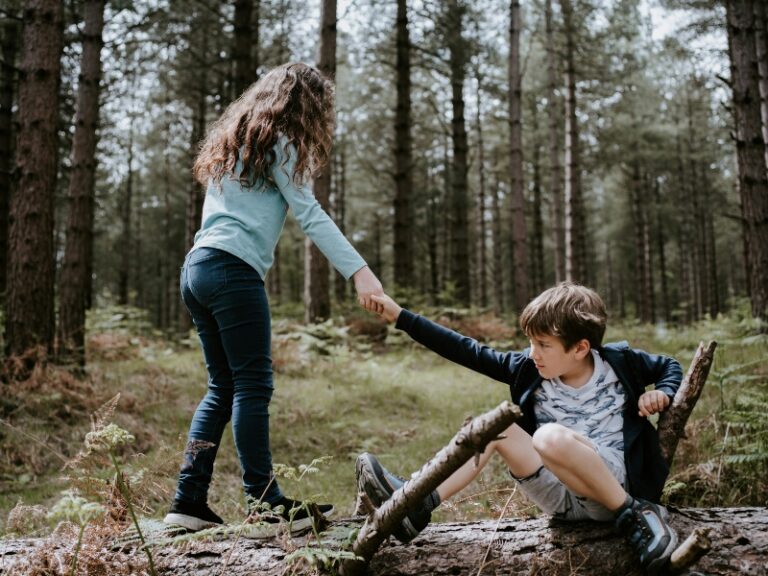
Yesterday, as I was adjusting the seatbelt in my car, I watched an elderly man drop a bag of groceries outside a supermarket. An orange rolled into the parking lot. Then another. Then a third. Cars continued moving around him. People walked past. Everyone seemed busy with somewhere else to be.
A young girl eventually stopped.
She picked up the oranges, gathered the groceries and carried the bag to the old man’s car. It probably took her less than two minutes. The elderly man thanked her several times. The young girl shrugged as if she had done nothing important. Maybe she hadn’t. Maybe that is exactly the point.
We often imagine making the world a better place as something enormous. We picture ending wars, solving poverty, saving the planet, reforming governments or discovering some brilliant solution that finally persuades humanity to stop behaving like humanity. Those things matter.
But there is another version of changing the world that is much less glamorous. It begins with what we do when nobody is watching.
We Underestimate Small Kindness
We don’t need to become saints. Saints probably have terrible group-chat conversations anyway. We simply need to become slightly more considerate human beings. Hold the door when someone’s hands are full. Let someone merge into traffic. Check on the friend who has gone unusually quiet. Thank the person who cleans your office. Listen without immediately preparing your own response.
These gestures seem insignificant because they don’t solve enormous problems. But human beings don’t experience life as statistics. We experience it one interaction at a time.
Research supports this surprisingly ordinary idea. A meta-analysis covering 27 experimental studies and more than 4,000 participants found that performing acts of kindness had a small-to-medium positive effect on the well-being of the person performing them.
Another study found something even more interesting: people who perform kind acts tend to underestimate how positively those acts affect the recipients.
In other words, we may be doing more good than we realize. That message matters because we often dismiss our own ability to make a difference. We think, What can one person possibly do? Perhaps more than one person thinks.
Pay Attention to the Invisible Suffering Around You
We live surrounded by people whose suffering is often invisible. The colleague smiling through a divorce. The neighbor who hasn’t spoken to anyone all week. The teenager eating lunch alone. The parent who says, “I’m fine,” because explaining the truth feels exhausting.
We can be surrounded by people all day and still feel completely alone. That isn’t just a feeling experienced by a few isolated individuals. Social disconnection is a problem far larger than most of us realize. A better world therefore isn’t only one with cleaner streets and better policies. It is one where fewer people feel invisible.
So, ask better questions.
Not merely, “How are you?”
Ask, “How are you really doing?”
Then stay long enough to hear the answer.
Stop Wasting What Someone Else Desperately Needs
There is something philosophically uncomfortable about waste. We throw away food because we don’t like leftovers, while someone else is wondering where their next meal will come from.
According to the United Nations Environment Programme, the world wasted 1.05 billion tonnes of food in 2022, almost one-fifth of the food available to consumers. Households accounted for about 60% of that waste.
That doesn’t mean you need to feel guilty about every banana that becomes suspiciously blackish-brown. It means we should become more conscious consumers. Buy what you will actually eat. Repair something before replacing it. Donate things that still have useful life. Carry a reusable bottle. Take only what you need.
The philosophical principle is simple: having the ability to waste something doesn’t mean we have the moral obligation to waste it. Our resources are not entirely ours. They are borrowed from the future. Give people dignity, not just charity. Charity can feed someone for a day. Dignity can change how someone sees themselves.
If you have the means, donate. Support reputable organizations. Buy from ethical businesses when possible. Help someone struggling financially. But also think about how you help.
Don’t humiliate people while helping them. Don’t turn someone’s difficult moment into content for social media. Don’t photograph every good deed. Sometimes the most compassionate thing you can give someone is the feeling that they haven’t lost their worth simply because life has become difficult.
Global poverty remains enormous. The World Bank reports that hundreds of millions of people still live in extreme poverty, while billions remain poor by higher poverty thresholds. We cannot personally solve global poverty. But we can refuse to make poverty more humiliating for the person standing in front of us.
Learn To Disagree Without Becoming Cruel
One of the world’s most underrated skills is being able to say:
“I disagree with you, but I don’t hate you.”
We have somehow turned disagreement into warfare. Someone votes differently, worships differently, thinks differently, earns differently or lives differently, and suddenly we behave as though civilization itself has been threatened. It hasn’t.
You can challenge someone’s argument without attacking their humanity. You can change your mind without losing your dignity. You can admit, “I was wrong.” That last sentence should probably be taught in schools.
A better world requires people who can disagree without dehumanizing one another. Because once we stop seeing another person as a human being, almost any cruelty becomes easier to justify.
Volunteer Your Time, Not Only Your Money
Money is useful. Time is personal. You can donate money while remaining emotionally untouched. Giving your time requires showing up. Help at a community center. Tutor a child. Visit an elderly person. Clean a local public space. Help a neighbor. Mentor someone beginning a career. You don’t need superpowers and a cape, all you need is the willingness to help make someone’s life a little easier.
The United Nations Volunteers’ 2026 report estimates that around 2.1 billion people, 34.5% of the global working-age population, volunteer every month worldwide. Much of this is informal, everyday help that never makes headlines.
That statistic gives me hope. Because beneath the arguments, outrage and endless bad news, billions of people are quietly helping other people. Most of them will never become famous for it. Perhaps they don’t need to.
Leave Something Better Than You Found It
There is an old question about what kind of world we want to leave behind. But perhaps we don’t need to think on such a grand scale. We can start by asking what we leave behind in the places and lives we touch every day.
Did the person you spoke to feel a little lighter after the conversation? Did you make someone’s difficult day harder or easier? Did you leave your workplace, your neighborhood, or even a simple conversation slightly better than you found it?
We don’t control governments, economies or the course of history. We do, however, have some control over the way we behave in the small spaces we occupy. We can choose to listen instead of dismissing someone. We can help without expecting applause. We can admit when we’re wrong, apologize when we’ve caused hurt and resist the temptation to make someone else’s bad day our opportunity to be cruel.
The world may never remember most of these choices. It probably shouldn’t. A good deed doesn’t become more valuable because someone noticed it.
The young girl who picked up those oranges probably forgot about the incident before she reached home. The old man probably didn’t.
Maybe that is how goodness actually spreads. One person makes another person’s day a little easier, and that person carries a little more patience into their next conversation. The effect is almost invisible, but it doesn’t have to be dramatic to matter.
A better world isn’t created only by extraordinary people doing extraordinary things. It is also shaped by ordinary people deciding, again and again, to leave the people and places around them a little better than they found them.
Thank you for taking the time to read. It means a lot.
Ansel
—
This post was previously published on medium.com.
Love relationships? We promise to have a good one with your inbox.
Subcribe to get 3x weekly dating and relationship advice.
Did you know? We have 8 publications on Medium. Join us there!
***
–
Photo credit: Annie Spratt on Unsplash

