


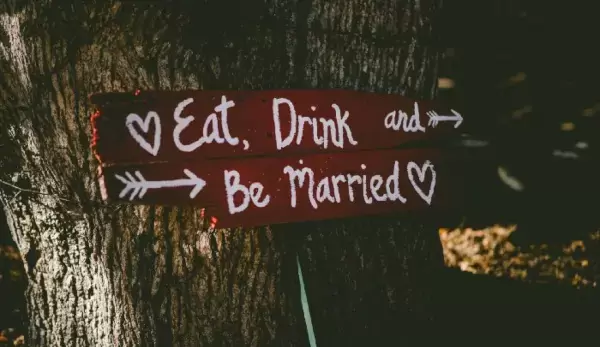
Modern weddings are a riot. They don’t make sense. At once traditional, conservative, religious and full of contractual agreement sanctified by someone’s god and our government, they are also totally obsessed with fashion, sex, music, food, dance, and money, all within the context of love and family. I attend every single one I’m invited to. How could anyone want to miss such a perplexing ceremony?
The sacred event has made a fresh impression in my life recently. I went on a deep dive into the history of marriage for an assignment right as I was preparing to attend a dear friend’s wedding. Going to the event with such a fresh take on the evolution of marriage made it especially… strange. And wonderful. Awe inspiring, really, that we still honor these traditions and feel no remorse in blending more and more deviant modern life into many of these time-honored (read: antiquated) traditions.
There we were, many heads bowed in prayer for supporting the new couple to uphold their holy bond to each other and be blessed by the ideological power of their choice. Then, as is the modern day trend, the language of vows started but more personal — some borrowed phrases of the past, sure, but mixed with more mutually beneficial promises (and less of that “obey” stuff) with some choked up, sweet lover confessions about friendship, respect, honor and everlasting commitment. Aw. So sweet. We all got teary with them. Love is fun.
Not two hours later bridesmaids were hiking their dresses to Lil Jon’s growling voice proudly spouting about the sweat drippin’ down his balls (his words not mine, ew), how much he likes to see all those hoes’ asses and titties, and can they sock it to him one more time.
No one batted an eye. The wedding party was born in the 90s, what did we expect for their high school throw-back songs? Apparently, professing your love in that most innocent and pious way with grandma present was not mutually exclusive to enjoying a good ol’ misogynistic male gaze rap song celebrating ball sweat and reducing women to fuck toys in a club. Literally, that’s what happened. Suddenly the reminder that marriage developed as a means of owning women as property didn’t seem so far off. Sure, sure… we totally care about respect. Unless disrespect has a sick beat behind it.
My feminist fire aside, I tend to just laugh at it. We are now so good at bastardizing tradition and choosing what lens to see it through, I take all the overly serious “I do” stuff with a grain of salt and just enjoy the love party. Too much emphasis on the forever mumbo-jumbo and I’m out. Frankly, I don’t care if this is forever. And probably too much pressure considering the divorce rate. But a love party? Hell yeah, definitely in.
Half the fun of modern weddings is just the design experience, right? Walking around, commenting on how this couple chose to do things and wow, the table settings, and oo, the pretty archway. It’s an Instagram heaven these days. Weddings are about a couple and their undying love, sure, but also, where’s the themed photo booth so I can remember my experience here like a one-day nuptial Disneyland? Excuse me, where are the outdoor party games and dance floor, hello? God literally forbid we get bored at this holy ceremony.
To be sure, for a lot of modern couples, the hype of how to be different is actually part of the fun. Weddings are the ultimate style guide reveal and we’re all here to witness the amazing party throwing skills. And ya know what, I’ll admit I feel a thrill seeing something that was once so sacred and careful be treated like a drunk party bus in Vegas with taco trucks by the end sometimes. It’s probably the only way I can stomach it.
Truthfully, these traditions are mostly nonsense. We should do whatever the hell we want with them. Because –
The Sex
What used to be hugely important about a wedding (virginity nonsense and the fact that hetero couples were probably gonna start makin’ babies) is now not so much the emphasis, thank goodness. Couples are almost annoyed at it now, offended that that would be the only reason they’re getting married. The funny thing is, we seem to still feel obligated to some Ghost of Virgin Past and perform aspects of the ceremony that really don’t need to be done.
For modern couples who have likely been sleeping together for a while now, I ask you, do we really need to see you playing naughty sex games in front of us all? The whole garter toss and lap dance portion of weddings that seems to accompany it is so friggin’ strange. We’re all pretending like this is some new erotic adventure when really, we were talking about their UTI last month and exchanging recommendations on lube.
Take it a step further and let’s say they are virgins (which is cool too) and are doing this in front of everyone. Um, creepy. We’re watching someone go through an uncomfortably intimate hormone surge, our eyes glued to watching her upper thigh area while the groom crawls his way up her dress, sometimes with his teeth, then proceeds to fling his new wife’s garment to a crowd of single men.
What the what, you guys. This is dumb.
Celebrating sex is not dumb, I just really don’t know if the actual wedding day is the place to do it anymore. If sex is a newly important part of being married for anyone, why ruin the day building anticipating for something that quite likely, is utterly destroyed by something like a wedding? Nothing kills an erection like partying as hard as possible with all the pressure of the most important people in your life reminding you of how good sex is supposed to be — oh, wait, but then all the married couples remind you of how quickly your sex life dies after you’re married. Have fun with that conundrum.
Weddings are just awkward here, because of course they are. Look at who’s there! Celebrating your sex life, in front of your family and all your friends, tends to come out in a confusing way. We treat it with secretive kiddie gloves as if we don’t want to disrespect the past by saying anything outright (can you imagine vows that include making sure she also orgasms on the regular?), but then we very obviously allude to it at every turn. It’s just weird.
People, we’ve grown. The fornicating part, for many couples these days, is really not what this ceremony is for at all, which is actually very cool. If you need sex advice, for the love of Cupid, don’t get it at the wedding. While sex (and it’s angel counterpart, virginity) used to be a slightly more controlling and misogynistic aspect of a marriage that made something “serious”, the more important aspects of partnership — mutual respect, personality connection, emotional support, family building in some cases — feel like the focus now. I’m into that. Let’s just focus on that at the wedding. Too many creepy uncles around anyway.
The Dress
In many traditional Indian weddings, the dresses are either colors from their region of origin or red to symbolize happiness and good luck. That makes a lot of sense. The tradition and the meaning go hand in hand.
For European/Western weddings, expensive white dresses are the standard, but the meaning is… disappointing. Nowadays, it’s really for no other reason than that it’s a pretty image drilled into our western culture as appropriate, beautiful and follows the glorification of specialness for the day. White dress = bride. The meaning has transcended into just a marker for the person wearing it. A big, white dress says, “Look at me! I’m the special one! I’m the queen today!”
Wait, queen? Well, yes. Most young brides would not necessarily describe their desire to wear white in relation to their deep affinity for emulating European royalty from the 1800’s if you asked them straight out, but that’s where it pretty much comes from (as well as standing out in black and white photography). And I certainly don’t think it reflects most people’s chaste purity, as many an interpretation will point to. Wearing a dress to signify virginity is not trending on Twitter last I checked.
So, white? Really? But but but… it’s so angelic and preeeetttyyyyyyy. It’s true. You’re pretty, you brides. It’s an unusual and often extravagant (read: uncomfortable) kind of dress in a very problematic color for normal day-to-day life so in that respect, yes, it’s a special day.
When couples are spending big, I feel a tad grossed out by the money part of the dress personally, but when I’m asked to gush at a friend, I play along happily and can’t help but celebrate in their bridal catwalk fun. Whatever, right? It’s their day. It’s their money. I’ll pretend like I don’t know about their student debt and STD’s for a day. Just admit it, the white dress is pretty… but slightly stupid in origin.
The Ring(s)
The symbol of the circle and physical marker of partnership doesn’t bother me in the slightest when it comes to wedding rings. I don’t think it’s necessary to signal to the world that you’re single or not, but I also don’t care that much. Many couples like having something meaningful between them, designing something special, or feeling connection through the mutual participation. That’s nice. I get it.
For hetero couples, women want to be treated as equals in their relationships, I’m hearing. However, we still subscribe to weird ideas of proposals, rings and lopsided gift giving. Why men (still, proposals are mostly done by men, sigh) propose with an engagement ring that only the female wears, why it needs to be expensive or why it needs to be a gaudy huge thing is totally opposite of what healthy partnership is. I hate that we equate large financially stupid things with the symbol for marriage. Fight me on that.
Buy a huge ring because you like it and because it’s pretty. Not because it symbolizes the amount of love you have for each other. When shit hits the fan, the only thing that ring’s good for is its value at a pawn shop. You still have to deal with you. Also, whatever happened to that whole love is not proud, love does not boast verse? Are we done with that now, or…?
While we’re at it, if a woman gets to/has to wear a ring during engagement, why doesn’t a guy do it? Is this perhaps playing into the tradition of gender power stereotypes, hmmm???
The Gender
For all the years of human marriage up until very, very, very friggin recently, marriage has been about a man and a woman with two sets of traditionally man and woman parents. Gender difference was highlighted and celebrated (in more than one creepy way) and many parts of the ceremony reinforced a lot of gender stereotypes.
Even now, with generations totally accepting of same sex coupling and friend groups consisting of a variety of gender identities, the separation of genders and little bits of gender specific performances are also astonishingly still a thing. We apparently really like to see the bride with all the gals and the groom with all the guys, the mother-son and father-daughter relationships highlighted. Every opportunity to play into this kind of gender choreography for friends and family is taken advantage of. The much older generations seem to revel in it. I’m bored with it.
Side note: Queer weddings and families get to redefine all of this and frankly, we could take a lesson there.
Even all the events leading up to the day are sort of strangely gendered. Thank goodness men are being invited to baby showers now, because if there was ever a moment to let them know they are expected to be equals, um, this would be the time.
In terms of traditional gender performance, weddings are very didactic in a sense. What people do, where they’re positioned, who gets to do what (I was an amazing flower girl in my day *hair flip*) how they proceed down the aisles, when they get coupled and when they stand together in gender — not much changes from ceremony to ceremony really. I’ve seen very few actual variations on this whole thing. A gay guy with the bridesmaids sometimes, sure. Not winning any trophies there.The implication still bothers me.
The more I examine why these gendered norms exist the more I see the sexist stereotypes of the past creep their way in. Both sides are brutal, really. Men, with their bachelor parties encompassing the idea they need a last night of “freedom” before the shackles of full time commitment ruin their sex lives forever. Women with their lingerie parties supposedly preparing them to be the most alluring bride the world has ever seen and learning all the secrets to pleasing and keeping a man.
Now, I’m not saying all ceremonial traditions can go to hell, but I am saying look at where some of these things came from. Then you can decide for yourself if your dad walking you down the aisle feels like a transfer of ownership. Most everything in western weddings comes from a mishmash of misogyny, sexism, witchery, religion and superstition that we’ve cleverly disguised as “proper”. I would love to see some newer traditions that reflect our shift in society and look like us now. Wedding planners are creative people. I’m sure they can find ways to mix it up.
The Meaning
Now this part, this is where I get feisty.
For the sake of this rant, I’m leaving religion out of things. You’re religious and need marriage? Fine, I can’t help you there. You do you, those are totally different sets of rules I also don’t understand.
I’m also going to simply say, weddings that celebrate legal marriage, by nature, uphold the common belief in monogamy. But that’s another post for another day.. I’ll just lay out that pretty little fact and move on for now.
I can definitely see why marriage needed a ceremony when it was about money, politics, power and property so some sort of law could be applied. That does require a contract and some hubbub. Of course it does! The thing is, we are convinced — and this is backed up by Pew research — that we are marrying for love now and all that other stuff is just part of the gig when you decide to love one person more than anyone else forever.
Love. What could be more complicated to build an indefinite contract around than only the most powerful emotion of all time? Holy shit. What have we done, haha.
The million dollar question here is — what does a wedding mean? Why do we need to get married when we love each other?
The answer for modern couples is not about having or getting love, the number one reason people say they marry for. Unless we’re talking about arranged marriages, love is already there in spades (hopefully). Marriage, the institution, is not about love at all. If it was, we would just have love parties, celebrating the feeling (again, can’t say this enough, I am down for that).
Marriage as it stands is absolutely about a contract governments recognize that involves politics, money, healthcare and decision making power and that’s what a wedding marks in time. So let’s just get that straight. I think we have a hard time with this so we focus on the love part, but I’m not sure why. The more realistic we are about what the meaning is, the smarter we can be about it. (Also, this is partly why queer people wanted to fight for it. Validation of the acceptance of queer love in the social and the legal sense — the contracts!!)
The ceremony is a bit of a confused, candy coated story. We focus a lot on the always-love-you part, but our vows should really be saying, because I love you so much, I want you to have these rights and privileges that are very fucking intertwined with mine. That’s what the contract is. No one can measure your love, really. But you can try to prove it with some legally binding shit.
Marriage shouldn’t be creating love or making it stronger, but that’s what weddings seem to imply. I hold the belief that if marriage didn’t exist, we would still love each other and find partners, make families and love them just as dearly (and leave them just as much). Here’s a fun question — if legal marriage didn’t exist, would more or fewer couples have a wedding if it was just about love and personal promises?
If our modern day rate of divorce is showing us anything, it’s about what little value legal marriage has nowadays on the love we claim to have at the start. Love is, all powerfully, directing marriage and not the other way around. When we take away stigma, misogyny and religion from the pressures of staying married, we’re left with what the true markers of partnership are. There is a case to be made that legalizing love places some intense pressure on people to stay together and that could be a good thing considering the sometimes fickle nature of love, but is that the kind of relationship we want? The mentality of “locking it down”? Is that what true love is? It needs a contract to keep it alive?
Interestingly, you don’t have to be in love with someone to get these contractual things, unless it’s about citizenship. Love was only a reason for marriage in very recent years. Before that, the contractual things were far more important for most families (including genetic heirs), which makes love being the number one reason for marriage all the more vital to think about. That’s not what the arrangement was built around. We now believe romantic love is an appropriate reason to trust people with our lives. I don’t necessarily disagree. It’s definitely progress, as far as women’s rights and freedoms are concerned, however, love is a complicated and mysterious thing and not everyone loves in the most, ahem, healthy ways.
Weddings are not about love alone, and that’s okay if we’re being honest about it. When we congregate to celebrate the union, we’re upholding a tradition that maintains a common belief in society that marriage and weddings are good. Remember, marriage in the legal sense is about contracts and privileges set by the government, which reward monogamous couples and families, believing they create strength in society in myriad ways. Some folks are still 100% in. Great! Bring on the contracts then.
The Contract
So, you love someone so much you want to sign all the contracts with them, have a big party and make it binding. (I guess not everyone idolizes Goldie Hawn and Kurt Russell with their “making the choice every day” mentality like I do.) You’re going all in, baby, this is it! Combine everything and get all the goods and make it really hard to separate! Combine your sex lives with your wallets and get tax breaks and own stuff together and make babies and pay for them together, whoohoo!
Is it wise to only have one person be responsible for all this? Not because I’m doubting your love is strong, but because… it’s actually unhealthy and unwise from a happiness perspective?
Sure, the love we’re hoping we’re talking about with marriage is more than lusty passion or puppy love infatuation. It’s love that can withstand growth, obstacles, children, pain and physical decline. That’s why you trust this person with these contracts. Those parts of the vows and this part of marriage — that one person is now responsible for all these other parts of our lives because of love — is also pretty crazy though.
Weddings celebrate a newly permanent couple and their desire to care for each other. In modern society where we’ve lost our village sized support networks, are we doing them a disservice by believing they no longer need support after this? Is a wedding some sort of scary last hurrah where everyone says… goodbye?
I know in my friend circle, that has only been the case a little bit, for some, but the difference is drastic. The amount of socialization and participation outside of their couple life and couple goals turns inward and friendships weaken.
There’s a case to be made that modern marriage is isolating folks from staying in larger, more supportive networks that could share the load of all these big life things we’re talking about. This Atlantic article did a superb job of taking a harder look at the institution and questioned what we think marriage does for us in terms of filling loneliness and having support.
Why do we want to place our whole life on one person legally? Why does one love partner have to carry such a load? I’m curious what society might look like if the designation of husband and wife were not legal terms anymore and held the same meaning as someone introducing a “partner” in society (that seems to be the most popular term for unmarried but serious coupling). Would the contracts portion be taken with more thoughtful care I wonder?
We choose the whole package at once because it’s easier, it’s tradition and the European tradition comes from women being owned as property and not having any rights or ability to get out of it. Thank goodness for women’s suffrage and that marriage has morphed into a somewhat more equal partnership, but that’s why there is such a heavy burden.
I do wish we had more people finding alternative ways to love deeply and not feel pressured to contractualize every aspect of their lives with it all at once. The whole shebang is truly antiquated, but I’m not sure how we get around weddings feeling like success stories. They are so friggin’ fun, after all.
I suppose I imagine a future where we have more couples building out their support networks with friends and family, separating out the contracts and obligations a little instead of signing a one-and-done. (For the last time, where are my love party people at?!)
Even in extraordinarily anti-establishment mindsets, the folks I’ve heard rail against marriage… are then admittedly married. They feel powerless against the institution’s benefits, not to mention the cultural mindsets of most partners. Marriage is still, for many, a prize to be captured and goal to be achieved.
…
So marriage (not love or commitment) is a little defunct maybe and the party that accompanies it is a little confused and overbearing. It needs some work. Parts of it are cool (yay, love!) and parts of it could be reassessed. (Tax breaks, really? They already split rent.)
But at least it gives us an excuse to party down?
And hey, I’m just spitballing here. I definitely want to come to your wedding. What kind of cake did you choose?
—
This post was previously published on medium.com.
***
You may also like these posts on The Good Men Project:
 White Fragility: Talking to White People About Racism |
 Escape the “Act Like a Man” Box |
 The Lack of Gentle Platonic Touch in Men’s Lives is a Killer |
 |
—
Photo credit: Ben Rosett on Unsplash

