


—
This content is for informational purposes only and is not intended to provide legal advice.
After a bicycle crash, document the scene before leaving if you are physically able and it is safe. Focus on preserving details that can disappear quickly, while getting medical attention and staying out of traffic.
Denver is the capital of Colorado and a consolidated city and county. It sits about a mile above sea level, at roughly 5,280 feet in elevation. The city has an established network of bicycle facilities, but that doesn’t mean that accidents never occur.
If you need help with handling a bike accident claim in Denver, working with a skilled attorney and careful documentation can make the crash easier to reconstruct and help you build a strong case.
1. The Roadway and Location
Start with wide photographs or video showing the entire scene. Capture street names, intersections, bike lanes, traffic signals, crosswalks, construction, and anything blocking visibility.
Record the approximate time, weather, lighting, traffic conditions, and road surface. Potholes, debris, faded markings, wet pavement, or blocked lanes can provide important context.
Colorado’s bicycle rules are found in C.R.S. § 42-4-1412, which covers bicycle operation. Roadway documentation can help show how those rules and conditions applied to the crash.
2. Vehicles, Bicycle, and Damage
Photograph the bicycle and every involved vehicle before anything is repaired or moved, when safe. Take wide and close-up images of:
- Frame, wheels, handlebars, pedals, brakes, and lights.
- Vehicle damage, license plates, make, model, and color.
- Apparent points of contact.
- Tire marks, broken glass, debris, and displaced equipment.
- Final positions of the bicycle and vehicles.
Keep the bicycle, helmet, clothing, and equipment in their post-crash condition. Do not discard, repair, or modify them before they are properly documented.
3. Driver and Witness Information
Exchange information with the driver and record their name, contact details, license information, insurer, policy number, registration, and plate number. Photograph documents when permitted rather than relying only on handwritten notes.
Witnesses can be valuable when accounts conflict. Get their names, phone numbers, email addresses, and a brief description of what they observed.
Also look for cameras that may have captured the crash, including:
- Businesses and homes.
- Doorbell cameras.
- Traffic cameras.
- Buses and delivery vehicles.
- Nearby motorists with dashcams.
Record the location of potential video sources promptly because footage may be overwritten.
4. Your Injuries and Immediate Account
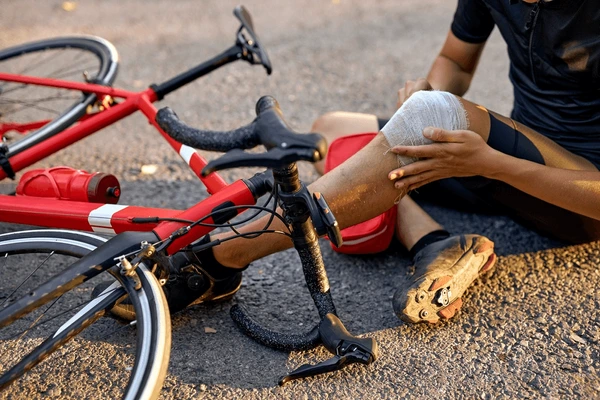
Photograph visible injuries such as cuts, bruising, swelling, road rash, torn clothing, and damaged gear. Note dizziness, confusion, numbness, or pain and when each symptom began.
While your memory is fresh, write a factual account covering your direction of travel, lane position, traffic signal, approximate speed, what the other vehicle did, and the impact sequence. Stick to what you actually know and avoid guessing about fault.
Seek medical care even when injuries initially seem minor. Medical records can document the connection between the crash and your injuries.
5. Police Response and Report Information
If your bicycle accident involves an injury, death, or property damage, state law may require the crash to be reported to police. When officers arrive at the scene, note the responding agency, officer’s name, or badge number, and ask for the police report or incident number for future reference.
A police report can be an important piece of evidence because it documents information gathered at the scene. It may include the exact location, date, time, statements from those involved, witness information, and the officer’s initial observations of the accident.
Final Takeaways
- Photograph the roadway, traffic conditions, and surrounding area.
- Document damage to the bicycle, vehicles, and personal belongings.
- Collect driver, witness, and potential camera information.
- Photograph injuries and record what happened while it is still fresh.
- Get the police report or incident number when officers respond.
—

