


—
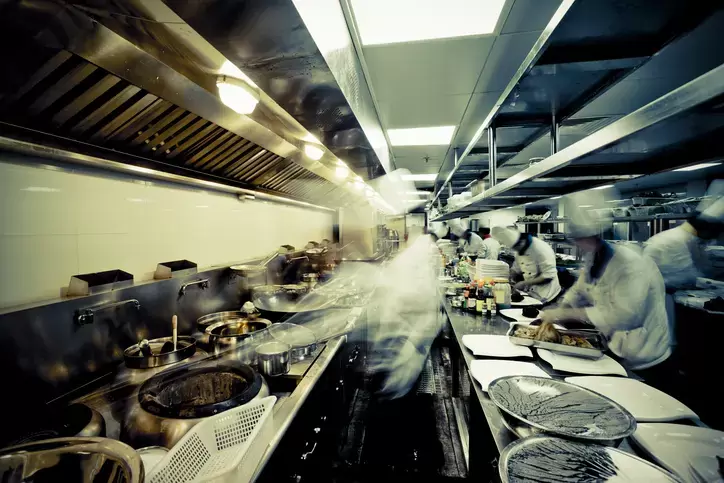
The doors at a CloudKitchens facility never really stop opening. Delivery drivers move in tight loops between the parking lot and pickup counter. Inside, stainless steel stations hum with heat and motion. Screens flash order numbers, prep times, and platform logos. At peak dinner hours, the pace tightens. This is not a shared commissary drifting through a slow afternoon. This is a high-volume ghost kitchen built to handle sustained pressure without losing control.
A busy shift begins before the first order hits the system. Each private kitchen inside the facility belongs to a single restaurant brand. The infrastructure is already in place. Gas, water, power, ventilation, and hoods are standardized and maintained by CloudKitchens. Operators bring their own recipes, teams, and brand standards. There is no front of house. No dining room to manage. Everything here is oriented toward delivery, pickup, production, and catering.
As orders go live across delivery apps, they do not arrive as noise. They arrive organized.
Order Aggregation as the Control Center
In a high-volume ghost kitchen, chaos starts when orders fragment. One tablet for each app. Competing alerts. Missed tickets. CloudKitchens avoids that scenario through centralized order aggregation.
All incoming orders flow into a single system. Uber Eats, DoorDash, Grubhub, and other platforms feed into one interface. Kitchen staff see a unified queue that updates in real time. Prep times adjust dynamically. Items out of stock are flagged across all platforms at once. There is no guessing which tablet belongs to which order.
This aggregation matters most during rush periods. When volume climbs toward 40 or 50 orders an hour, visibility becomes the difference between speed and backlog. Staff can sequence tickets based on promised delivery windows rather than arrival order alone. That allows kitchens to batch similar items, manage fry times, and pace output without rushing individual dishes.
The screens do not shout. They inform. Color coding highlights urgency. Timers count up rather than down, showing how long an order has been in the system. Managers watch the same data from a higher level, tracking throughput and identifying slow points before they become failures.
Movement Without Congestion
Inside the kitchen, movement is deliberate. Each station has a defined role. Proteins fire at one end. Assembly happens at another. Packaging sits closest to the handoff zone. Because there is no dine in traffic, the layout is optimized for linear flow.
This matters when volume spikes. Cooks do not collide with drivers. Drivers never enter prep areas. Finished orders leave the kitchen only once, sealed and labeled. The physical design reduces friction before speed ever becomes an issue.
CloudKitchens facilities are designed around these flows. Wide corridors accommodate constant foot traffic. Pickup shelves are clearly marked by brand and order number. Lighting is bright and functional. Noise exists, but it is contained. Timers beep. Ventilation hums. Conversations stay short and operational.
There is pressure, but it is managed pressure.
Quality Control Happens Before the Bag Leaves
High volume does not excuse mistakes. In fact, volume amplifies them. A single error repeated fifty times becomes a customer service problem by midnight.
Quality control in a CloudKitchens environment is layered. First, restaurants maintain full control over food preparation. Their staff cooks the food. Their recipes dictate execution. Each kitchen is private, not shared, which protects consistency.
Second, packaging standards are enforced at the handoff point. Orders are checked against receipts. Tamper evident seals are applied. Items are counted, not assumed. Drinks and sides are verified before bags move to the pickup shelf.
Third, timing is monitored. If an order sits too long waiting for a driver, the system flags it. On site teams can intervene, communicate with drivers, or coordinate a remake if necessary. The goal is not just speed. It is accuracy delivered at the right moment.
This process replaces the traditional front of house quality check. There is no expo window. Instead, quality control lives at the intersection of kitchen output and delivery logistics.
The Driver Handoff Is a System, Not a Guess
Delivery drivers arrive constantly. Some are early. Some are late. Some are new to the facility. Without structure, this becomes the fastest way for mistakes to slip in.
At CloudKitchens, driver handoff is handled by on site fulfillment teams. These teams act as traffic controllers. They verify order numbers. They direct drivers to the correct pickup area. They prevent drivers from grabbing the wrong bag during busy moments.
Drivers do not wander. They follow a process. Orders are staged logically. High volume brands have dedicated shelf zones. Staff monitor dwell time and communicate delays when necessary.
This separation allows kitchen staff to stay focused on cooking. They are not answering questions at the door or managing driver impatience. The fulfillment team absorbs that complexity so the kitchen does not have to.
During peak hours, this division of labor becomes essential. One team cooks. One team coordinates logistics. Neither is distracted by the other.
Real Time Analytics Guide Decisions Mid Shift
The difference between a smooth night and a spiraling one often comes down to information. CloudKitchens facilities operate with real time analytics visible to operators and managers.
Order volume by minute. Average prep time. Driver wait time. Order accuracy trends. These metrics update continuously. If prep time creeps upward, managers see it immediately. If one menu item slows the line, it becomes obvious within minutes.
This allows for in shift adjustments. Staff can be reallocated. Menu items can be paused. Prep strategies can change on the fly. Decisions are made based on data, not instinct alone.
For brands scaling across multiple locations, these analytics also create consistency. A successful workflow in one kitchen can be replicated elsewhere. Best practices travel faster when they are measurable.
On Site Support Keeps the System Running
Behind the scenes, CloudKitchens manages the facility itself. Maintenance issues are addressed without pulling operators away from service. Cleaning schedules keep shared areas functional. Security manages access and flow.
This support matters most during high volume periods. When equipment fails or infrastructure falters, speed disappears. By handling the environment, CloudKitchens allows restaurants to focus on execution rather than facilities management.
Importantly, CloudKitchens does not supply restaurant specific equipment. Operators bring what they need beyond the standard infrastructure. That balance allows brands to maintain their own standards while benefiting from a managed environment.
Why 50 Orders an Hour Does Not Mean Chaos
Handling 50 orders an hour is not about moving faster. It is about removing friction. Each system inside a CloudKitchens facility exists to reduce decision points and prevent errors before they happen.
Order aggregation eliminates tablet overload. Defined kitchen layouts prevent congestion. On site fulfillment teams manage driver flow. Quality control is embedded into the process. Real time analytics guide adjustments. Infrastructure is stable and maintained.
The result is not silence or calm. It is controlled intensity. The kind that experienced operators recognize as sustainable.
For restaurants, this environment makes growth tangible. High volume delivery becomes something that can be planned, staffed, and repeated. For customers, it translates into consistent food arriving when expected. For drivers, it means predictable pickups.
Ghost kitchens are often discussed in abstract terms. Inside a working CloudKitchens facility, they are anything but abstract. They are physical, busy, and disciplined spaces built around one goal. Delivering food at scale without losing control.
—

