


—
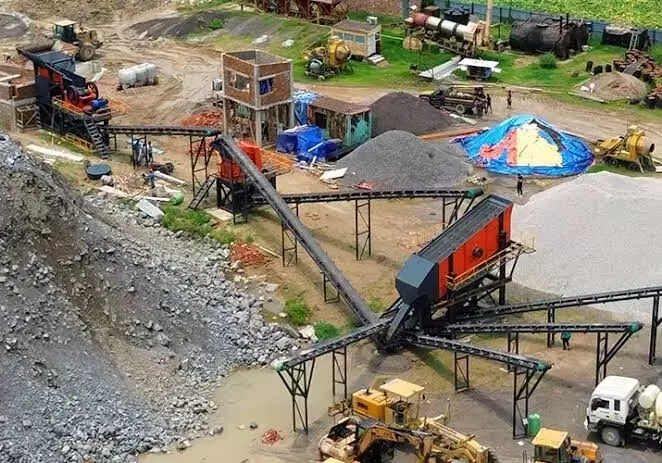
A stone crusher plant is a kind of setup majorly used in sand making, construction material production, highways, roads and bridges in a variety of industries, such as railway, metallurgy, civil engineering. The plant has the ability to process a variety of raw materials including limestone, granite, basalt, quartz stone, diabase and so on. It can produce aggregate of different sizes, which can be used for making road base, rail road ballast, low grade highway construction and building filling, etc.
With the increase in population worldwide, the need for stone crusher plant has also increased tremendously. In these developments, businesses, contractors, engineers and others will find the information it provides on the working principles of stone crusher plant useful for making essential decisions on their aggregate requirements.
What Is a Stone Crusher Plant?
A stone crusher plant is a bunch of machines and equipment used in the processing of stones and construction materials. Rather than purchase lots of different machines, it is preferable to purchase a complete plant that does the job. For more information, visit www.uniquemacglobal.com.
It is a stone crushing production line with a capacity of 60 tons per hour. It can be used to produce rock aggregate and machine-made construction sand. This machine-made construction sand has a lot of advantages compared with the naturally formed construction sand and it is suitable to be used in highway, urban, hydropower, and other construction works.
How Does a Stone Crusher Plant Work?
The working principle is relatively simple. Large stones are usually delivered to the working site by truck and dumped into a stone storage area. They are then fed into the crusher plant by a loader.
1. Feeding
Raw material flow is regulated by a vibrating feeder or similar equipment into the primary crusher. Even feeding allows optimal handling of the material and prevents loading of the equipment beyond capacity.
2. Primary Crushing
Jaw crushers are commonly used in the first stage of crushing large and hard materials, as large and hard materials are typically encountered in this stage.
The main goal of primary crushing is to reduce the size of the raw materials to fit in the subsequent stages of crushing.
3. Secondary Crushing
After the primary crushing, the material often goes through the secondary crushing. In this stage, the material can be processed by several different types of crushers depending on the material and the desired end product.
The goal of secondary crushing is to achieve relatively smaller and more uniform crushed material.
4. Screening
Vibrating screens allow different sized crushed material to be separated according to size. Coarse materials are returned to the crusher for further crushing, while crushed material of the correct size is diverted to stockpiles or further processing.
In construction, different sizes of aggregates are used and necessary. This is where screening is essential.
5. Conveying and Stockpiling
Crushed materials are transported through conveyor belts to various stages of the processing plant. Finally, materials are transported to stockpiles.
Simplifying the movement of materials through a system and reducing unnecessary handling can increase the efficiency of the system.
Common Types of Stone Crushers
Depending on the type of raw material and the desired end product, different types of crushers can be employed.
Jaw Crusher
Jaw crushers work by applying force on both sides of a rock to crush it between a fixed jaw and a moving jaw. Many hard materials acquire their strength through abrasion. Jaw crushers are therefore well suited for hard and abrasive materials. They are also effective in the other primary stages of crushing.
Cone Crusher
Cone crushers are used in secondary and tertiary crushing stages. Fine crushing is typically accomplished at these later stages. Cone crushers are ideal for producing aggregate that is both uniform and of a higher quality.
Impact Crusher
Certain aggregate shapes can be produced by an impact crusher. They produce aggregates with reduced wear on the moving components. This is due to the predominate crushing by impact.
Vertical Shaft Impact Crusher
Finer aggregates are a by-product of vertical shaft impact crushers. They are ideal for the finer crushing and manufacturing of sand
Types of Stone Crusher Plant Configurations
Stone crusher plants can be configured in a variety of ways.
For long term aggregate production and quarry operations, a stationary stone crusher plant may be ideal.
A mobile stone crusher plant is designed to relocate. This allows construction projects and useful for operating sites that are temporary or where the source of the material may change.
Some systems combine the best aspects of both stationary and mobile configuations.
Factors to Consider When Setting up a Stone Crusher Plant
A great number of factors come into consideration when choosing or designing a plant for crushing.
Raw Material
Factors like the abrasiveness and moisture content, hardness, and size of raw material can affect the performance of a crushing plant.
Required Capacity
When considering capacity needs, a few hundred tons per day versus large aggregate processing are completely different scenarios and have different equipment needs.
Desired Product Sizes
The end use of the aggregate dictates the size needed. Examples could be aggregate used to make concrete, asphalt, or the road base for the construction of a road.
Site Conditions
Available space, access roads, power, drainage, site amenities, and the transport of the raw material should be part of the design of the aggregate plant.
Maintenance Requirements
Reliability of the crushing operation is based on the regular inspection and maintenance of the crushing plant. Wear parts, belts, screens, and bearings also require critical attention.
Importance of Screening in Aggregate Production
When considering aggregate production, size is not the only important consideration. Screening accurately helps ensure a consistent product, and also reduces oversized and undersized material in the product.
A properly selected screening system can also improve the efficiency of the crushing circuit by removing materials that do not meet specification.
Environmental Considerations
Aggregate production enables the construction of roads, but produces dust, noise, and vibrations during the process. Stationary and transfer operations also require the addition of controls to reduce the generation of dust and vibrations if environmental control is a consideration.
Safety Considerations
Like any production operation, crushing stone is replete with numerous safety hazards from machinery, equipment, maintenance, and construction activity. Safety is paramount when considering the potential hazards.
Operators must receive adequate training on the equipment and use the equipment in combination with required personal protective equipment. Additionally, operators must use lockout and isolation during maintenance and stay out of the danger zone. Defined operating procedures further reduce workplace hazards.
Automation in Modern Crushing Plants
In modern crushing plants, automation is the future of aggregate processing. In conjunction with automated controls and sensors, remote monitoring and the collection of production data will allow operators to assess equipment performance and diagnose hidden problems.
Automation of common functions does not eliminate the need for operators with knowledge of the equipment and the plant process. Automation improves the visibility of the process and helps operators achieve a more consistent level of plant performance.
Components of an Aggregate Processing Crusher Plant
The aggregate crushing process is much more involved than just installing crushers. Included in an aggregate processing crusher plant are feeders, conveyors, screens, dust control equipment, and an adequate and safe plant support system.
Equipment Specifications and Functional Plant Layout
Equipment specifications, along with the functional layout of the plant, should be evaluated based on the project. Other resources should be consulted prior to basing the design of the project and equipment procurement solely on the supplier’s website.
Factors Affecting Stone Crusher Plant Performance
The performance of a stone crusher plant is dependent on factors such feeding, crushing, screen size, conveying, maintenance, and the management of materials.
The factors mentioned above must be evaluated prior to the selection or design of a crushing plant. Regulatory and safety standards also must be considered. A good design of a crushing operation helps operators control operational costs while maintaining optimal performance and safety of the plant equipment.
Conclusion
A basic understanding of the concepts described is useful to people researching stone crushing equipment, aggregate processing, and modern stone crusher plant designs.
—

