


—
Dry ice tends to conjure images of Halloween fog machines and science experiments. But this frozen form of carbon dioxide has far more practical applications than most people realise — from keeping your groceries cold during a power outage to cleaning industrial equipment without chemicals.
What Is Dry Ice?
At its core, dry ice is simply carbon dioxide in solid form. It is frozen at -78.5 degrees Celsius and has a unique property: it sublimates, meaning it transitions directly from a solid to a gas without ever becoming liquid. That is where the name comes from — it stays dry.
For a deeper look at the science behind it, this article on what is dry ice covers the fundamentals and safety considerations.
What makes dry ice genuinely useful is that combination of extreme cold and clean evaporation. There is no residue, no mess, and no water left behind.
Shipping and Cold Chain Logistics
This is where dry ice earns its keep commercially. When frozen or temperature-sensitive goods need to be shipped — whether that is meal kits, pharmaceuticals, or biological samples — dry ice maintains ultra-cold temperatures far longer than regular ice.
Unlike gel packs or wet ice, it does not melt into liquid, which means packaging stays dry and contents are protected from water damage. For anyone who has received a subscription meal box or frozen seafood delivery, dry ice was almost certainly involved.
Emergency Cooling During Power Outages
Here is a practical one. When the power goes out and your freezer starts warming up, dry ice can keep food frozen for 24 to 48 hours depending on the quantity used. A few kilograms placed on top of the food in a closed freezer buys you significant time before anything starts to thaw.
This is particularly relevant for rural properties or areas prone to storm-related outages. Keeping a supplier’s contact details handy is a simple piece of household preparedness that most people overlook.
Cleaning Without Chemicals or Water
Dry ice blasting has become an increasingly popular industrial cleaning method. Pellets of dry ice are propelled at high speed against a surface, and the rapid temperature change causes contaminants to contract and separate from the underlying material.
The beauty of this approach is that the dry ice sublimates on impact — there is no secondary waste to clean up, no water to manage, and no chemical solvents involved. It is used in food processing facilities, manufacturing plants, and even fire restoration work.
For homeowners with workshops or anyone who restores vehicles or machinery, dry ice blasting services are becoming more accessible and affordable.
Pest Control
This is one that surprises most people. Dry ice is used in pest management, particularly for controlling ground-dwelling pests like rodents. The CO2 gas released as dry ice sublimates displaces oxygen in burrow systems, providing a chemical-free method of pest control.
Some councils and pest management professionals now use this technique as an alternative to traditional poisons, particularly in areas where secondary poisoning of wildlife is a concern.
Fog Effects and Events
Yes, the theatrical use is real and legitimate. Dropping dry ice into warm water produces a dense, low-lying fog that is non-toxic and dissipates naturally. It has been a staple of event production for decades.
But it is not just for concert stages. Home entertainers use small quantities for cocktail presentations, themed parties, and photography. The effect is dramatic, and because the fog is simply cold CO2 and water vapour, it is safe in well-ventilated spaces.
Removing Dents and Tiles
Among the more unexpected applications: dry ice can help remove small dents from vehicles. Applying dry ice to a dent causes the metal to contract rapidly, and in some cases the dent pops back into shape. It does not work on every dent, but for minor dings it can save a trip to the panel beater.
It is also used to remove floor tiles and adhesive residues. The extreme cold makes adhesives brittle, allowing tiles to be pried up more easily without damaging the subfloor.
Handling Dry Ice Safely
A few essential safety points, because this is not regular ice:
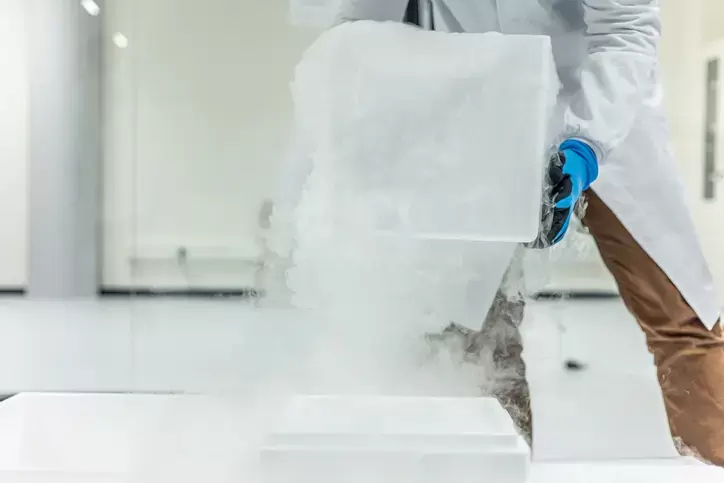
- Never handle with bare hands— the extreme cold causes frostbite on contact. Always use insulated gloves
- Ventilate the area— as dry ice sublimates it releases CO2 gas, which can displace oxygen in enclosed spaces
- Do not store in airtight containers— the pressure buildup from sublimation can cause a sealed container to rupture
- Keep away from children and pets unsupervised
More Useful Than You Think
Dry ice sits in that category of things most people know about but few truly understand. Its combination of extreme cold, clean sublimation, and versatility makes it one of the more practical substances available — whether you are shipping temperature-sensitive goods, dealing with a blackout, or just trying to make your next backyard gathering a bit more memorable.
—

