


—
Small apparel businesses have become an important part of today’s creative economy. From custom t-shirts and hoodies to personalized promotional items, many entrepreneurs build profitable brands by offering unique products tailored to specific audiences. While creativity and branding are essential, the foundation of any successful apparel business lies in its production setup. The tools used throughout the customization process directly influence product quality, consistency, and long-term scalability.
This article explores the essential tools commonly used by small apparel businesses and explains how thoughtful equipment selection supports efficient workflows, professional results, and sustainable growth.
Understanding the Apparel Customization Process
Every apparel customization business follows a structured production workflow. Although methods may vary, most processes include design preparation, material handling, application, and finishing. Each stage relies on tools that must work together seamlessly.
When equipment is poorly matched or unreliable, even small issues can disrupt the workflow. Inconsistent results, wasted materials, and production delays are common problems that can damage customer trust. For small businesses operating with limited margins, these challenges can significantly affect profitability.
Understanding how tools fit into each stage of production helps business owners create workflows that support both quality and efficiency.
Design and Printing Equipment
Design preparation is the starting point of apparel customization. Digital design tools allow business owners to create artwork, adjust sizing, and ensure proper placement before production begins. Accurate designs reduce errors and improve overall efficiency.
Printing equipment is then used to prepare transfer designs that will later be applied to garments. Consistency at this stage is critical. Variations in color, alignment, or resolution can lead to rejected products and increased costs. Reliable printing tools help maintain uniform output, especially when producing multiple items in a single order.
For small apparel businesses, investing in dependable design and printing tools lays the groundwork for professional-quality results.
Cutting and Material Preparation Tools
Material preparation is an often underestimated step in the production process. Cutting machines, trimming tools, and preparation stations ensure garments and transfer materials are correctly sized and aligned before application.
Clean preparation reduces material waste and prevents alignment issues during application. For businesses handling frequent orders, proper cutting tools save time and minimize costly mistakes. Well-prepared materials also contribute to smoother workflows and more predictable results.
Efficient preparation allows operators to focus on quality rather than constantly correcting errors.
Heat-Based Transfer Equipment
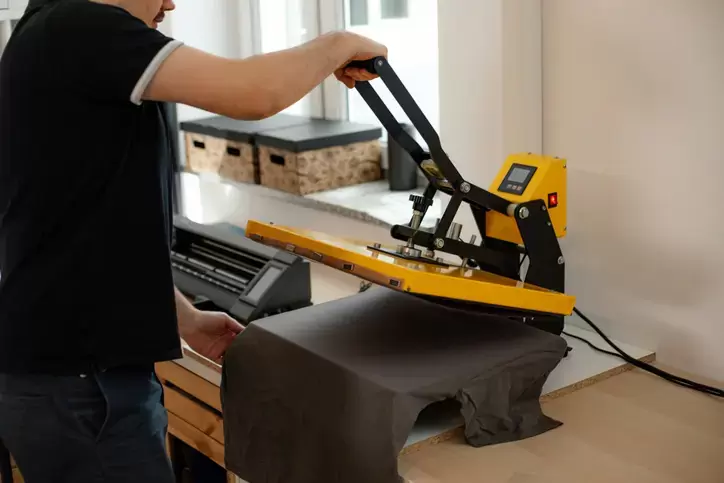
Heat-based transfer equipment is one of the most critical tools in apparel customization. This equipment applies controlled heat and consistent pressure to bond designs securely to fabrics. Without stable temperature and pressure, transfers may peel, crack, or fade after washing.
A detailed heat press machine guide explains how heat press machines work and why precise heat and pressure control are essential for producing durable, professional-quality apparel.
Using proper heat-based equipment allows small businesses to deliver products that meet customer expectations and withstand regular use.
Why Equipment Quality Matters for Small Apparel Businesses
Small apparel businesses often operate with limited resources, making efficiency and reliability essential. The right equipment offers several long-term benefits:
- Consistency: Uniform results across different orders and production runs
- Efficiency: Reduced manual effort and faster production times
- Durability: Fewer breakdowns and lower maintenance costs
- Scalability: Ability to handle increased order volumes
Equipment designed for professional workflows supports business growth rather than creating limitations as demand increases.
Long-Term Benefits of Investing in Professional Tools
While entry-level tools may be suitable for beginners, their limitations often become apparent as businesses grow. Professional-grade equipment helps reduce variability in production, which is especially important for businesses working with repeat customers or wholesale clients.
Consistency builds trust, and trust leads to stronger brand reputation and customer loyalty. Reliable tools also reduce operator fatigue by minimizing manual adjustments and repetitive troubleshooting.
Although professional equipment may require a higher initial investment, the long-term cost of ownership is often lower due to improved efficiency, reduced waste, and longer service life.
Overcoming Common Production Challenges
Small apparel businesses frequently encounter challenges such as inconsistent results, material waste, and limited production capacity. These issues are often linked to tool selection and workflow design.
Uneven heat application, inaccurate preparation, or unstable pressure can all lead to defective products. Over time, these problems increase costs and negatively affect customer satisfaction. Identifying weak points in the production process allows business owners to make targeted improvements.
By focusing on reliable tools and structured workflows, small businesses can overcome these challenges and establish production systems that support consistent quality.
Building a Scalable Apparel Production Workflow
Scalability is a key concern for growing apparel businesses. As demand increases, production systems must handle higher volumes without sacrificing quality.
Scalable workflows rely on tools that deliver predictable results and integrate smoothly into daily operations. Equipment that supports repeatable processes allows business owners to focus on marketing, customer relationships, and product development rather than constantly adjusting production methods.
Planning for scalability early helps businesses avoid costly upgrades and disruptions later.
Learning From Industry-Focused Resources
Research plays an important role in equipment selection. Businesses that take time to understand tools, compare features, and learn from experienced sources make better decisions.
Platforms such as DTF Bank
provide insights and solutions designed for modern apparel customization and small-scale manufacturing workflows.
Access to reliable information helps business owners avoid common mistakes and choose tools that align with long-term goals.
Final Thoughts
Small apparel businesses succeed when creativity is supported by dependable tools. From design and preparation to heat-based transfer equipment, each stage of production benefits from reliable machinery.
By understanding how tools contribute to the overall workflow and investing in equipment that supports consistency and efficiency, small apparel businesses can deliver high-quality products, build customer trust, and grow with confidence over time.
—

