


—
It usually starts with the walks. The dog who once pulled at the leash stops at the corner, looks back, and waits. The man holding the leash notices and says nothing. He turns around.
For many men, the first signs of an aging dog are quiet ones: a slower trip down the stairs, a longer pause before the jump onto the couch, and a nap that starts earlier in the afternoon. A dog in his later years asks for a different kind of attention than the one who once needed to burn off energy every evening.
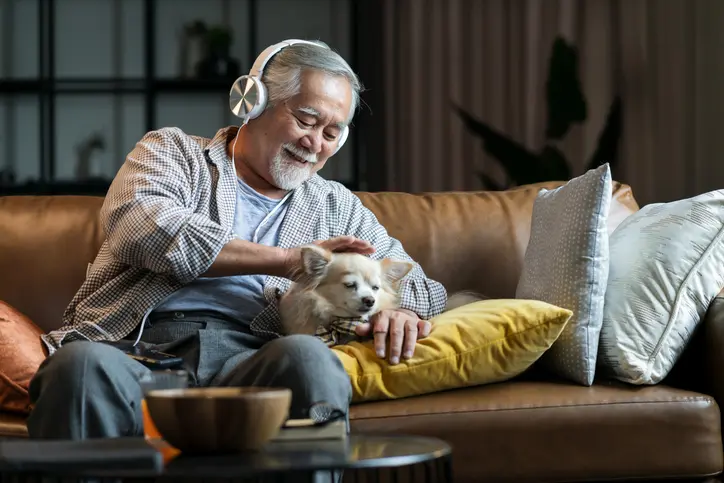
And somewhere along the way, the relationship begins to change. The dog who spent years following his owner everywhere now needs someone to slow down for him. It’s a small adjustment at first, but it can teach a man something about patience, responsibility, and what it really means to care for someone.
Small Changes That Make the Days Easier
Most of what helps an older dog doesn’t require a major overhaul. Slippery floors can be difficult for stiff legs, so a few rugs or runners can provide better traction. A ramp can replace a jump onto the couch or into the car, while a soft, supportive bed gives aging joints a more comfortable place to rest.
Routine matters, too. Older dogs may benefit from more frequent bathroom breaks and a predictable schedule. Walks can become shorter and slower, with the dog setting the pace. If he seems uncomfortable or reluctant to move, a vet can help determine whether pain or another health issue is involved.
None of these adjustments is particularly dramatic. But together, they ask a man to rethink what makes a good day. It may no longer be about how far they walked or how much energy they burned. Sometimes a good day is simply one where his dog is comfortable, safe, and happy to be beside him.
When the Accidents Begin
A dog who has been house-trained for years may suddenly start having accidents. Sometimes it’s a puddle by the door. Other times, it’s a wet bed in the morning. It’s easy to focus on the mess, but harder to accept what it may mean: the dog who once managed everything on his own is beginning to need more help.
New accidents shouldn’t simply be dismissed as old age. Pain, urinary problems, mobility limitations, and other health changes can all play a role, so a conversation with the vet is an important first step.
There are practical ways to make things easier, too. HoneyCare, for example, offers absorbent dog diapers and male wraps designed to help manage leaks and accidents. Adjustable, fur-safe fasteners and wetness indicators can make daily care more manageable, provided the products fit properly and are changed regularly.
The goal isn’t just to keep the floors clean. It’s to help an older dog stay comfortable while adjusting to changes he can’t control. And for his owner, it’s a chance to respond with patience rather than frustration.
Making the Most of the Time
There’s a particular sadness in watching a dog grow old, even while he’s still beside you. You notice the things he can no longer do and catch yourself remembering when they were easy. It’s tempting to push those feelings aside, but there’s nothing wrong with acknowledging them. Loving an aging dog means appreciating the time you still have, even when you know it won’t last forever.
Perhaps that’s one of the harder lessons. You can’t stop the years from passing or give him back the energy he had as a puppy. But you can make sure the years he has left are filled with the same care and companionship he’s always known.
After years of unconditional love, enthusiastic greetings at the door, and unwavering loyalty, it’s your turn to return that love with a little extra patience and care. The walks may be shorter and the days a little slower, but there’s still plenty of room for familiar routines, extra cuddles, and the quiet comfort of simply being together.
—

