


—
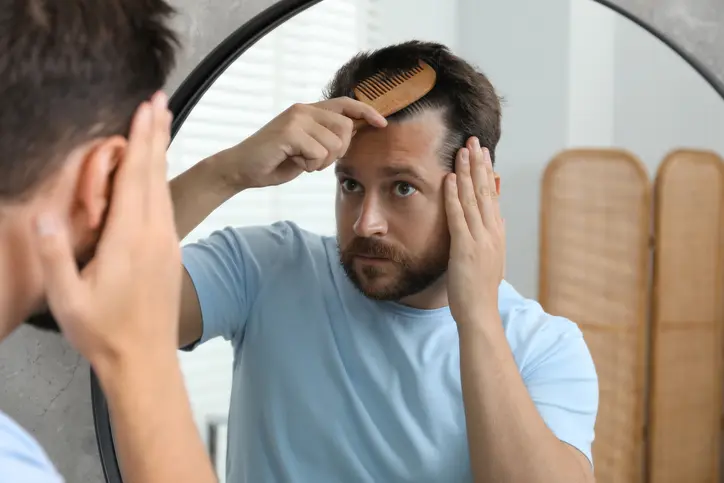
Most men can remember the moment. A photo taken from above at a wedding, a harsh light in a hotel bathroom, a barber holding up the mirror a little longer than usual. The hairline you had always taken for granted is not where it used to be, and you notice yourself checking it in every reflective surface for weeks afterwards. Then you say nothing to anyone.
It is one of the most common experiences in a man’s life and one of the least discussed. Around half of men show signs of male pattern hair loss by the age of 50, and for many it starts in their twenties. The good news is that the options have never been better, from simply owning a shorter cut to treatments that slow the process down, and a modern hair transplant that now looks so natural most people would never guess. What has lagged behind is the conversation.
The Joke That Isn’t Really a Joke
Men are allowed to talk about hair loss in one way: as a joke. Friends rib each other about receding hairlines, and the man on the receiving end laughs along. It is a familiar pattern. Humour lets us acknowledge something without admitting it bothers us.
But for plenty of men it does bother them, sometimes a lot. Hair is tied up with how we see our youth, our attractiveness and our sense of who we are. Feeling that slipping away is not vanity. It is a perfectly human response to change, and it deserves to be taken as seriously as any other part of looking after ourselves.
Confidence Is the Real Story
Ask men who have dealt with their hair loss, whichever way they chose, and the same word comes up again and again: confidence. Some found it by shaving their head and never looking back. Others found it by taking action to keep or restore their hair. The common thread is that they stopped quietly worrying and made a decision.
That is the healthiest place to land. There is no right answer, only the one that lets you stop thinking about your hairline every time you walk past a shop window.
How Far Treatment Has Come
For men who do want to keep their hair, the picture has changed enormously. The obvious, plug-like transplants that gave the procedure a bad name belong to another era. Today’s techniques move individual follicles from the back and sides of the head, where hair is naturally resistant to loss, to the areas that have thinned.
Sapphire FUE uses fine sapphire-tipped blades to create tiny channels for each graft, allowing dense, carefully angled placement that follows the natural direction of growth. DHI goes a step further, implanting grafts directly with a specialist pen, which suits smaller areas and can often be done without shaving the whole head. Recovery is measured in days rather than weeks, and the results grow in as your own hair, which you can cut, style and forget about.
Cost and access have shifted too. A procedure that once meant a long trip abroad is now widely available closer to home, often with fixed-price packages, aftercare and follow-up appointments included.
Starting the Conversation
If your hairline has been on your mind, the first step is simply to say it out loud. Talk to your partner, a friend, your GP or a specialist. A good consultation should feel like a conversation, not a sales pitch: someone looking at your hair, your family history and your goals, and explaining honestly what is possible.
Whatever you decide, the decision itself is freeing. Men are getting better at talking about their mental health, their relationships and their bodies. Hair loss deserves a place in that conversation too, without the punchline.
—

