Recent reports of the schooling experiences of Black students in elementary, middle and high school in Toronto tell a story of negligence and disregard. This disregard includes a lack of access to appropriate reading materials and supportive relationships with teachers and administrators.
In conversations about their school life, Black students talk about adverse treatment by their teachers and peers, including regular use of the “n-word.”
These issues contribute to alienating and problematic school days for Black students. And none of this is new: racism in Toronto and Ontario schools has been ongoing for decades.
The students [I spoke with] were fiercely articulate and often deeply moving…. They don’t understand why the schools are so slow to reflect the broader society. One bright young man in a Metro east high school said that he had reached [the end of high school] without once having a book by a Black author [assigned to him]. And when other students, in the large meeting of which he was a part, started to name books they had been given to read, the titles were Black Like Me and To Kill and Mockingbird (both, incredibly enough, by white writers!). It’s absurd in a world which has a positive cornucopia of magnificent literature by Black authors. I further recall an animated young woman from a high school in Peel, who described her school as multiracial, and then added that she and her fellow students had white teachers, white counsellors, a white principal and were taught Black history by a white teacher who didn’t like them…
More than two decades later, reports continue to show that school boards do not meet the educational needs and interests of Black students and parents.
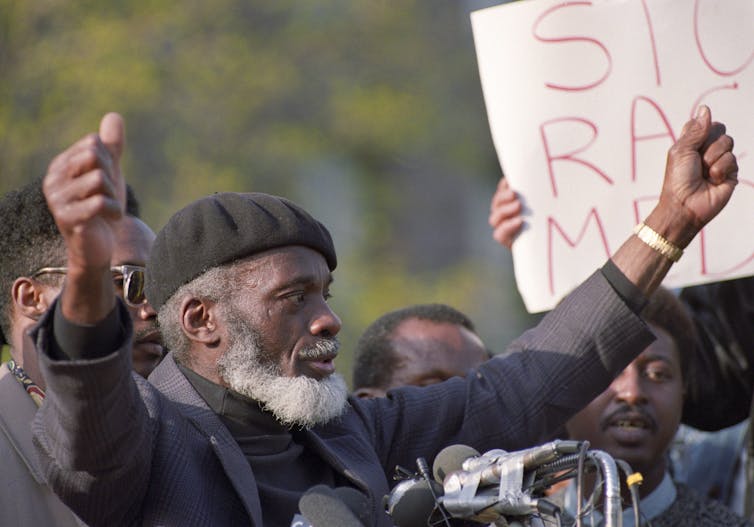
Dudley Laws, a founding member of the Black Action Defence Committee, speaks to a ‘stop anti-Black police violence’ rally at Queen’s Park in Toronto in May 1992 after several shooting deaths of Black youth by police. The Canadian Press/Hans Deryk
Two years ago, I led a study to examine the schooling experiences and educational outcomes of Black students. We surveyed 324 parents, educators, school administrators and trustees. We talked to Black high school and university students in the Greater Toronto Area (GTA) who participated in the five community consultations we held in four school districts.
Participants echoed what students said 20 years ago in the Lewis report. Black students say they are “being treated differently than their non-Black peers in the classrooms and hallways of their schools.” They say there is still a lack of Black presence in schools. There are few Black teachers, the curriculum does not adequately address Black history and schools lack an equitable process to help students deal with anti-Black racism.
Participants said they perceived a more punitive discipline of Black students. They also said they observed the “streaming of Black students into courses below their ability level.” They said Black students were discouraged from attending university.
Last year, I conducted another study with Black elementary, middle and high-school students in the Peel District School Board (PDSB), a multiracial district in Ontario. This study produced the same list of concerns.
Not belonging
Students reported being called the “n-word,” as they put it, by “people who are not Black.” This use of racial epithets adds to an already alienating educational climate for many Black students.
One middle school student said: “People are getting too comfortable with saying that n-word.”
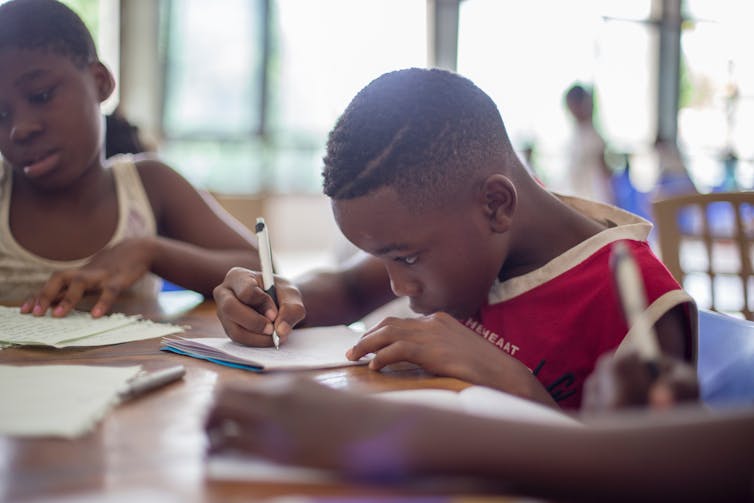
The use of the ‘n-word’ seems to be on the rise, even in middle schools. Unsplash
A high school student shared his reaction to being called the n-word:
Don’t like ads? Become a supporter and enjoy The Good Men Project ad free
“I recall one time where I almost slapped this guy [for using the n-word]; but I was like: ‘Nah! I’m not going to let this happen or let him disturb me like that.”
Like Black students before them, their experiences contributed to their “sense of un-belonging” and a schooling environment that made learning problematic, tough and challenging.
Beyond Toronto, Black students and their parents are similarly complaining about the use of the n-word across Canadian public schools: Several news reports tell of parents in school boards in York, Ottawa, Montréal and Halifax.
One Montréal mother told CTV news that in an argument with his classmate, her son was called “the n-word” by a white student. The mother went on to say: “I’m at war with the systemic racism that occurs at the school.”
CBC Kids News published a story about two Black Grade 12 students in Nova Scotia who gave presentations to their peers across the province about being called the n-word. One of the presenters, Kelvin, said the word is commonly used to “hurt” and put him down.“ He said the word and its implications had not been taught by teachers in any of his classes.
That the “n-word” brings health and safety implications as well as deep consternation to Black students should be a concern that teachers take up. Teachers need to examine course materials for their content and impact on students’ learning.
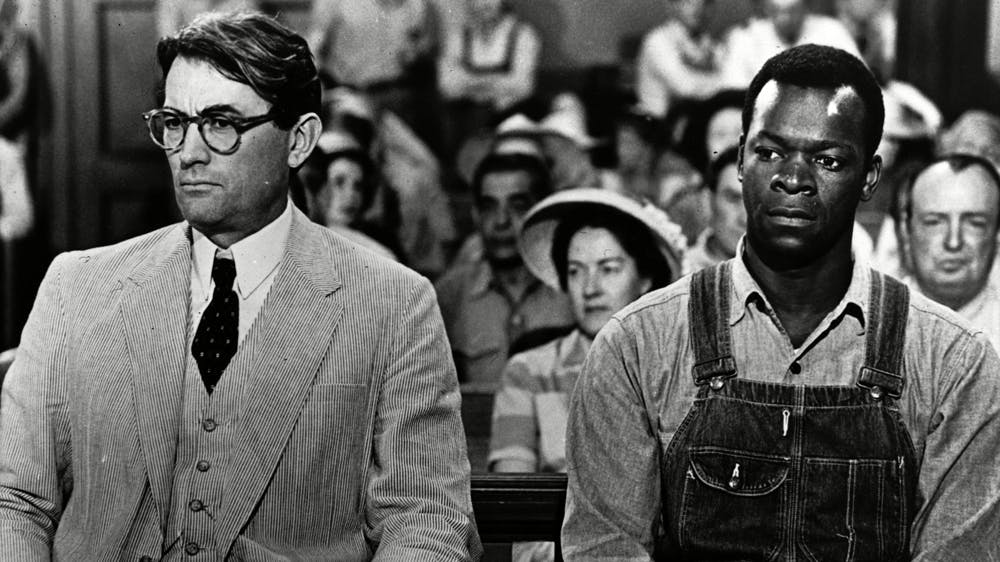
An image from the movie, ‘To Kill a Mockingbird.’ Shutterstock
These are texts that Canadian students might find difficult to relate to their lives. These texts become especially problematic when it is the only time that the lives of Black people are mentioned in class.
Don’t like ads? Become a supporter and enjoy The Good Men Project ad free
All teaching material must be continuously re-assessed in relation to historical, political and social contexts. Materials must also be evaluated for their ability to pertain to the realities of Black students in today’s classrooms.
The experiences of all students must be centred and the knowledge, needs and aspirations they bring into the classroom considered.
This is the same recommendation Stephen Lewis made in 1992.
Teaching materials must also be evaluated for their ability to pertain to the realities of Black students in today’s classrooms. Shutterstock
Responsive learning spaces
As Poleen Grewal, associate director of the Peel District School Board pointed out, it is not just about the texts taught. Teachers who use uncritical texts as a way into discussions about racism are unlikely to benefit Black students already aware of racism. Grewal said teaching must be accompanied by the ability to create “culturally responsive learning spaces.”
Educators need to be aware of how structures of inequities like racism, classism, homophobia, xenophobia and Islamophobia operate in educational institutions to obfuscate student interest in learning.
Nigel Barriffe, president of the Urban Alliance on Race Relations and an elementary teacher with the Toronto District School Board in Rexdale, throws up a salute to the chant ‘Black Lives Matter’ at a public meeting of the Ontario Anti-Racism Directorate. (Chris Young/Canadian Press)
Recently, a number of school Boards have initiated programs that they claim address anti-Black racism, including anti-racism workshops for teachers. Will these measures help to change the inequitable and racist contexts of Canadian schools and the racism students experience?
School boards need to value and draw upon the cultural and intellectual capital of Black students. To do so, they need to encourage the university aspirations of Black students, address racism experienced by students, and use educational materials that enable a relevant and responsive learning environment.
We are proud of our SOCIAL INTEREST GROUPS—WEEKLY PHONE CALLS to discuss, gain insights, build communities— and help solve some of the most difficult challenges the world has today. Calls are for Members Only (although you can join the first call for free). Not yet a member of The Good Men Project? Join below!
All levels get to view The Good Men Project site AD-FREE.
Register New Account
Please note: If you are already a writer/contributor at The Good Men Project, log in here before registering. (Request a new password if needed).
◊♦◊
ANNUAL PLATINUM membership ($50 per year) includes:
1. AN ALL ACCESS PASS — Join ANY and ALL of our weekly calls, Social Interest Groups, classes, workshops, and private Facebook groups. We have at least one group phone call or online class every day of the week.
2. See the website with no ads when logged in!
3. MEMBER commenting badge.
*** ANNUAL GOLD membership ($25 per year) includes all the benefits above — but only ONE Weekly Social Interest Group and ONE class.
*** ANNUAL BRONZE membership ($12 per year) is great if you are not ready to join the full conversation but want to support our mission anyway. You’ll still get a BRONZE commenting badge, and you can pop into any of our weekly Friday Calls with the Publisher when you have time. This is for people who believe—like we do—that this conversation about men and changing roles and goodness in the 21st century is one of the most important conversations you can have today.
♦◊♦
We have pioneered the largest worldwide conversation about what it means to be a good man in the 21st century. Your support of our work is inspiring and invaluable.
The Conversation is an independent news and commentary website produced by academics and journalists, free for the public. Follow on Twitter @CA_conversation