


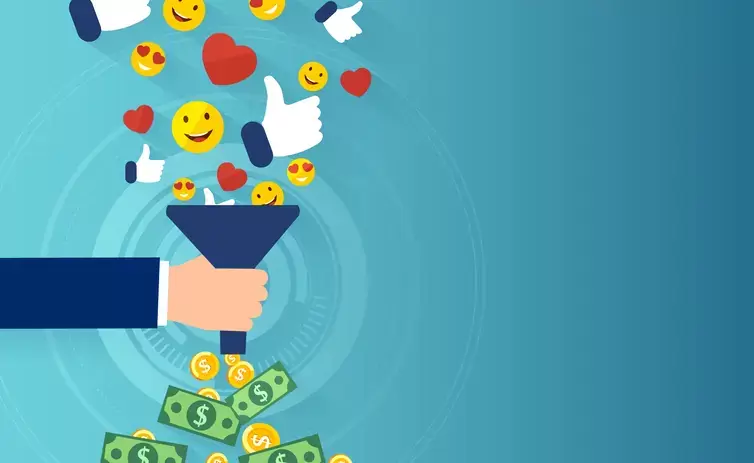
We’ve been using the term “social networks” for something that stopped being that a long time ago. Network suggests relationships, communities, conversation and connections between people. The reality is that Facebook, Instagram, TikTok, X or YouTube are not social networks: they are infrastructure on an industrial scale for extracting attention, fueled by mass surveillance, optimized to keep us engaged for as long as possible, converting every gesture, pause, scroll, response or hesitation into monetizable data.
New research by Maik Larooij and Petter Törnberg, “Can We Fix Social Media?” raises the fundamental question the regulators avoid: can we fix social media with small design tweaks? The answer is devastating: the researchers simulate a social platform with agents based on language models and test a chronological feed, hiding metrics, promoting bridge content, introducing ideological diversity. The improvements are modest, partial, or even counterproductive: echo chambers, the concentration of attention and the amplification of extreme content reappear, as if they were structural properties of the system and not mere design flaws.
This ties into the conclusions of an Ars Technica article on the study: social media, as it is currently built, may be beyond repair. Not because there is a lack of brilliant engineers, nor because users are particularly stupid, nor because we haven’t yet found the right algorithm, but because the basic mechanism is rotten: network growth, emotional reaction, visibility, feedback, polarization, and more growth.
Another Ars Technica article, “RIP social media”, points to a second transformation: the breakdown of the old digital public square into more fragmented, private, semi-private, algorithmic, or AI-mediated spaces. But just because something fragments doesn’t mean it heals. Törnberg’s research on social media use in the United States between 2020 and 2024 paints a picture of decline, fragmentation, and persistent polarization: casual users are leaving, the most polarized remain, and the visible conversation is becoming narrower, more extreme, and less representative.
This paper, still in pre-print form by Törnberg himself, “Towards a post-social media studies”, spells out the situation: we are entering a phase beyond the classic social media paradigm. User-generated content is losing ground to opaque recommendation systems; public conversation is shifting toward closed or transient spaces; and AI is beginning to become not only an intermediary but a medium of communication in and of itself. Put another way: the problem is no longer merely that social media functions poorly, but that the very concept of a social network is dissolving into a machinery that is even less visible, even less auditable, and even more personalized.
Which is why the band-aid solutions still being proposed by regulators such as banning doom scrolling, adding labels, calling for more moderators, hiding “likes,” demanding age controls, or trusting that platforms will voluntarily design healthier environments are a pipe dream. Such measures may have some marginal effect, but don’t address the root cause. It’s like trying to combat smoking by forcing a change in the color of the pack, but allowing the industry to continue manipulating nicotine to maximize addiction.
The root cause is the surveillance model. The US Federal Trade Commission stated it with a clarity rare for a regulator: the leading social media and video platforms have deployed mass surveillance of users to monetize their personal information, with insufficient privacy controls and inadequate protection for minors. We are not speaking in metaphors. We are talking about an industry whose fundamental economic incentive consists of observing, inferring, classifying, predicting, and manipulating.
That is the point Europe must finally grasp. It is not about banning specific companies, punishing specific entities, building a Ministry of Truth, nor identifying the entire population to supposedly protect minors. It is about declaring a business model based on the systematic surveillance of people to be illegitimate. The European Data Protection Board has already pointed out that Big Tech’s consent or pay models are not valid when consent is not truly free. The question is not technical, it is political.
As long as a platform earns more the longer it manages to keep us engaged, and as long as that time translates into more data, more profiles, and more targeted advertising, any talk of digital well-being is hot air. The algorithm isn’t there to inform us better, to make us happier or to strengthen democracy. It’s there to maximize a business function. And if anger, fear, envy, outrage, or tribal belonging work better than serenity, complexity or critical thinking, the system will learn to produce exactly that.
That is why the solution cannot consist of asking Meta, TikTok, X, or YouTube to be “more responsible.” We have been listening to that farce for too many years. The solution lies in banning surveillance-based behavioral advertising, drastically limiting the collection and reuse of personal data, enforcing true interoperability, requiring external audits of recommendation systems and mandating that platforms operate using models that do not rely on knowing the user better than the user knows themself.
Some will say that this would destroy the free internet. I believe it would destroy a deeply toxic version of the internet funded by a permanent violation of privacy. It was argued that banning smoking in enclosed spaces would destroy the hospitality industry, that requiring seat belts was paternalism, or that regulating industrial waste would ruin the economy. What happens is always the same: when an industry has normalized a brutal externality, it presents any attempt to limit it as a threat to civilization.
Today’s social media platforms are not a neutral infrastructure tainted by a few bad actors. They are extraction machines designed to turn social life into raw material. And when a machine is built to spy, hook users, and polarize, it isn’t fixed by polishing the interface. It’s fixed by changing the law that allows that machine to exist under those conditions.
The underlying issue is very simple: a democratic society cannot delegate its public conversation to companies whose business improves when that conversation deteriorates. And the sooner we stop pretending that this is a problem of design, digital literacy or content moderation, the sooner we can ask the only question that really matters: are we going to continue allowing surveillance to be the price of participating in digital social life?
—
This post was previously published on Enrique Dans’ blog.
***
You Might Also Like These From The Good Men Project



If you believe in the work we are doing here at The Good Men Project, please join us as a Premium Member today.
All Premium Members get to view The Good Men Project with NO ADS.
Need more info? A complete list of benefits is here.
Photo credit: iStock

