


By Ai-jen Poo
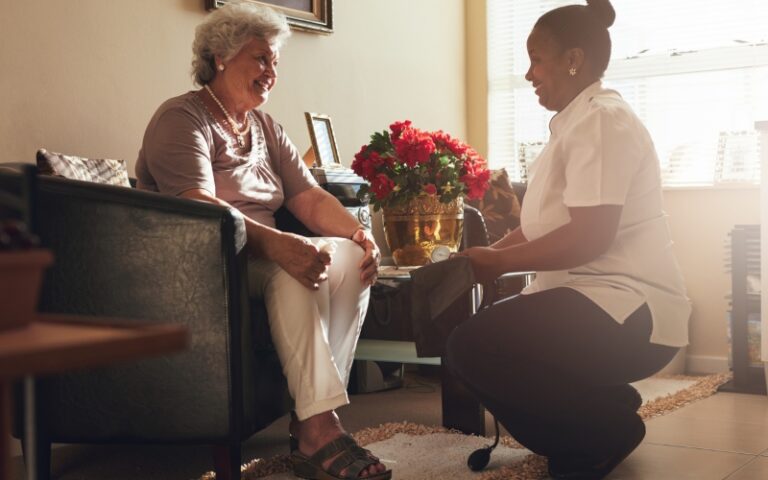
Domestic workers often enter our lives amidst life’s major transitions: a newborn, a new home, an accident, or a medical diagnosis. They provide these essential services in private homes, but their work is also deeply connected to the broader global economy.
Of the world’s 75 million domestic workers, nearly one in five are immigrants. Women seeking opportunity leave their homelands and become the trusted workers who care for homes, children, and aging and disabled loved ones in other countries — sometimes while relying on relatives or other workers to help care for their own families back home.
The services domestic workers provide are the foundational labor that enables all other global economic activity. And in this integrated world, we would all be better off if every country provided affordable and equitable care and decent wages and working conditions for care workers.
Unfortunately, care infrastructure remains underfunded. And care workers, who are overwhelmingly women, remain among the least protected and least valued. More than 80 percent lack the labor protections and social security that many other workers take for granted.
This is finally beginning to change as domestic workers overcome their isolation to organize across languages, borders, and politics. In the United States, we’ve passed Domestic Workers Bills of Rights in 13 states, two cities, and Washington, D.C. These laws typically guarantee domestic workers basic rights like minimum wage, overtime pay, rest breaks, and safe working conditions, and some include paid leave and anti-discrimination protections.
Our international allies have also won important victories.
Brazilian policy now recognizes care as a right and a responsibility shared across society, while explicitly addressing decent work and protections for care workers. Indonesia has developed a long-term care economy roadmap that brings together child care, elder care, social protection, and leave policies, in addition to passing landmark domestic workers protection laws. Uruguay ensures domestic workers basic rights such as a guaranteed eight-hour workday, mandatory overtime pay, minimum wage, and paid leave.
The International Labor Organization has also taken important action, adopting the first international labor standards for domestic work in 2011 and forging a treaty in 2019 that affirms everyone’s right to a world of work free from violence and harassment.
These measures of progress are important. But much more needs to be done. Too many governments — including in the United States — still approach care as largely an individual family problem: Find someone to look after your child, figure out how to support an aging parent, and somehow manage the rising costs of caregiving.
Later this year, the U.S. government will host the G20 summit, an annual convening of the leaders of 19 large economies and the European Union that represent about 85 percent of the world economy. This forum has the power to catalyze a transformative shift in our global care economy.
G20 members should help strengthen international labor standards for care workers and ensure that domestic workers themselves have a voice in shaping the policies that determine their lives. These leaders should also jointly commit to increasing public investment in stronger and more accessible care systems.
At the National Domestic Workers Alliance, we have learned that domestic work makes all other work possible. That is true in the United States. It is true in every G20 member nation. And it is true in the many developing nations without seats at this table.
We know that transformation does not begin at an international summit. It begins when isolated workers find one another. It begins when they tell their stories and transfer those stories into organizing, which is happening in communities and countries around the world. It’s time spaces like the G20 do their part to accelerate the transformation we need so that everyone can work and age with dignity.
—
Previously Published on otherwords.org with Creative Commons License
***
At The Good Men Project, we are proud to syndicate work from OtherWords, a public-interest editorial service published by the Institute for Policy Studies. We value their work because it brings readers clear, accessible, fact-checked commentary on the policies and power structures shaping everyday life, often from voices and perspectives that do not get nearly enough mainstream attention.
We believe these conversations belong here because questions about democracy, inequality, justice, rights, and public responsibility are not separate from the human story. They shape how families live, how communities function, who gets heard, who gets protected, and what kinds of values a culture rewards. Many of the issues OtherWords covers also overlap with questions we care deeply about at GMP: power, identity, belonging, care, fairness, and how to build a society that is more humane than the one we inherited. That is one reason we are glad to share their work with our readers.
There are many ways to support The Good Men Project’s mission. You can join us on Substack, become a Premium Member, and follow our broader conversations about identity, relationships, culture, justice, and how to live well and responsibly in a rapidly changing world. We also work with authors, agencies, brands, and sponsors through our author amplification and paid guest post programs. For more information, email [email protected].
Join The Good Men Project as a Premium Member today.
All Premium Members get to view The Good Men Project with NO ADS. Need more info? A complete list of benefits is here.
—
Photo credit: iStock

