


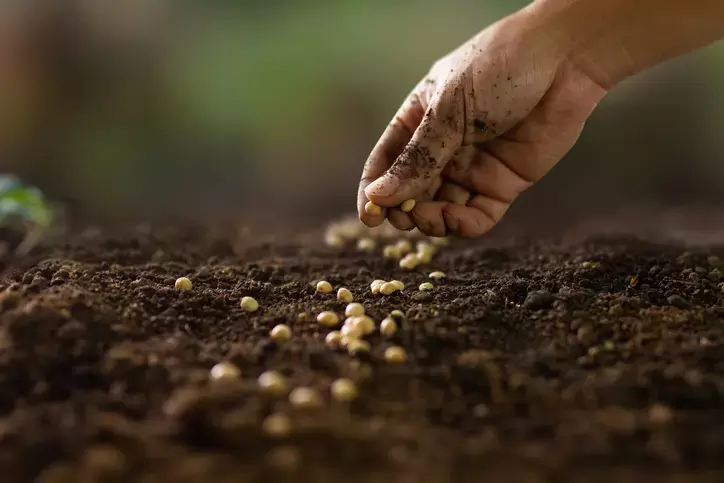
Have you ever been sitting cross-legged in the fresh ground with the mud all over your hands and suddenly thought that you were finally breathing right, like you had not breathed in months?
It was me, last spring, bawling over my tomato seedlings at 7am on a weekday. It was not my best moment — or was it?
Gardening and mindfulness helped me get a home in my own self when I was completely lost. This is not a typical self-care post recommended by your mom about bubble baths and fragrant candles. It is the matter of discovering the inner strength to develop self-love with the help of stillness and soil.
Whether you’re overwatering your houseplants or overthinking your life choices, I’ll share how learning to nurture growth outside myself taught me to nurture the garden within.
But first, let me tell you about the dying cactus that called me out on my biggest self-sabotaging habit…
The Parallels Between Self-Care and Gardening
The Similarity between Plant Care and Self-Care
Have you ever wondered about the way your plants would blossom when you would merely show them the appropriate level of care and attention? Not too much water, not too little sun. Plants don’t respond well to helicopter parenting any more than they do to neglect.
We’re exactly the same way.
When I first started gardening, I killed everything. I’d either drown my plants with too much water or forget about them for weeks. Sound familiar? Most of us alternate between crazed self-improvement and utter self-surrender.
A golden mean is somewhere in between. Plants need regular attention, not always constant attention to fuss, and we have to do the same to our souls.
Just imagine: plants grow not faster when you look at them. They unfold at their own pace. Similarly, our personal growth rarely happens on demand.
Finding Stillness in a Busy World
Establishing To-Day Centers of Silent Thought
Practicing stillness does not involve getting rid of everything in order to run away to a week-long silent retreat (which sounds out of this world). It is like easing out those little holes of peace in your daily noisy routine.
Start small. The five minutes every morning before you look into your phone can transform a lot. Take a seat, mouth your coffee, watch the steam rise, and breathe. That’s it.
It has helped me a lot to place a stillness alarm. When it rings, I will drop whatever I am doing, and I will take three deep breaths. Easy to say, and after one week of such practice, my stress decreased significantly.
Try this: identify your natural pauses — waiting for water to boil, standing in line, or sitting in your car before heading inside. Transform these moments into intentional stillness instead of reaching for your phone.
The Meditative Nature of Garden Work
Have you ever heard how time bends digging in the ground? There is almost a magical thing about working in the garden that makes you fall down in the present time.
Planting seeds takes your undivided attention. It is not possible to scroll through Instagram and plant a seedling into the ground. You are working with your hands, and your brain shuts down, and there you are just… there.
These mechanical motions, like weeding, watering, and pruning, automatically put you into a meditative state. Your breath becomes slower. Your shoulders drop. Your racing thoughts settle like leaves drifting to the ground.
I used to overthink everything until I started spending evenings in my garden. Now when my mind spins out, I head outside and let my hands get dirty. The worries that seemed enormous indoors somehow shrink under the open sky.
Unplugging to Reconnect with Your Inner Voice
Something really critical has been overpowered by that continual digital hum — the voice of your inner wisdom.
The last time we thought without an interruption of a notification, most of us could forget about this moment. We are so used to silence in our minds that we have forgotten the voices inside us.
Try this digital detox challenge: for one hour daily, put your phone in another room. Not on silent. Not face-down. Physically removed from your space.
The discomfort you’ll feel speaks volumes. That itchy need to check, that phantom vibration in your pocket — that’s how dependent we’ve become on external stimulation.
When I first tried this, I walked around as an addict. On day three I was hearing myself again, small voices of creativity, relationship insights, and solutions I had doggedly been working on months ago.
The way silence promotes clarity and self-understanding.
In the noise, we lose ourselves. We recover our own selves in silence.
In the same way, your brain is a glass of muddy water. When constantly shaken by external input, the water stays cloudy.
No one can ask questions in silence, as silence is full of answers. When you create space between thoughts, you notice patterns. Why do you react strongly to certain situations? What beliefs are running your life behind the scenes?
I found out that I was not afraid to fail; failure was never the basis of my fear, but rather disappointing people. Those insights were made when I was taking a silent morning stroll and not watching Netflix.
These silent moments make your relationship with yourself deeper. You listen to yourself and are a speaker at the same time, and this makes intimate dialogue with yourself, and you realize what you really need and want.
Hints on how to find inner peace
Now, I will provide some practical actions. Here’s what works:
- Morning pages — three pages worth of consciousness braining when you get up in the morning. No editing, no thinking. Just put pen to paper and start writing everything that can come to your mind.
- Sensory walks — Take a 10-minute walk focusing exclusively on one sense. What do you hear? What textures do you feel? This pulls you instantly into the present.
- The 4–7–8 breath — breathe in for four counts, hold for seven counts, and breathe out for eight counts. This literally clears your nervous system when you are spinning out.
- Boundary setting — Create tech-free zones in your home and tech-free hours in your day. Your bedroom and dining table are good places to start.
- Mindful transitions — Take three breaths before moving between activities. This creates tiny stillness buffers throughout your day.
The magic of stillness inside is that it is accessible to you all the time; you do not need any special device. Nothing more than your interest and the intention to take a pause in a world that is hardly capable of pausing.
Hands in Soil: The Therapeutic Power of Gardening
The Science Behind Soil’s Mood-Boosting Properties
Ever wonder why you feel so darn good after digging in the dirt? It turns out to be not solely in your head. It is this bacterium called Mycobacterium vaccae, which grows in soil and, in fact, activates the release of serotonin when you touch it. Yes, the same happy hormone as antidepressants are aimed at.
Scientists discovered this happy little microbe while studying cancer patients. Those exposed to the bacteria reported better quality of life and reduced depression. Wild, right?
However, that is not everything. Your brain is also flooded with dopamine when you go gardening, that is, when you succeed in harvesting something you have planted. Your brain basically throws you a little reward party for growing that tomato.
Grounding Techniques Through Physical Connection with Earth
The entire earthing thing may appear to be woo-woo, but keep reading. As you walk or put your bare feet or hands on the ground, you are in direct contact with the negative (or natural) electrical current on the earth. The contact aids in equilibrating your electrical condition.
This one specific tip can work for you: The next time you feel stressed, take off your shoes and stick your toes in the garden. Or grab a handful of dirt and really feel its texture. Notice how your breathing naturally slows down?
This isn’t fancy meditation — it’s just your nervous system responding to direct earth contact. Your body remembers this connection even if your busy mind has forgotten it.
Transforming Anxiety into Focused Garden Tasks
Anxiety loves nothing more than a swirling mind with nowhere to land. Gardening gives those anxious thoughts somewhere specific to go.
When I’m spiraling about work deadlines, I head to my garden and tackle something concrete:
- Weeding a small patch
- Pruning one plant
- Watering just the containers
The repetitive nature of garden tasks works like a moving meditation. Your hands are busy, your attention is focused, and suddenly that mental chatter gets quieter.
The beauty of gardening for anxiety is that it demands presence. You can’t effectively prune a rosebush while mentally replaying yesterday’s awkward conversation. The plant needs your attention now.
Creating Beauty as a Form of Self-Expression
Your garden is basically a living, growing art project that reflects your inner world. Think about it — the colors you choose, the plants that speak to you, even how orderly or wild you let things grow… it all says something about who you are.
Some days I plant neat rows of practical vegetables. Other days I scatter wildflower seeds with abandon. The two versions are me; it is just that they are different parts of me.
The development of beauty in your garden simply means developing beauty in your life as well. You are taking self-care when you are placing plants in a manner that you aesthetically find satisfying.
The strength is that gardens are being They’re never “finished.” This reflects the same experience of loving ourselves, a constant process, one that seasons that require varied things in terms of love.
How to Develop Self-Compassion with Garden Lessons
Introduction to Imperfection: Non-Growth in the Planetary as Well as the Human Realm
In two weeks, I killed my first tomato plant. No slow decay — but a sharp, sudden withering, such as could only be sustained by frantic watering.
Your plans are perfect, but the garden does not know about it. Those heirloom tomatoes you babied from seed? Blossom end rot. That carefully plotted color scheme? Rabbits had other ideas.
Sound familiar?
Gardens mirror our own messy growth journeys. We plant expectations for ourselves — the promotion by 30, the relationship that follows a certain timeline, the body that responds exactly as we want to exercise.
Then reality happens.
The most peaceful gardeners I know have learned to nod at imperfection rather than fight it. They adapt when plants grow leggy or produce less than expected. They don’t take it personally when nature has its own agenda.
The Art of Starting Over: Resilience in Failed Crops and Personal Setbacks
My neighbor Tom replanted his squash three times last season. “The garden teaches patience,” he told me, hands dirty from starting again. “Sometimes you just pull it out and try something different.”
Gardens don’t allow us to dwell in failure. There is the next season, the next way, the new type to sample. My garden of withered containers was a great image of my last year of depression, until I noticed I had the ability to just start over.
Starting over in the garden taught me
- Failure isn’t personal
- Timing matters more than effort sometimes
- Some things are beyond our control
- The soil remains, even when plants don’t
Celebrating Small Victories: From New Sprouts to Personal Achievements
Good gardeners celebrate like crazy over tiny green shoots. They take photos of the first tomatoes like proud parents. They invite neighbors over to witness a rare bloom.
I’ve learned to bring this same energy to my personal growth. Managed to water myself regularly this week? Victory. Set a boundary that felt uncomfortable? Gold star. Got out of bed during a tough mental health spell? That deserves celebration.
The garden celebrates incremental progress. A plant does not burst forth out of a seed to fruit; instead, it unrolls gradually, and all of the steps are worth observation.
A Lesson to Learn on How to Nurture Without Judgement
Interrupting me, my gardening mentor pointed at some surprise sunflowers available in my carrot row and corrected me, telling me that these are not weeds but volunteers.
Gardens resist our rigid categories. What’s a weed? Very often a plant gets to be in a place you had not expected it to be. What is a pest? In other cases, that unique pollinator is a key pollinator you did not expect to look the way it does.
This perspective shifted my view on self-care. I began to regard my emotions as simply that: information whereby my emotions were volunteers that delivered messages that I might want to hear.
When we are cultivating plants, we do not inform them that they are growing slowly or otherwise not as they should be growing. We change the conditions, put more sunshine on it, use different soil, get better drainage, and wait.
I am currently experiencing the same mood, and I am trying to take care of myself. I avoid judgment, make mild changes, and exhibit self-care.
From Garden to Life: Transferring Earth Wisdom
Setting Intentions Like Planting Seeds
You know that feeling when you first press a seed into soil? That tiny moment of hope and possibility? That is what it is like to set intentions in the development of yourself.
We can make choices on what virtues to develop in ourselves, just as I make decisions on the type of vegetables to plant every season. Perhaps it is the capacity to be more forgiving toward oneself or to be patient, or it is the power to build more healthy boundaries.
Start small. Write three developments that you would like to work on this month. Write them on a wall where you can see, your bath room mirror, phone wallpaper, your wallet. They are invisibles; watch them or listen.
Establishing Nourishing Daily Routines
Gardens thrive on consistency, and guess what? So do you.
The most vibrant gardens I’ve grown didn’t happen through occasional massive efforts. They flourished through daily tending — those fifteen minutes of watering, weeding, and observing.
Your self-care works the same way:
Garden Task
Self-Care Equivalent
Morning watering
Five minutes of meditation
Weeding
Journaling negative thoughts
Pruning
Letting go of commitments that drain you
Fertilizing
Reading inspiring material
The magic happens in the routine, not the grand gesture. I am aware that these little and unnoticeable efforts slowly change the inner world more effectively than all weekend self-care binges ever will be.
Designing Places that can be of Support to You
My tomatoes do not thrive when grown under cover, and my ferns do not thrive when exposed to direct sunlight. Every plant has to have certain conditions to thrive.
You’re no different.
Take a hard look at your surroundings. Are the people around you like warm sunshine, helping you grow? Or are some relationships more like drought, leaving you depleted?
Your physical space matters too. I turned my room into a peaceful place, instead of an overstuffed landing place, and instantly felt better sleeping. My restructuring of the kitchen ensured that I had less difficulty cooking in a healthy manner.
This week, consider taking small steps towards a greener environment. Perhaps it is clearing your desk, reorganizing your natural lighting in your living room, or just putting your mobile phone in a different room during your dinner.
The Positive Results of Routine Self-Care
The first tomato of summer, warmed by sunshine and bursting with flavor — that’s what consistent self-care eventually yields.
You will see the difference after several weeks or even several months of taking care of yourself. They are initially small and may include such things as sleeping better, being not so easily irritated and more energetic.
However, one day, something will happen which would have knocked you off track before, but you will deal with it differently. There is your crop time.
Write down these events. Start a growth journal, and in it, write down proofs of your growing ability to be joyful, resilient, and present. These are words in your soul when times are tougher.
Anointing With Your Blessing: How Self-Love Spreads to Everyone
I never harvest enough in my garden to eat by myself. The surplus zucchinis and bouquet of basil naturally over seep to neighbours and friends.
The same occurs when you develop self-love. And then your cup runneth over.
You may find yourself being more tolerant of your children or more attentive with your spouse. Perhaps you volunteer more, or you just listen. This is not a selfish act, and this is the benefit of being well-kept.
The loveliest gardens are not enclosed gardens, but gardens to be shared. The same holds with the garden of your spirit. The more you have made a habit of doing this to yourself as a means of securing your own good, the easier you will discover yourself to be in a position to do the like to others, without your feeling any obligation to do so or your having lost anything at all; it is just a flow over of your own health.
Conclusion
The same patience, attention, and care that are necessary in the outer gardens should also be considered in our inner gardens. The stillness in the busy life opens and provides room to explore ourselves, to discover and develop ourselves. The healing nature of being in touch with the ground reminds us that we are so fundamental a part of the earth, and the growth and the rest of gardening teach precious things about self-care and self-healing.
It all depends on how you take care of your own garden, either yard or metaphorical, and that there is no linear growth and every season is relevant. As you plant seeds of self-love, cut off self-doubt, just sit and look lovingly on your inner scenery, you are doing a deep work of self-care. Bring the learning of the garden into your everyday and see how your life and your world will grow with purposeful caring and love.
—
Photo: iStock

