



Sometimes, common moments are camouflage for divinity and grace.
Your heart is where your inner light resides
We often miss such exquisite moments because of the endless chatter in our minds.
Modernity, with all of its technological intrusions and distractions, has recalibrated humanity to exist in the thrum of incessant noise and superficiality. We sense that life has something deeper to offer us if only we could calm our distracted minds.
But sometimes there are moments of blessed clarity when the camouflage lifts and we experience a kind of transcendence.
It was around dusk and the weather was mild the day my wife came home from work and settled onto the patio couch. The last of the bees were flitting about the garden flowers, and I was immersed in a book, sipping a coffee. Our cat, Einstein, ambled out of the house and joined my wife on the couch.
My wife is a hospice nurse who has the privilege of gently caring for people as they navigate the closing chapters of their lives.
But the work is not without its emotional toll. Thus, a restorative nap with her purring cat in the garden can do wonders.
In that moment, as slumber cradled her and the bees danced in the flowers, I felt something.
Your heart is where your inner light resides. It is part of every sacred journey to reconnect with your inner light, step into your divinity, spread the light of love before you, return to the essence of love, and inspire others to do the same. — Molly Friedenfeld
It was a kind of deep serenity. I closed my book, took a photograph of my wife and cat, and then leaned back in my lawn chair. A breeze caressed my face and lifted my hair slightly.
In that sublime moment, I felt utterly free. My mind was still like a lake at dawn.
The most important moments of our lives
The brilliant writer and essayist Charles Schifano recently wrote a satirical, sardonic critique of today’s endless culture of overachievement, success, and productivity.
Schifano’s essay, titled “Maximization,” opens thusly:
Regardless of what you do, it is imperative that you are productive. Forget about results. Forget about purpose. Forget about consequences. All that matters, in this life, during your very few years, as you spin uncontrollably on a minuscule rock in a paltry galaxy, is productivity. And while you confront the tick of time, it is almost certainly true that you could, in fact, be a little more productive.
Social media sites and YouTube videos abound with gurus sharing tutorials on time management, diet pronouncements, success hacks, fitness commandments, productivity rules, and more.
Some of this advice may be well-intentioned, and it may help folks seeking self-improvement. Other times, it is neither, and only exists to sell you useless stuff. Worse, it can make people feel bad about themselves, blinding them to the beauty lurking below the frenetic surface of everyday life.
And what’s below the surface is the very thing I found that day in the garden, as my wife napped with her cat.
Charles Schifano’s essay includes the following:
Start tomorrow morning by waking up a bit earlier. Begin your day with gusto and head right to your daily checklist. Study it closely and ensure that your daily checklist aligns with your weekly checklist. And then ensure that your weekly checklist aligns with your monthly checklist. The goal is efficiency and speed and optimization and your humanity is determined by your ability to transform your life into statistics.
I laughed out loud when I read that humorous, mordacious paragraph.
Because it’s so true. We’re always killing ourselves trying to be better all the time. Trying to get ahead. Become more efficient. Make more money. Slave over our checklists.
And along the way, we neglect our interior lives.
We get so busy we don’t know how to slow down. How to settle into ourselves. How to reconnect with that shining light within.
Sure, some folks schedule yoga sessions or meditation retreats, but they often do this as part of their checklist. Part of their public persona. So they can talk about it later at cocktail parties, or feel productive.
I shared the following comment below Schifano’s essay:
Loved this. So much of Internet land includes endless optimization, hacks, diets, and maximization tutorials. Navy SEALs forever exercising, finance gurus lecturing, influencers with white teeth flexing in the gym. All in the name of getting ahead, being better, etc. Give me a cold IPA in a brewery with a friend, wasting time chatting about books and life. Or a low-impact walk with my dog. An afternoon with my wife in her Miata, with the roof down. Life is meant to be lived, not optimized all the time.
Schifano replied, noting that a long chat with a friend is not a waste of time, which I agreed with. And the more I thought about it, I concluded:
The moments we often think of as wasting time may be the most important moments of our lives.
The serenity and peace of that afternoon with my wife and cat in the garden resonates with me deeper than our European trips and some of my career successes.
Other seemingly unremarkable moments in my life equally fill my soul with a sense of peace, love, and harmony. They had nothing to do with self-improvement, success, or productivity.
They had to do with taking care of the soul and truly living.
While we are making other plans
Once I took my grandmother on a train ride in the park.
It was summer and I was home from University. My grandmother was battling cancer, and I took her to doctor appointments and treatments. And one sunny afternoon, to lift her spirits, I detoured after her blood tests to the local park.
I bought tickets for a train ride through the park and by the lake.
To this day, I vividly remember the way she laughed and smiled as we enjoyed the train ride. Afterward, we fed the ducks by the lake. It was a magical day, even though it was spontaneous and unplanned.
Life is what happens to us while we are making other plans. — Allen Saunders
I remember that morning, before I took my grandmother to her appointment, feeling a bit put upon. I wanted to go to the beach with my friends, but my Dad asked me to help, so I did.
But then, as the day unfolded with my grandmother, I fell into a wonderful state of being. I remember holding her hand in the park, as we walked over green lawns and past a playground full of laughing kids.
I remember her surprise when I bought the train tickets, and we slid into the open-air passenger coach. I remember the wind in her silver hair, the birds overhead, the cool breeze, and the scent of the train’s steam engine.
My grandmother died later that year, but her spirit lives on within me every time I call up the memories of that day.
The best of life is not about life hacks, endless self-improvement, or productivity gains. The best of life is found in the quiet moments. The everyday experiences, be it alone or with loved ones. The times when we think maybe we’re wasting time, but what the heck?
There’s nothing wrong with making plans and trying to improve yourself and get ahead in life. We all want to find success and achievement.
But don’t forget to live.
Tomorrow is a new day
I just finished reading Hermann Hesse’s 1922 classic novel “Siddhartha,” which explores the spiritual journey and self-discovery of a man named Siddhartha during the time of the Gautama Buddha.
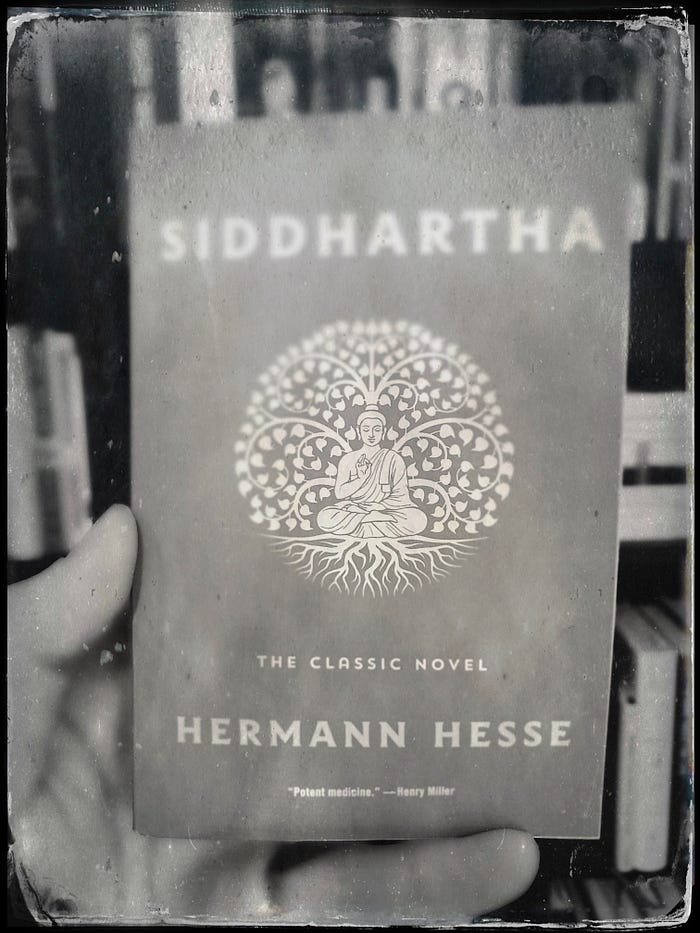
There’s a line in the novel that stood out to me:
When someone seeks, said Siddhartha, then it easily happens that his eyes see only the thing that he seeks, and he is able to find nothing, to take in nothing because he always thinks only about the thing he is seeking, because he has one goal, because he is obsessed with his goal. Seeking means: having a goal. But finding means: being free, being open, having no goal.
So much of our lives revolve around goals.
Goals for our families, careers, and self-improvement. And it’s no wonder when so much of our culture worships at the altar of success, beauty, and fame.
But then, even for those who achieve vast wealth and personal success, happiness often eludes them.
Why is that?
Perhaps because we are existing instead of living. We are so consumed with our plans, goals, material acquisitions, status, looks, and money that we never slow down and enjoy the bees in the garden, or that train ride in the park.
To live is the rarest thing in the world. Most people exist, that is all. —Oscar Wilde
It’s easy to exist rather than live.
Even retired folks who no longer have to work and have resources can find themselves existing instead of living. They get wrapped up in the news, the neighborhood gossip, or complaining about health challenges or the mistakes their kids are making.
They forget to sit quietly in the garden, amongst the dancing bees. They forget to close their eyes and get lost in the rhythmic purrs of the cat on their lap.
They forget about being free, being open, and having no goal.
They forget about the little gifts of daily life. They forget that life is meant to be lived, not merely exist in.
Finish each day and be done with it. You have done what you could. Some blunders and absurdities no doubt crept in; forget them as soon as you can. Tomorrow is a new day. You shall begin it serenely and with too high a spirit to be encumbered with your old nonsense. —Ralph Waldo Emerson
Oscar Wilde was right. To live is the rarest thing in the world. Most people exist, that is all.
But it doesn’t have to be that way. It’s not as complicated as we make it.
Slow down, and worry a little less about self-improvement, success, and productivity. Waste some time in a brewery with a friend, or in a coffee shop reading a book. Watch your spouse nap in the garden.
Tomorrow is a new day.
Don’t forget to live.
Before you go
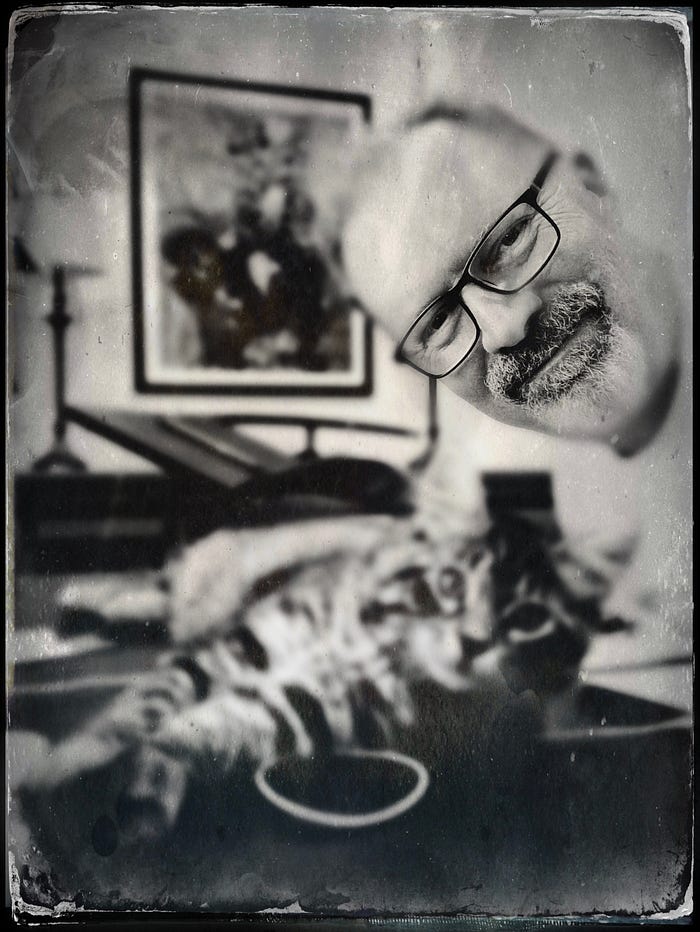
I’m John P. Weiss. I write elegant stories and essays about life. If you enjoyed this piece, check out my free weekend newsletter, The Saturday Letters.
—
This post was previously published on Medium.com.
—

If you believe in the work we are doing here at The Good Men Project, please join us as a Premium Member today.
All Premium Members get to view The Good Men Project with NO ADS.
Need more info? A complete list of benefits is here.
Photo credit: John P. Weiss

