


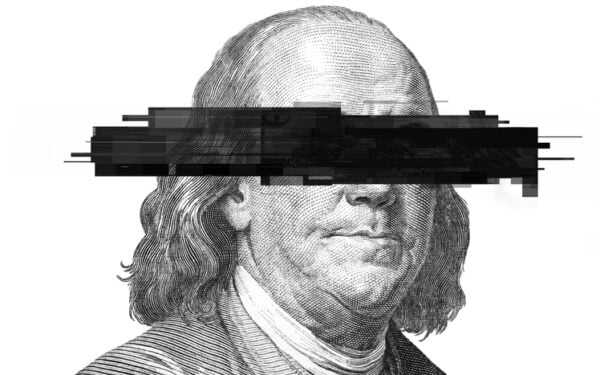
“Let thy vices die before thee.” — Benjamin Franklin
When one has virtues, does one have vices?

Every morning, he would look forward to getting into his car and driving a few minutes down a couple streets in his neighborhood straight to the bank to withdraw a large amount of cash.
He was a bit further out of left field than most. He wasn’t necessarily in pursuit of money anymore, in our competitive society; he had plenty of it, and he clearly enjoyed it. He was the kind of guy who would generously pick up the entire tab at dinner without a second thought.
Yet literally, whenever I would call him randomly on the phone and ask him what he was doing right now, he’d just say, “Oh, I’m just counting my Benjamins.” As if it were his default answer.
Money Worship to “Benjamins”
Oftentimes, he boasted about his millions with a personal ode to Benjamin Franklin. Many times, when I used to hang out with him he religiously referenced our “founding father,” more specifically to his $100 bills. He’d often count them all day long with a sense of joy.
Hustle Culture
For some reason, I thought to myself, “It’s a little bit twisted, don’t you think?” It mirrored the way the mafia and hip-hop rappers count their “Benjamins,” except my friend wasn’t a criminal.
It’s quite amusing actually.
Smirking Mania Fixation
He’d obtain his funds from the bank teller at the drive-through, pull over to the curb for a bit and enthusiastically smile and count all of his hundred-dollar bills like a little kid in a candy store.
Also, he liked to brag about being a “moneyist,” a term used for a person who’s basically highly focused on making money. A hyper-capitalist, if you will. With that title, came a lot of personal “vices.” Come to think of it, I knew a bunch of guys and they all had a vice or two, maybe more.
Moneyism & Vices
Anyway, I believe my friend eventually developed dual personas:
“The Moneyist” and “The Viceist.”
Cascade of Destructive Habits
With his vices, ethical dilemmas, if you will, surround his vice behaviors. The usual, turning to alcohol, tobacco, gambling, amongst a bunch of other stuff. Toxic and unhealthy behaviors.
It’s a potent combination.
Think of it this way: The Moneyist represents a toxic internal belief system (the mindset), while The Viceist manifests constant, nonstop destructive external actions (the behavior).
But what if you end up at war with your own vices?
Some men stay, some men flee.
It’s funny, my friend’s ode to Benjamin Franklin’s hundred-dollar bills was basically a paradox in reference to one of Franklin’s most famous proverbs: “Let thy vices die before thee.”
The maxim urges us to conquer our flaws and bad habits during our lifetime, instead of leaving them all behind when we eventually pass away. Franklin was basically a self-improvement guru.
It’s completely ironic when it comes to my friend.
Franklin’s quote about killing vices stands in stark contrast to the ultimate American symbol of wealth: the $100 bill. A “Benjamin” is the highest denomination of U.S. currency in circulation.
Historically, the $100 bill was engineered with security features to fight counterfeiters and protect the currency. In fact, Franklin was an innovator who designed money to foil copycats.
There is a quiet tragedy in this design choice.
Pursuit of the “Benjamins”
Franklin’s bill was engineered to keep the currency from becoming fake—yet the obsessive pursuit of the “Benjamins” is exactly what forced my friend to construct a fake, dual life.
In modern culture, money is frequently seen as the root of primary vices like greed, corruption, and materialism—everything he succumbed to. The “root of all evil,” if you will.
Irony of Wealth
Franklin wrote endlessly about the dangers of chasing raw wealth.
He famously also stated, “Money never made a man happy yet, nor will it. There is nothing in its nature to produce happiness. The more a man has, the more he wants.”
There is a profound, twisted irony here. The very man who explicitly warned us against greed, and urged us to destroy our vices, is now the face of the ultimate symbol of financial obsession.
The Modern Paradox of the “Benjamins”
What if the American dream of financial success mutates into a toxic internal belief system?
In modern society, men are conditioned to compete, accumulate, and conquer.
Success is rarely measured by character, but by net worth. Yet, we rarely discuss the deep psychological toll of this relentless chase. When a man’s self-worth is entirely tied to his net worth, an underlying anxiety develops—the constant, terrifying fear of losing status.
To cope with this internal pressure, the mind fragments.
Destructive behaviors and numbing habits follow closely in the wake of hyper-capitalism, serving as a desperate escape from the very wealth a man has built.
My friend’s life became a vivid textbook example of this modern trap: a personal encounter with “Moneyism,” the painful emergence of dual personas, and the profound irony hidden right on the face of our highest denomination of currency.
Our War Within Modern Manhood
My friend’s trajectory is not an isolated incident; it represents a silent war taking place within many successful men today. When a man adopts “Moneyism” as his identity, the pressure to maintain that status often gives birth to “The Viceist.”
We look at a hundred-dollar bill and see absolute freedom, but we actually ignore the warning of the man printed on it. If we want to change the narrative around modern manhood and success, we have to start asking ourselves the hard question:
Are we conquering our flaws, or are we letting our vices outlive us?
—
iStock image

