


It began with a scroll.
I had just finished dinner, watching my favorite comedy podcast on YouTube, mindlessly letting the algorithm show me whatever came next. Then “the word” popped up on the right side of my screen: Looksmaxxing. Curiosity got the best of me this time around, and suddenly I found myself watching an influencer explain — in innumerable ways — why a man’s facial and physical appearance is, in his view, the single most important factor in determining his value.
The Bizarre, Hyper‑Specific Language of the Looksmaxxing World
Some of these trends veer into genuinely harmful territory, promoted by online communities that often blur the line between self‑improvement and self‑destruction.
He went on (and on) with endless how‑to’s, demonstrating how to “fix” a jawline using tongue posture, chewing devices, and a series of exercises that looked like they belonged in a dentist’s office. Then came the “before and after” glow‑ups, the bone‑structure ratings, core looksmaxxing metrics, extremities like so‑called “bone smashing” (a harmful practice promoted in some online spaces), the skincare hauls promising transformation, and even a PSL — the Physical Sexual Lookism scale, a ranking system used in certain online communities to rate men’s perceived attractiveness. More tips, more advice, and more rules.
It was a rabbit hole of aesthetic optimization — and it was endless.
Most of us are already familiar with the world of filters, AI‑enhanced selfies, and carefully curated images meant to make us appear more attractive online. But the looksmaxxing movement insists that the virtual version of yourself isn’t enough. It pushes the idea that your real‑life appearance must be upgraded too — aggressively, strategically, relentlessly.
Somewhere between the filters and the tutorials, it hit me: men aren’t just being encouraged to look good. They’re being told that looking like themselves is no longer enough.
At its core, looksmaxxing is an online subculture centered on “maximizing” one’s physical attractiveness. It ranges from “softmaxxing” — grooming, skincare, fitness — to “hardmaxxing,” which can involve extreme cosmetic procedures in pursuit of an idealized male aesthetic.
The movement gained traction on TikTok in the early 2020s, but its roots stretch back to the 2010s, where it emerged in niche incel and manosphere forums. These communities promoted the belief that physical perfection could elevate a man’s confidence, desirability, and social status — a kind of aesthetic ascension toward becoming an “alpha male.”
In this worldview, the male body becomes a project, a hierarchy, and a battleground. A sharper jawline, a narrower waist, a more angular face, a more muscular frame — each feature is treated as a badge of honor on the path toward dominance.
The message is clear: your worth is measurable, and your appearance is the metric.
But beneath the surface, this culture often fuels severe body image issues and insecurities. The pursuit of perfection becomes a moving target, and the pressure to constantly improve can leave men feeling body‑dysmorphic, inadequate, anxious, and trapped in comparison.
Why Men Are So Vulnerable to This Pressure
Part of what makes looksmaxxing so powerful is that it preys on insecurities men rarely admit out loud. Dating apps have turned attraction into a numbers game, where just one quick glance at a single photo can determine whether someone even gives you a “like” or a chance.
Social media adds another layer — endless comparison to men showing off their muscles, posting “fitspiration” shots, or flexing at the gym under perfect lighting, perfect angles, perfect genetics, and sometimes “too” perfect filters designed to elevate social status.
I have plenty of male friends who genuinely enjoy working out after a long day, staying fit, or just trying to be healthy — nothing extreme, nothing obsessive. But I also know someone who keeps up with his appearance very carefully. I wouldn’t classify him as a “looksmaxxer,” by all means, yet one moment stuck with me: we were on the phone on a cold winter day, and he mentioned he didn’t want to wear a coat because it “makes me look too fat.”
Hearing that comment felt a little odd — that’s just me — not because it was dramatic, but because it echoed a phrase more commonly associated with women. Hearing it from him made me realize how quietly body‑image concerns show up in men’s lives, even in small, everyday decisions. Research from the Mental Health Foundation shows that a quarter of men feel low or anxious about their body image, and more than 1 in 10 experience suicidal thoughts tied to appearance — yet few ever talk about it. That’s the quiet part of all this — the way appearance anxiety slips into ordinary moments, even for men who aren’t chasing an extreme ideal.
For many men, looksmaxxing offers something deceptively comforting: control.
If life feels uncertain, if dating feels discouraging, if confidence feels fragile, then changing your appearance can feel like a solution. It becomes a way to cope with loneliness, rejection, or the fear of being invisible. And because men are often discouraged from talking about insecurity, the pressure builds quietly, internally, and relentlessly.
The Masculinity Paradox: Look Good, But Don’t Care About Looking Good
Looksmaxxing exposes a contradiction at the heart of modern masculinity in our digital age. Men are expected to look attractive — fit, stylish, well‑groomed — yet they’re also expected to pretend they don’t care about any of it. Caring too much about your appearance is labeled vain or feminine. Caring too little is labeled unattractive or sloppy.
This double bind pushes men into an odd middle ground: look good, but don’t look like you tried.
In that tension, looksmaxxing becomes more than a trend. It becomes a symptom of a deeper cultural pressure — one where young men are encouraged to sculpt themselves into a new, digitally defined version of masculinity. In the process, many drift toward self‑objectification, perfectionism, and even narcissistic habits they might otherwise resent. The pressure to maintain an ideal they didn’t choose can quietly wear them down.
So men walk a tightrope: improve yourself, but do it quietly. Look good, but don’t let anyone see the effort. The result is a silent pressure cooker where men feel responsible for meeting aesthetic standards they’re not even supposed to acknowledge. Looksmaxxing becomes the secret language of that pressure — a way to chase perfection without admitting the chase.
The Industry Built on Male Insecurity
Where there is insecurity, there is profit. And the looksmaxxing movement has become a goldmine. Key players within this space generate millions in revenue. Entire industries now market directly to men’s fears: skincare lines promising “masculine” self‑care, supplements claiming to enhance jawlines or muscle density, hair‑restoration clinics offering expensive solutions, cosmetic dentists selling the “perfect” smile, injectables as confidence boosters, dermatologists for flawless skin, plastic surgeons for “subtle” enhancements — the list goes on.
Influencers play a major role in this economy. Many of them monetize their own appearance, selling routines, products, and programs that imply you can buy your way into attractiveness. The message is subtle but effective: if you’re not improving, you’re falling behind. If you’re not optimizing, you’re failing. The pressure becomes not just emotional, but financial.
What I Realized While Watching and Reading All This
As I kept watching the video — listening to this influencer give an entire lecture on all the how’s and why’s a man should be into looksmaxxing — and then reading more about the topic, I noticed something unexpected: I wasn’t just observing the pressure — I was feeling it, softmaxxing at the very least. A tiny part of me wondered whether my facial structure was defined enough, whether my skin looked too dull, whether I needed a “pale glow up,” whether I should be doing more. I even caught myself thinking, How can I better optimize my own physical appearance? And that’s when — eureka — I understood how easily this culture pulls men in.
The Beauty Benchmark: Why Men Audit Their Features Before Their Character
It doesn’t start with insecurity.
It starts with curiosity.
Then comparison.
Then self‑critique.
Then the quiet belief that maybe you’re not enough as you are.
And if I felt that pressure to take my aesthetics a step further after only a few minutes, I can only imagine what younger men feel after hours, days, or years of exposure.
Why Men Are Expected to Be Perfect but Pretend They Don’t Care
Women have long had spaces to talk openly about beauty standards and the toll they take, but men have rarely been encouraged to discuss their appearance with one another. The rising expectation to be “perfect” isn’t just unrealistic — it’s deeply concerning.
A Different Way Forward for Men
None of this means men shouldn’t care about their appearance. Grooming, fitness, and self‑care can be healthy, grounding, and confidence‑boosting. The problem isn’t wanting to look good — it’s believing that your worth depends on it.
Men need space to talk openly about body image without shame.
We need to redefine self‑improvement so it doesn’t become self‑punishment.
And we need to remember that confidence isn’t built through perfection — it’s built through acceptance, connection, and authenticity.
Looksmaxxing promises transformation, but what many men actually need is permission to be human.
Closing
Looksmaxxing may look like a trend about appearance, but it’s really a story about a man’s self‑worth — about men trying to navigate a world that tells them to be everything at once: confident but humble, attractive but effortless, self‑improving but never insecure.
Perhaps the real transformation men need isn’t in the mirror at all.
Maybe it’s having the freedom to stop performing for it.
—
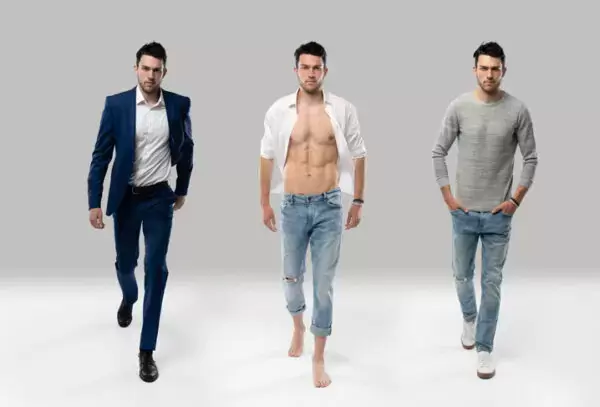
iStock image

