


—
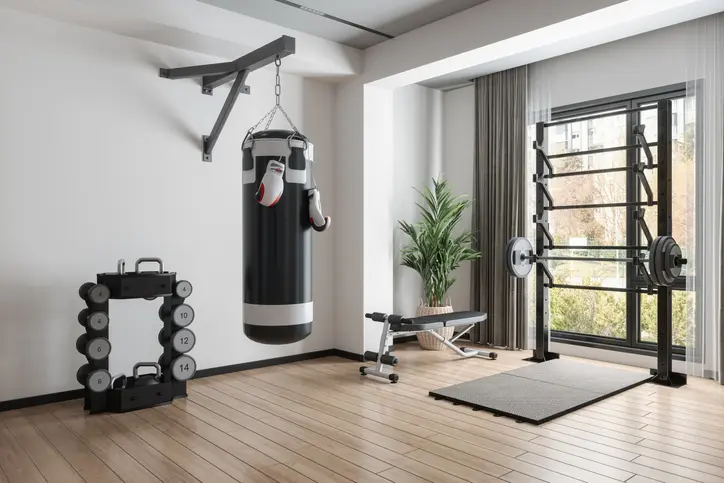
Creating an effective functional training environment necessitates finding a balance between rapid access to machines and efficient use of floor space. Failure to organize the space will lead to serious tripping risks because heavy cast-iron plates, urethane dumbbells, and bumper plates are prone to accumulating in the training environment. Off-floor storage of free weights helps protect the costly rubber floor from degradation due to constant compression and significantly speeds up workout intervals.
A purchase of proper storage facilities will make it possible to categorize your equipment according to its weight class, outer diameter, and how frequently it is used during workouts. Creating an optimal layout necessitates to explore weight racks for your gym setup according to your square footage and workout volume.
Spatial Mapping and Footprint Planning
Before selecting any storage frame, calculate your gym floor’s dead-zone dimensions and maximum weight capacity. Horizontal storage options provide great visibility but waste precious floor space, while vertical storage utilizes maximum overhead space from a compact floor area. Ensure that the ceiling height of your gym provides adequate clearance of at least 36 inches around all equipment racks for walking so you do not bump into the equipment while lifting heavy weights.
| Storage Solution | SqFt Floor Space | Maximum Weight Capacity (kg) | Accessibility |
| A-Frame Plate Tree | 3.0 – 4.5 | 300 – 400 | Moderate |
| Peg Board Wall Mount | 0.5 – 1.0 | 250 – 500 | Excellent |
| Plate Bumper Rack Horizontal | 5.0 – 7.0 | 400 – 600 | Excellent (Bumpers) |
| Mass Rack 3 Tier | 6.0 – 9.0 | 800 – 1000+ | Excellent |
Weight Distribution & Safety Science
Proper weight staging relies heavily on ergonomic engineering and basic physics. Heavy plates (20kg–25kg) should always be stored on lower or mid-tier pegs to keep the frame’s center of gravity low and prevent dangerous tipping hazards. Use of moderately changing plates placed at waist level helps relieve the lower back of strain due to repeated racking.
- Lowest Levels: Heavy bumper plates, iron plates from 20 kg upwards, heavy kettlebells.
- Middle Levels: Plates between 10 kg and 15 kg, medium hex dumbbells.
- Upper Tiers: 25kg–5kg change plates, collars, resistance bands.
Research published by the National Institute for Occupational Safety and Health (NIOSH) highlights that lifting heavy loads below knee level or above shoulder height drastically increases spinal shear forces, reinforcing the need for waist-height placement of mid-range weights.
Selecting Storage by Weight Category
Different plate and dumbbell designs demand dedicated storage geometries. Standard cast-iron plates fit tightly on closely spaced vertical pegs, whereas full-diameter Olympic bumper plates require wider peg clearances or dedicated horizontal toast racks. Stacking bumper plates flat on top of one another damages the center steel inserts over time due to localized pressure.
- Bumper Plates: Use horizontal slotted racks or wide-spaced vertical trees.
- Hex Dumbbells: Opt for angled 2-tier or 3-tier tray racks to prevent wrist strain upon extraction.
- Kettlebells: Choose flat, rubber-lined mass storage shelves with rear retaining lips.
- Barbells: Use vertical tubes or gun racks to safeguard your sleeve bearings.
Structural Strength and Steel Gauge
How long a weight rack will last is determined by its structural strength and the thickness of its steel components. Commercial racks with light-duty use 14 gauge steel, which can deform when weights are placed on them. Commercial racks that see lots of usage use 11 gauge steel (3mm).
Guidelines from the Safe Work Australia standards for heavy equipment highlight that static load limits must exceed maximum anticipated weight by at least 25% to account for impact forces during aggressive re-racking.
Floor Protection and Environmental Considerations
Metal racks that rest directly on hard concrete may end up wearing off powder coating and cause rapid oxidation. Rubber-covered rack feet protect your base flooring by absorbing any sounds and prevent unnecessary movements of racks when loading is going on.
In case of a high-humidity environment such as garage areas and coastal settings, hardware that features zinc coating as well as electro-coated steel racks has higher resistance to corrosion compared to standard powder-coated racks. Explore weight racks for your gym setup engineered for humid spaces to safeguard your equipment against premature rust and wear.
FAQs
What is the best storage system for bumper plates?
Horizontal toast-style caddies and wall-mounted vertical peg systems offer the highest spatial efficiency for bumper plates. Wall pegs free up all usable floor space, while horizontal toast caddies keep full-diameter plates organized in narrow, accessible slots without wasting vertical clearance.
Is it possible to store bumper plates horizontally in a pile?
Vertical storage of bumper plates in piles placed on the ground is not recommended. The process of stacking puts too much pressure on the center stainless steel inserts, and may lead to loosening of the inner ring, and will complicate the process of loading on an Olympic bar.
What is the load capacity of a standard 11-gauge steel rack?
11-gauge steel racks can carry loads between 800kg and 1000kg+. Ensure you know the maximum static load capacity of the rack from its manufacturer prior to loading your multi-rack system.
Dynamic Storage Systems
Efficient use of your lifting space requires proper storage systems, which will ensure the safety of your floor, protection of your equipment, and efficiency of your training sessions. Weight lifting off the floor will reduce the risk of injuries while creating order out of chaos. Matching steel strength, footprint dimensions, and shelf layouts to your gear creates a safe setup built to handle heavy use for years to come.
—

