


There is a recent article in The Economist, Large, creative AI models will transform lives and labour markets, describing how LLMs work. It states that, “First, the language of the query is converted from words, which neural networks cannot handle, into a representative set of numbers. gpt-3, which powered an earlier version of Chatgpt, does this by splitting text into chunks of characters, called tokens, which commonly occur together. These tokens can be words, like “love” or “are”, affixes, like “dis” or “ised”, and punctuation, like “?”. gpt-3’s dictionary contains details of 50,257 tokens.”
“The llm then deploys its “attention network” to make connections between different parts of the prompt. Its attention network slowly encodes the structure of the language it sees as numbers (called “weights”) within its neural network. Emergent abilities are all represented in some form within the llms’ training data (or the prompts they are given) but they do not become apparent until the llms cross a certain, very large, threshold in their size.”
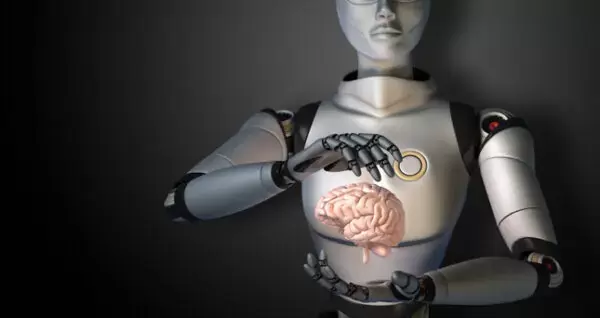
The article mentions chunks of characters and autoregression. The first in the series left out some other important parts of LLMs. AI is not the human brain, but AI has a mind. The inner workings of LLMs and the outcome that includes emergence, or emergent abilities, properties or phenomena operate like a mind.
The overall function of any mind is to know. It may arise from a complex organ as the brain, it may in a form of memory in a single-celled organism, or from an object system like a computer, or from human brain cells—or organoids—in the nervous system of murine.
Neurons or whatever simulates them result in the making of a mind or something with a broad mechanism for knowing. Feelings, emotions, reactions, knowledge, language and so on, are known. Some systems do not have artificial neural networks but are able to know to extents.
There are premises that neural networks were built on intended to mimic the brain. Many of those led to progress, but did not exactly get the mind. It is often said that the brain or more precisely, the mind generates predictions. It is this prediction generation or predictive coding, processing against errors that shaped LLMs.
The mind, however, does not make predictions. It functions in a way that appears so, but it does not. Cells and molecules of the brain structure, organize, construct or build the components of mind. It is the components of mind that operate what is labeled predictions.
When someone is speaking, typing, listening or signing, there is often preparation of what may come next in the mind. Sometimes, it may seem like it should be one thing, but it is another. Some other time, nothing may present. It is also this preparation that is sometimes used to recall things or the same way that something is set up to be remembered.
There is no exclusive prediction function in the mind. The mind, conceptually, has quantities and properties. Quantities relay to acquire properties to varying extents. It is the property that gets acquired in a moment that determines what an experience is, or simply what is known.
Quantities have early-splits or go before, where some in a beam head in a direction like before, so that others simply follow. If the input matches, there would be no changes, if not, the following quantities head for the right direction. This explains what is labeled as predictions. Quantities have old and new sequences. They can also be prioritized or pre-prioritized. Prioritization is what attention for transformers simulate.
Properties have thin and thick shapes. They have a principal spot where one goes to have the most domination. They also have bounce points. A thick property can merge some of its contents, resulting in creativity. Properties can be formed by quantities. Some properties are also natural, enabling things for humans that other organisms do not have. Every label used to explain the mind including conditioning have an exact mechanism of how the mind drives it. Conditioning or reinforcement is simply a property acquired per a situation, which seems better than another property.
How does the human mind work to be useful for explainable AI or interpretability, towards alignment? The human mind has a structure, has functions and components. For all it does for internal and external senses, how does it work, including for sentience, or knowing? Some of the answers to the unknowns for AI could emanate from the mind, boosting transparency.
—
iStock image

