


Dating isn’t real. The concept of “dating” someone else only rests in our minds, and here’s why this is true.
Though I admit, a blanket statement like this is unlikely to rewrite the definition of dating, nor is it to say that my opinion is true for everyone else.
I see dating like this: A “Pre-relationship” or a “Proto-relationship”.
Dating habits are a precursor to anything in the relationship.
The only real thing about dating is how we behave leading up to commitment.
Since dating is an established term, I’ll continue to use it in my life, but it’s also a made-up idea.
Sometimes it’s used to excuse “bad” behaviors. Ghosting, stonewalling, tardiness, flakiness, zero boundaries, selfishness, etc… Things that will typically hurt someone’s feelings who is on the receiving end.
Not everyone makes excuses, but subconsciously, we may believe (and I’ve done this) that we’re not responsible for how we treat others just because we’re not in a “committed relationship” with them.
We’re only dating, who cares?
Does that mean “dating” is all bad? Or that everyone has some malicious, ulterior motive? No, but we need to get clearer on what it means to “date”.
I don’t have to explain why people “date” and get into relationships. Sex feels good, love and connection are fulfilling, and it’s fun to spend time with people we find attractive.
But often, people put themselves in weird and awkward situations with strangers or people they don’t know too intimately.
Yes, we do it for sex, love, connection, experience, relationship, etc… but in some way, “dating” has turned into this massive “free-for-all” where everything goes and it’s all become normalized.
Intentional dating vs. Casual dating.
1. Intentional dating:
The end goal is to build a relationship for love and connection to thrive, but at the same time the outcome of such a thing is “good either way”. It’s about having a non-attached outcome.
Not a detached attitude of “I don’t care. Doesn’t matter to me.”
Detachment tends to lead people to avoidance; where we avoid the tough parts of love and relationship (i.e. tough talks, uncomfortable feelings, etc..)
However, the fundamental flaw with “relationship” is that this has many different meanings and boundaries for everyone. Yet, we could classify a relationship as having: Feeling, Action, Reciprocation, and Framework.
2. Casual “dating”
The “no-strings-attached-kind-of-thing”, boundary-less, “situationships”, “playing-the-field”, hookups, and the like are the sort of thing where we may be quite detached from any outcome.
It’s a laissez-faire type of attitude that I don’t particularly care for.
Without a clear goal besides pleasure, casual “dating” is nothing more than “messing around” and wasted time and energy if your intent is a deep, genuine connection with someone.
Otherwise, you’re throwing mud on the walls and hoping something will stick if you fall into this dynamic with people who only want to have a “bit of fun”.
If you’re not ready to build a relationship, that needs to be clearly stated upfront, none of this:
- “I think I want a relationship…”
- “I’m not sure, but let’s see where things go.”
- “I’m still figuring it out.”
- “I don’t know what I’m doing, let’s just wing it!”
For example, one former colleague told me how when she started dating her partner, they said to her “Well, this will be the anniversary of when we started dating”.
I recall her telling me that she was uncomfortable with that statement.
Her feelings were valid, but if we get unnerved by the thought of a date naturally leading to something more intimate, why even go out in the first place?
Is it wrong to assume now that we should expect more from people these days?
To forget dating is a lifelong part of relationship.
“Dating” doesn’t just stop once you fall in love and have a relationship.
The relationships that don’t continue to practice building connection and chemistry are bound to fail at some point. Trust me. My last long-term relationship ended this way.
Unfortunately, our relationship peaked right before the COVID-19 outbreak. It’s not the pandemic’s fault that the chemistry in our relationship started to wane. We weren’t going on dates.
It’s not like everything was all “shut down”. As the years went by, we didn’t maintain the relationship by dating each other.
We could have still had date activities in which we did things together at home or went out to places that weren’t public gatherings like the park or something. But we made excuses.
We avoided intimacy and settled for what the relationship had become by the time it ended. Eventually, when problems surfaced, there wasn’t much incentive for either of us to really give a fuck.
…
If we don’t treat “dating” as a means to a long-term relationship, we’re unlikely to have a meaningful relationship that we desire.
Meaning, it’s time to start practicing the behaviors that make a relationship early on. Love and connection have to be built. They don’t just fall into our laps.
If we aren’t slightly more intentional with our actions, and we treat our partner as a stranger, will we ever prioritize them? Will we ever open up?
Unlikely.
That’s been my experience. The situations I’ve been in where the other person didn’t treat it as a priority never turned into a relationship. In the instances in which we’ve prioritized each other, things lasted slightly longer.
I don’t mean to say we should “jump into” a relationship with someone on the first date, but there’s an argument to be made for less “standoffish”, more vulnerable, and less guarded behaviors around people we supposedly hope will lead to a long-term partner.
…
When “dating” is not intentional, it’s casual.
Secure people feel comfortable with intimacy and are usually warm and loving; anxious people crave intimacy, are often preoccupied with their relationships, and tend to worry about their partner’s ability to love them back; avoidant people equate intimacy with a loss of independence and constantly try to minimize closeness.
— Amir Levine, Attached: The New Science of Adult Attachment and How It Can Help You Find — and Keep — Love
I’ve “dated” a lot of girls who displayed behaviors linked to either a dismissive or fearful-avoidant attachment style.
While it’s false to say every avoidantly attached individual dates casually, at least from my personal experience, their fears of intimacy unconsciously steer them in that direction. Even if they consciously state they intend to build a relationship with someone.
In the long run, their words were often misaligned with their actions.
Sometimes I would ask and receive answers such as “I think I want a relationship…” “I want to have a relationship.” “I want you to ask me to be your girlfriend.”
However, as the “dating experience” progressed, despite these self-professed words, their behaviors signified that “what we had” was an afterthought:
- Lack of effort.
- Limited communication.
- Tardiness.
- Flaking.
- Lack of vulnerability or avoidance of intimacy.
Their actions spoke more than their words. Their true priorities rested on other things. Not me, not dating, and not a relationship.
That is their prerogative, and there’s no judgment, but this is a common occurrence from my experience and with other people I know.
The point isn’t to bash exes or previous partners, but we’ll mislead people when we’re not honest, upfront, or certain about what we want. At worst, some of this behavior is dishonest and manipulative, and at best, it’s casual or non-committal.
Casual “dating” is messing with people’s hearts.
We shouldn’t “date” someone unless we’re ready to take accountability.
Someone may develop feelings for us, and if we’re unconsciously (or not) deceiving others with our motives, goals, or priorities, there is blame to be had on our part.
For example, if you go out with someone and they insist they’re open and ready for a relationship, and lead you on for weeks or months of exclusive dating, only to discard you when their fears of intimacy become overwhelming that avoidant partner is responsible for the emotional fallout of their partner feeling distress, grief, confusion, anger, and disappointment.
Here’s why:
As someone with behaviors associated with an anxious attachment style, I can get attached to someone quicker than I should. Meaning, that I can certainly develop feelings for someone and rely too heavily on the “relationship” and its success far sooner than appropriate.
The healing goal of someone like myself is to seek reassurance from “within”. To take back ownership of one’s frame. Meet our own needs. We must learn to feel what it’s like to stand up for ourselves and accept who we are as people.
Often, healing isn’t a passive thing, sometimes it’s an active behavior. The other day I got the chance to stand up to an ex. I didn’t need her approval, and I spoke my truth.
The intentions of avoidant people can be hard to figure out when their actions don’t match their words.
However, as we learned, avoidant partners have a responsibility when they fail to articulate their motives to the people they are seeing. This isn’t to say that anxious partners don’t have a part to play either.
Anxious people need to learn to be more secure with or without a relationship.
All attachment patterns were learned in childhood. To avoid the sting of perceived abandonment from their parents, “avoidants” focused on their parents wants and needs to the detriment of their own.
It’s similar to an anxiously-attached person, but avoidants love to “love bomb”.
The same behavioral patterns manifest in dating. This time, it’s just geared towards a partner. As such, they become skilled at people-pleasing and love-bombing (a particular trait that some of my fearful avoidant partners were masters at).
If you’re on the receiving end of these “kind”, “lovely”, and “thoughtful” gestures, it’s natural to develop feelings for these types of people. Who wouldn’t feel good when their partner says or does things like:
“I think I like you…no… I definitely like you!” or they go out of their way to make trinkets for you, invite you to the movies or a sporting event, or suggest they want you to meet their parents soon.
It’s not wrong to think these people are genuinely interested in us. But deep down, their people-pleasing leads to resentment.
Ken said it better than I can, so here’s a short clip on “avoidant love bombing”.
Ken Reid
“Go with the flow.”
When I hear the words “I want a relationship” early in the “dating” phase, I will steer our interactions in that direction. I’m not going to waste time making assumptions or second-guessing what they want. The situation will play out as it needs to.
If we’re not compatible or have no chemistry or connection fine. We’ll part ways. I can accept that.
But I can’t get behind this idea of “let’s go with the flow” or “let’s wing it” and waste time with people who don’t have common values.
The casual daters make dating the “main course”. That’s all they want. They “can have their cake and eat it too”.
Or they hope, by some miracle that things will just “fall into place” if they date enough people. They prefer surface-level interactions, conversations, and experiences that require minimal investment. That’s usually a sign that this is the most they are capable of.
We can boil this down to one simple concept. The idea of prioritizing someone else and a loving, intimate relationship is nauseating and frightening to them.
…
To conclude,
Dating is part of relationship.
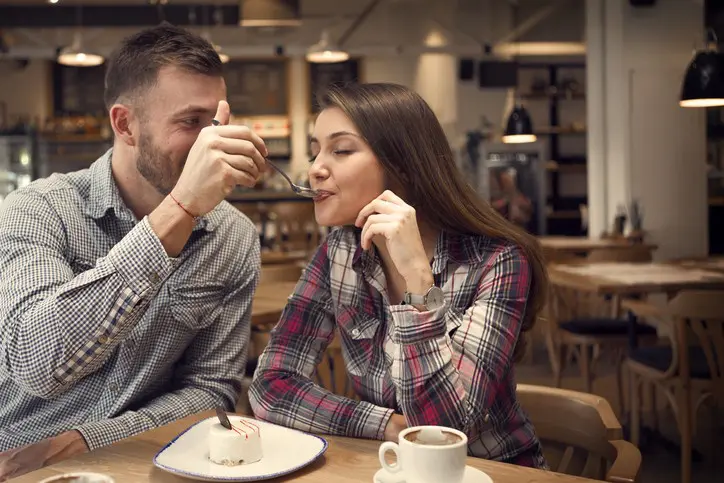
Whatever the behavior is: abuse, kindness, compassion, ghosting, stonewalling, and everything else, these are precursors for what to experience in an actual relationship with that person sitting across from us at the coffee shop.
But if we treat dating as the “main event” without considering relationships don’t just “come out of nowhere”, it’s unlikely for that “dating” experience to bear the fruit of anything worthwhile unless we steer it in the direction we want.
That requires us to be intentional with our actions. To have the eagerness and follow-through to make it a priority. To be emotionally available and vulnerable. And to be a partner to someone, and not just mooch off the title of “relationship”.
With all of this in mind, it also requires a non-attached outlook. To be good with the outcome regardless of what happens.
If we intend to mess around without any attachment, that must be communicated clearly.
…
Are you interested in more advice like this?
Subscribe to my Substack and unlock weekly exclusive insights that inspire, challenge, and transform.
Let’s grow together. Sign up now!
…
If you liked this article, follow me here on Medium.
I post new articles 2 to 3 times per week.
—
This post was previously published on medium.com.
***
From The Good Men Project on Medium
 |
 |
 |
 |
***

Join The Good Men Project as a Premium Member today.
All Premium Members get to view The Good Men Project with NO ADS.
A $50 annual membership gives you an all access pass. You can be a part of every call, group, class and community.
A $25 annual membership gives you access to one class, one Social Interest group and our online communities.
A $12 annual membership gives you access to our Friday calls with the publisher, our online community.
Register New Account
Need more info? A complete list of benefits is here.
—–
Photo credit: Paloma A. on Unsplash
