


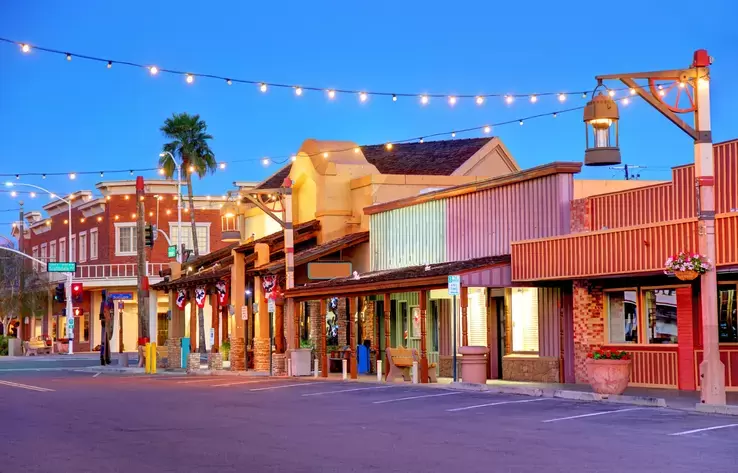
As artificial intelligence reshapes white-collar work and fuels unease across corporate America, a very different mood is taking hold on Main Street. While office jobs are being re-evaluated and workflows rewritten, many brick-and-mortar businesses are looking toward 2026 with something closer to calm confidence.
From barbers and bakers to butchers and family-run retailers, storefront businesses tend to operate in a world that is physical, personal, and rooted in face-to-face service. That grounding appears to be acting as a buffer against the broader wave of automation anxiety.
To understand how this plays out locally, Advance Funds Network surveyed 3,012 storefront business owners, asking how confident they feel heading into 2026 – and how exposed they believe their businesses are to technological disruption. The results reveal a striking divide between Main Street sentiment and the fears dominating corporate conversations.
The 10 Most Confident Main Street Businesses in America:
1. West Palm Beach, Florida
West Palm Beach ranked in first place for confidence thanks to its people-driven local economy. Many storefront businesses here rely on in-person service, repeat customers, and steady foot traffic from residents and visitors alike. Owners see technology as supportive, not threatening, leaving them feeling resilient and optimistic heading into 2026.
2. Fort Lauderdale, Florida
Unlike sectors worrying about automation, many Fort Lauderdale storefronts operate in spaces where presence matters. Tourism keeps demand flowing, but it’s the hands-on nature of hospitality and service work that gives owners confidence. For them, tech feels peripheral — not something that threatens the core of the business.
3. New Orleans, Louisiana
Ask local owners what protects their businesses here and the answer isn’t technology — it’s character. From food to retail, success in New Orleans depends on personality, culture, and lived experience. That sense of irreplaceability explains why many shopkeepers feel insulated from wider AI anxiety.
4. Oceanside, California
Confidence in Oceanside showed up in 4th place overall. Storefronts benefit from repeat locals, in-person spending, and customers who want real interaction, not digital substitutes. Owners described a market shaped by lifestyle rather than disruption, where physical businesses still feel relevant, valued, and commercially steady.
5. Orlando, Florida
In Orlando, confidence comes from volume and variety. Storefront owners serve residents, tourists, and workers alike, spreading risk across multiple customer types. Many operate experience-led businesses where personal service matters, making automation feel distant and leaving owners focused more on demand than disruption.
6. Pasadena, California
Pasadena business owners, the 6th most confident in the country, spoke less about growth and more about durability. Many run long-established shops supported by loyal local customers, where reputation and expertise drive sales. That grounding in trust and repeat trade helps explain why the outlook feels steady, even as tech uncertainty rises elsewhere.
7. Jersey City, New Jersey
Here, optimism is shaped by proximity. Jersey City storefronts benefit from dense neighborhoods and daily foot traffic, serving customers who value convenience and familiarity. Owners described businesses built around routine human interaction — a model they see as hard to replace and unlikely to vanish overnight.
8. Buffalo, New York
Buffalo’s confidence is rooted in resilience. Many small businesses have weathered decades of economic change and adapted without losing their local base. Owners told us that having already survived downturns makes today’s AI-driven uncertainty feel manageable — just another shift to navigate, not a threat to survival.
9. Hollywood, Florida
For many storefront owners in Hollywood, confidence is tied to consistency. Local businesses benefit from a steady flow of residents and visitors, with demand centered on food, services, and everyday needs. Owners see their work as rooted in physical presence, making automation concerns feel largely theoretical.
10. Scottsdale, Arizona
Rounding up the top 10, Scottsdale’s optimism comes from positioning. Many shops cater to discretionary spending – wellness, dining, personal services — where experience matters more than efficiency. Owners described customers who seek quality and connection, reinforcing the sense that their businesses rely on human judgment rather than replaceable processes.
Interactive map showing where the most confident main streets are in 2026.
What Main Street Believes Gives It an Edge
When asked what gives local businesses their biggest advantage today, owners consistently pointed to human-centered strengths:
- Personal, face-to-face service (32%)
- Local loyalty and repeat customers (30%)
- Community trust (14%)
- Work that can’t be automated (10%)
- Flexibility and independence (10%)
- Lower reliance on technology (4%)
That sentiment carried through when respondents were asked what AI would struggle most to replace:
- Local customer relationships (40%)
- Manual or skilled physical work (38%)
- Management and leadership (20%)
- Creative work (2%)
A Cautious but Grounded Outlook
Looking ahead to the next two years, optimism is measured rather than euphoric:
- Thriving and expanding: 24%
- Holding steady: 12%
- Struggling but surviving: 56%
- At risk of decline: 8%
Despite those pressures, belief in the cultural importance of Main Street remains overwhelming. Nearly all respondents said local businesses are either essential (58%) or very important (24%) to the identity of a town or city.
“What this study shows is that Main Street confidence isn’t about ignoring change – it’s about understanding where technology helps and where it simply can’t replace human connection,” says Irving Betesh, CRO of Advance Funds Network. “Local businesses may be cautious, but they are grounded in something far more durable than hype: trust, relationships, and the everyday role they play in their communities.”
—
Photo: iStock

