


—
When the first cold snap hits, there’s nothing worse than fumbling with an unfamiliar thermostat while your house grows colder by the minute. Whether you’ve just moved into a new place, you’re helping an aging parent, or you simply haven’t touched the heating system since last winter, knowing how to turn on heater in house settings correctly is a practical skill worth mastering.
This guide walks you through the process for every common heating setup, plus what to do when things don’t go as planned.
Step 1: Identify Your Heating System
Before you touch anything, figure out what kind of system you’re working with. Most American homes use one of these:
- Forced-air furnace— Burns natural gas, propane, or oil and pushes warm air through ducts and vents.
- Heat pump— Moves heat from outside air into your home. Common in milder climates and increasingly popular nationwide.
- Boiler with radiators or baseboards— Heats water or steam that circulates through pipes.
- Electric baseboard heaters— Individual units mounted along walls, often with their own dial.
- Mini-split system— Wall-mounted indoor units controlled by a remote.
Check your basement, utility closet, garage, or attic for the main unit. A large metal box with ductwork means a furnace. A tank-like vessel with pipes means a boiler.
Step 2: Set Your Thermostat Correctly
For most homes, this is the only step you’ll need.
On a digital or smart thermostat:
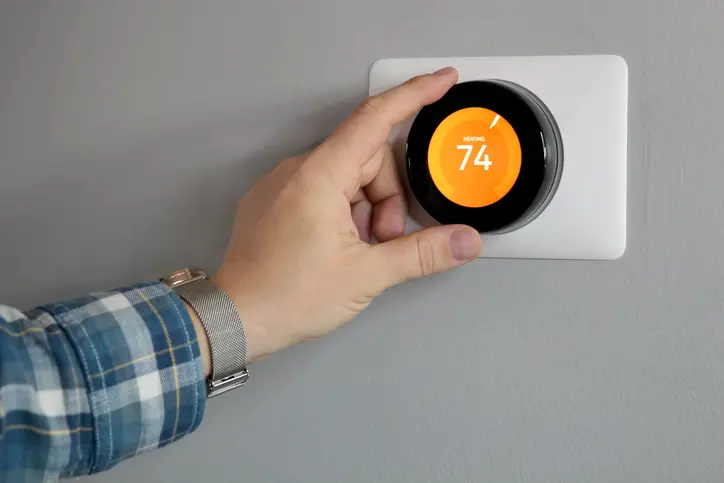
- Press the MODE button until the display reads HEAT.
- Use the up arrow or touchscreen to set your target temperature a few degrees above the current room temperature.
- Set the fan to AUTO rather than ON — this prevents the blower from running continuously and pushing cool air between heating cycles.
- Many systems have a built-in delay of up to five minutes before the burner fires.
On an older manual thermostat: Flip the switch from OFF or COOL to HEAT, then slide the temperature lever upward. Some models have a separate fan switch — leave it on AUTO.
A reasonable winter setting is 68°F while you’re home and awake, dropping to 60–65°F overnight or when you’re out. The Department of Energy estimates you can save roughly 10% annually on heating bills by lowering the thermostat 7–10 degrees for eight hours a day.
Step 3: Check Power and Fuel
Most people searching for how to turn on heater in house guides get stuck right here — the thermostat looks fine, but nothing happens. Work through these checks in order:
Thermostat batteries. A blank or flickering screen usually means dead batteries. Most units take two AA or AAA batteries behind the faceplate.
Furnace power switch. There’s almost always a switch near the unit that looks exactly like a light switch — sometimes on the furnace itself, sometimes on a nearby wall or joist. Make sure it’s ON.
Circuit breaker. Find the panel and look for a tripped breaker labeled “furnace,” “HVAC,” or “heat.” Flip it fully off, then back on.
Gas valve. For gas systems, confirm the shutoff valve on the supply line runs parallel to the pipe, not perpendicular.
Oil tank level. Oil-heat households should verify the tank isn’t empty before troubleshooting further.
Step 4: Handle the Pilot Light or Ignition
Furnaces built before the mid-1990s often have a standing pilot light. If yours has gone out:
- Turn the gas control knob to OFF and wait five full minutes for any gas to clear.
- Turn the knob to PILOT.
- Hold a long lighter to the pilot opening while pressing and holding the reset button.
- Once lit, keep holding the button for 30 seconds, then release and turn the knob to ON.
If you smell gas at any point, stop immediately. Leave the house, and call your gas utility from outside.
Newer furnaces use electronic ignition and have no pilot light. If these fail to fire, the issue is typically a faulty igniter or flame sensor — a job for a technician.
Step 5: Prepare for the First Burn
Expect a burning-dust smell during the first hour of the season. That’s normal — it’s accumulated dust on the heat exchanger burning off. Open a window briefly if it bothers you.
Before you crank the heat, replace your air filter. A clogged filter restricts airflow, strains the blower motor, and can cause the system to overheat and shut down. Also walk through the house and make sure furniture, rugs, and curtains aren’t blocking supply vents or return grilles.
When to Call a Professional
Contact an HVAC technician if your heater short-cycles, blows cold air, makes banging or grinding noises, trips the breaker repeatedly, or won’t ignite after you’ve verified power and fuel. Annual professional maintenance before heating season remains the single best way to avoid a mid-January breakdown.
—

