


The person who drives a garbage truck may himself be viewed as trash. The worse danger is not the job itself but the devaluing of those who do it. A society that considers your body dispensable will inflict a violence upon you. Working in a field is one thing; being misled by a corporation about the safety of a carcinogenic pesticide is another. Hammering on a roof is one thing; not being able to afford a doctor when you fall off it is another. Waiting tables is one thing; working for an employer whose sexual harassment you can’t afford to fight and risk a night’s worth of tips is another.–Sarah Smarsh, Heartland
When the media discuss poverty in America, they typically focus on urban areas and often on the minority poor. But a majority of the poor are white and rural poverty rarely gets the same attention, except in coverage that suggests it is a thing of the past or conveys stereotypes about their behavior or their voting patterns.
But there are rare journalists who do more in-depth pieces on poverty and inequality and who have lived it themselves. One is Sarah Smarsh and her new book Heartland: A Memoir of Working Hard and Being Broke in the Richest Country on Earth, immediately hit the bestseller lists after hitting the bookshelves. Now, it is a finalist for the National Book Award.
That subtitle is well chosen. In a country that doesn’t like to talk about class, or even acknowledge that it exists, the poor are often convinced that if they haven’t made it, it is their fault. Smarsh’s Kansas family certainly internalized this lesson: “The responsibility for our actions is ours and ours alone, I had been taught. But I see now that my dad changed under the pressure of the situation. I would watch his spirit flicker as his economic situation fluctuated.”
Like most young poor people, it would take years for Smarsh to come to this realization. She saw the mistakes her family members made, substance abuse and domestic violence among them, and likely assumed that middle and upper-class people didn’t do those things. But as she would come to realize “They suffered from weaknesses of character, yes–just like every other person, in every other income bracket. What put the shame on us wasn’t our moral deficit. It was our money deficit.”
This internalized shame is pervasive, as Smarsh notes “Society’s contempt for the poor becomes the poor person’s contempt for herself.”
This is made worse by the lack of representation of poor and working-class people in the media and popular culture, something I have noted before as a problem that has increased since my childhood. Smarsh says it well, “To be made invisible as a class is an invalidation. With invalidation comes shame. A shame that deep–being poor in a place full of narratives about middle and upper classes–can make you feel like a failure.”
It isn’t just resources or psychology that place the poor at a disadvantage; it is in every aspect of society and how we interact with our institutions. Writing about her experience in school with a difficult teacher, Smarsh notes: “When unfit teachers occupy classrooms, certain children are most vulnerable—those with disabilities, who can’t convey mistreatment to their parents, and those whose parents are too negligent, too drunk, or too busy to ask how school is going.”
Unlike other media narratives on the issue, Smarsh’s account is grounded and real, in part because she lived it herself and is not flying in as an observer. But also because she is a talented writer. A ready comparison is Ta-Nehisi Coates’ book “Between the World and Me.” Coates’ work is a memoir, written as a letter to his son, about race in America.
Smarsh employs a similar device about class, writing to a daughter who is, as yet at least, hypothetical. A daughter of poverty she has chosen not to have.
I have no idea if she’s read Coates, but Heartland is not derivative. I first became aware of her work in a lengthy four-part series she wrote on Dolly Parton for the music magazine No Depression. I was impressed with her ability to weave together personal narrative, family history, musical influences, and political and social trends.
Parton gets only a brief mention in the book, but Heartland takes a similar approach, describing the lives of Smarsh’s parents, grandparents, and others, all of whom have made mistakes, but all of whom worked hard and remained poor, something many Americans seem to believe is impossible.
The rural poverty Smarsh describes differs from urban poverty in important ways, not just the demographics of those affected. Many of the people she discusses own their own homes and often farms and businesses, but remain poor, struggling, their lives often dominated by instability.
Smarsh acknowledges that racism and other factors mean that the white poor have some advantages, but one can see from her work why so many fail–or refuse–to see it. It’s hard to hear that you are privileged when you are objectively struggling. Her family lives in a situation she describes as “a complicated mix of privilege and disadvantage.”
The shame the poor feel are often, without irony, inflicted on others, but in ambivalent ways. She describes a common scene from her childhood:
‘”Get a job,” Grandma would murmur about homeless people holding signs at Wichita stoplights under highway on-ramps. Then she would start cranking her window down. “Lou, find Grandma’s purse, please,” she’d say. “Hand me my wallet.”’
That ambivalence, about poverty, race, and a variety of other issues, is part of the American character. While we pretend to be a society of equal opportunity, our daily experiences prove otherwise. Whether you are designing policy or simply want to learn more about the lives of the poor and working class, Sarah Smarsh’s Heartland is a highly recommended place to start.
—A version of this piece also appeared in the Porterville Recorder on November 14th, 2018.

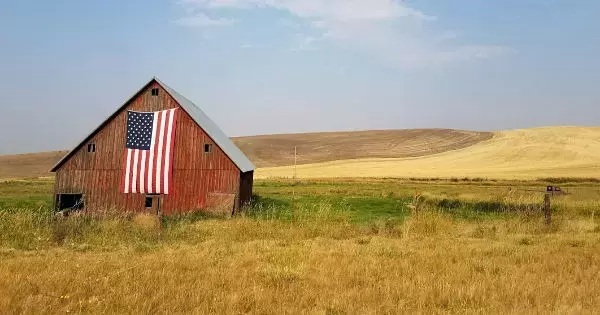
Photo by specphotops on Unsplash

