


—
Dinosaur skulls have long fascinated collectors, educators, and enthusiasts alike. Whether displayed in museums or private collections, these relics offer a direct connection to a prehistoric world that continues to captivate the imagination. Yet, as interest grows, so does confusion around what is actually being offered in the market.
Many people searching for a dinosaur skull for sale quickly discover that not all skulls are created equal. Some are genuine fossils millions of years old, while others are carefully crafted replicas designed for accessibility and durability. Understanding the difference is essential for making informed decisions, whether for education, display, or personal passion.
What Defines a Real Dinosaur Skull?
A real dinosaur skull is a fossilized remnant of an actual prehistoric animal. These skulls have undergone a process called fossilization, where organic material is gradually replaced by minerals over millions of years.
Key Characteristics of Real Fossils
- Age: Typically over 65 million years old
- Material: Mineralized bone, often heavy and stone-like
- Rarity: Extremely rare and often incomplete
- Scientific Value: High importance for research and study
Because of their rarity, complete dinosaur skulls are seldom found intact. Paleontologists often work with fragmented pieces and reconstruct them using scientific methods.
Challenges of Owning Real Skulls
Owning a real fossil comes with several limitations:
- High cost due to rarity
- Legal restrictions in many regions
- Fragility and sensitivity to environmental conditions
- Ethical considerations regarding preservation
For most individuals and institutions, these challenges make real skulls impractical for everyday use or display.
What Are Replica Dinosaur Skulls?
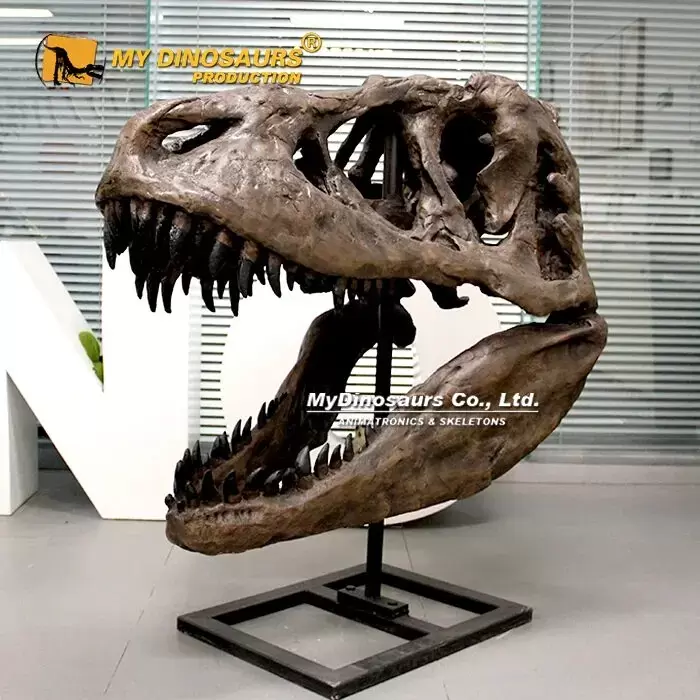
Replica dinosaur skulls are scientifically accurate reproductions made from molds of real fossils. These replicas are crafted using materials such as resin, fiberglass, or high-density polymers.
Why Replicas Are Popular
Replicas offer a practical alternative to real fossils while maintaining visual and educational value.
- Affordability: Significantly lower cost
- Durability: Resistant to damage and environmental factors
- Accessibility: Widely available for purchase
- Educational Use: Ideal for hands-on learning
Many replicas are so detailed that even experts need close inspection to distinguish them from originals.
Real vs Replica: A Side-by-Side Comparison
| Feature | Real Dinosaur Skull | Replica Dinosaur Skull |
| Authenticity | 100% genuine fossil | Reproduction from real fossil |
| Cost | Extremely high | Affordable |
| Durability | Fragile | Durable |
| Availability | Rare | Widely available |
| Legal Restrictions | Often regulated | No restrictions |
| Educational Use | Limited handling | Safe for interaction |
This comparison highlights why replicas dominate the commercial and educational markets.
How to Identify a Quality Replica
Not all replicas are equal. High-quality replicas are designed with precision and attention to scientific accuracy.
Features to Look For
- Accurate proportions based on fossil records
- Detailed texture replicating bone surfaces
- Correct coloration reflecting fossilized material
- Professional casting techniques
A well-made replica should capture the essence of the original fossil without appearing artificial or overly polished.
Common Mistakes Buyers Make
- Choosing based solely on price
- Ignoring scale and size accuracy
- Overlooking material quality
- Failing to verify craftsmanship
Careful evaluation ensures a better long-term investment.
Why Replicas Are the Preferred Choice Today
In modern settings, replicas serve a broader range of purposes than real fossils.
Educational Advantages
Replica skulls are widely used in:
- Classrooms for hands-on learning
- Museums for interactive exhibits
- Theme parks for immersive experiences
They allow people to engage physically with prehistoric history without risk of damage.
Practical Display Benefits
For collectors and businesses, replicas offer:
- Easier maintenance
- Safer transportation
- Consistent appearance over time
These factors make replicas a reliable choice for long-term display.
Choosing the Right Dinosaur Skull for Your Needs
Selecting the right skull depends on the intended use.
For Education
- Choose lightweight, durable materials
- Prioritize anatomical accuracy
- Opt for full-scale models when possible
For Decoration
- Focus on visual impact and size
- Consider wall-mounted or freestanding options
- Match the style to the surrounding environment
For Collecting
- Look for limited-edition replicas
- Ensure high craftsmanship standards
- Verify the source of the mold
Understanding the purpose helps narrow down the best option.
The Role of Craftsmanship in Replica Production
Creating a realistic replica requires a blend of science and artistry. Skilled artisans work closely with fossil data to ensure accuracy.
The Process
- Mold Creation: Taken from original fossils or reconstructed models
- Material Casting: Using durable, lightweight substances
- Detailing: Hand-finishing textures and features
- Coloring: Applying realistic tones and shading
This meticulous process ensures that replicas are not just copies but educational tools and visual masterpieces.
The Growing Demand for Dinosaur Replicas
Interest in dinosaurs continues to grow across all age groups. From children discovering prehistoric life to adults building themed spaces, the demand for replicas has expanded significantly.
Several factors contribute to this trend:
- Increased access to educational content
- Popularity of dinosaur-themed attractions
- Advancements in replica manufacturing technology
As a result, the market for replicas continues to evolve, offering more realistic and diverse options than ever before.
Conclusion
Understanding the difference between real and replica dinosaur skulls is essential for anyone exploring this fascinating field. While real fossils hold immense scientific and historical value, their rarity and limitations make them inaccessible for most people.
Replicas, on the other hand, provide a practical and visually compelling alternative. They combine accuracy, durability, and affordability, making them suitable for education, decoration, and collection alike. As interest in prehistoric life continues to grow, replicas ensure that the wonder of dinosaurs remains within reach for everyone.
Choosing the right skull ultimately comes down to purpose. With the right knowledge, anyone can confidently select a piece that brings the ancient past to life in a meaningful and lasting way.
—

