


—
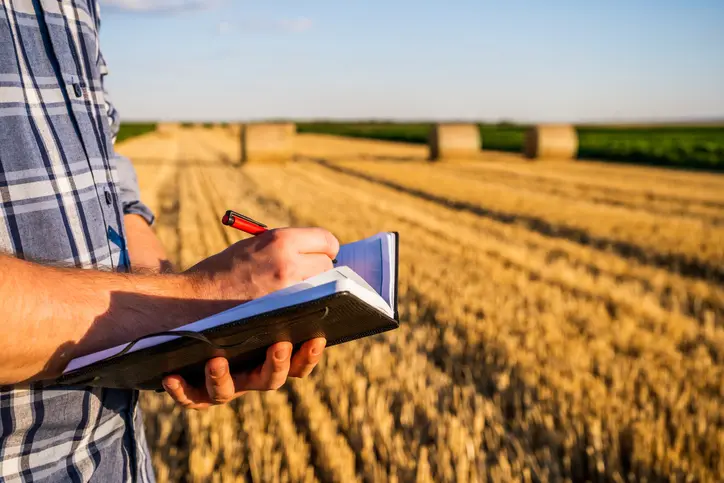
Not long ago, farm records lived in spiral notebooks on the dashboard, ledgers on the kitchen table, and filing cabinets in the shop. Planting dates were scribbled on calendars, spray records were written on the back of receipts, and yield totals came from scale tickets stuffed in a folder. For generations, that system worked well enough.
Today, the picture looks very different. Tractors log their own activity, sensors report soil moisture to a phone, and cloud platforms store years of field history that can be pulled up in seconds. The tools have changed dramatically, and so have the expectations from lenders, buyers, regulators, and landlords.
This article looks at how farm record-keeping has evolved, what new opportunities and challenges digital tools bring, and why the fundamentals still matter as much as ever.
What Hasn’t Changed: The Importance of Keeping Farm Records
Before looking at what is new, it helps to remember what has stayed the same. The importance of keeping farm records has never been about the format. It has always been about running a sound business and making informed decisions.
Good records have always helped farmers:
- Understand profitability. Knowing what each crop, field, or enterprise costs to produce shows where money is made and lost.
- Secure financing. Lenders rely on accurate financial and production records to evaluate loans and operating lines.
- File taxes correctly. Organized income and expense records reduce errors and support deductions.
- Meet legal requirements. Pesticide applications, labor, and certain environmental practices have long required documentation.
- Plan for the future. Field histories guide rotation, fertility, and seed decisions year after year.
- Support succession planning. Clear records make it easier to transfer knowledge and assets to the next generation.
Digital tools have not replaced these goals. They have made it faster, easier, and more accurate to reach them.
How Farm Records Used to Be Kept
Traditional record keeping relied on memory, paper, and a lot of discipline. A typical system might have included a pocket notebook for field notes, a desk calendar for key dates, a ledger or basic accounting program for finances, and folders full of invoices, receipts, and scale tickets.
This approach had real limitations:
- Delayed entry. Notes were often written up days or weeks later, leading to missing or inaccurate details.
- Scattered information.Field records, financial data, and equipment logs lived in different places and were hard to connect.
- Limited analysis. Comparing yields across years or calculating cost per acre by field took hours of manual work.
- Risk of loss. Fire, floods, spills, or a misplaced notebook could wipe out years of history.
- Knowledge stuck in one head. Often only one person truly understood the system, which created problems when they were unavailable.
Many farmers kept excellent records under these constraints, but it required considerable time and effort, usually after long days in the field.
Change One: Records That Create Themselves
The biggest shift in the digital age is that much of the data now records itself. Modern equipment and connected devices capture detailed information automatically as work happens.
Examples of automatic data capture include:
- Precision planters logging seed variety, population, and location for every pass
- Sprayers and spreaders recording product, rate, and coverage maps
- Yield monitors capturing harvest data down to small sections of each field
- GPS fleet trackers documenting where machines went, how long they ran, and fuel use
- Soil and weather sensors reporting moisture, temperature, and rainfall in real time
- Livestock tags and scales tracking animal weights, health events, and movement
This automation reduces the burden of manual entry and dramatically improves accuracy. Instead of trying to remember how many acres were sprayed last Tuesday, a farmer can pull up an exact as-applied map. The role of the record keeper has shifted from writing everything down to reviewing, organizing, and using the data that is collected.
Change Two: Mobile, Cloud-Based, and Real-Time
Paper records lived in one place. Digital records live everywhere you need them. Cloud-based platforms and mobile apps have changed when and where farm records can be created and accessed.
Key improvements include:
- Entry at the moment of action. Scouting notes, photos, and application details can be logged from a phone right in the field.
- Access from anywhere. Owners, managers, agronomists, and accountants can view the same up-to-date information from different locations.
- Shared team records. Employees can contribute to a single system instead of keeping separate notes.
- Automatic backups. Cloud storage protects records from loss due to fire, flood, or a broken computer.
- Offline capability. Many apps store data without a signal and sync once a connection returns, which is essential in rural areas.
Real-time records also support faster decisions. A manager can see which fields have been sprayed, where equipment is working, and what inventory remains without making a single phone call.
Change Three: Higher Expectations for Documentation
As record-keeping tools have improved, so have the expectations placed on farms. Buyers, regulators, and financial partners increasingly ask for detailed, verifiable documentation.
Today’s documentation demands often include:
- Crop insurance reportingwith accurate acreage and production records by unit
- Government program compliance for conservation practices and acreage reporting
- Food safety and traceability requirements that track products from field to buyer
- Sustainability programs that ask for data on tillage, cover crops, nitrogen use, and carbon practices
- Certified and specialty marketssuch as organic or non-GMO, which require detailed audit trails
- Lender and landlord reporting that expects clear financial and production summaries
Digital records make meeting these requirements far more manageable. Instead of rebuilding a year’s history from scattered notes before an audit or deadline, farmers can generate reports directly from data they have already captured. In many cases, strong digital records also open the door to premium markets and incentive programs that would be difficult to access otherwise.
Change Four: From Record Keeping to Decision Making
In the past, records were mostly historical. They documented what happened so it could be reported or referenced later. Digital records are increasingly predictive and analytical, helping farmers decide what to do next.
With digital records, farmers can now:
- Compare hybrid or variety performance across fields, soil types, and years
- Calculate cost of production and profit per acre for each field
- Identify underperforming areas that may benefit from drainage, fertility, or management changes
- Build variable-rate prescriptions based on yield history and soil data
- Track equipment hours and fuel use to plan maintenance and replacement
- Benchmark performance against previous seasons or regional averages
This is perhaps the most meaningful change of all. The importance of keeping farm records now extends beyond compliance and taxes to become a core driver of profitability. Records that once sat in a filing cabinet are now active tools for planning every season.
New Challenges and How to Get Started
Digital record-keeping brings clear advantages, but it also introduces new challenges that farmers did not face with paper systems.
Common challenges include:
- Data overload. Equipment and sensors generate huge volumes of data, and it can be hard to know what matters.
- Disconnected platforms. Data may be split across equipment portals, apps, and accounting software that do not share information.
- Data ownership and privacy. Farmers need to understand who owns their data and how providers may use it.
- Online records require strong passwords, secure access, and reliable backups.
- Learning curve. Adopting new tools takes time, and busy seasons leave little room for training.
The good news is that you do not need to digitize everything at once. A practical path forward looks like this:
- Start with your biggest pain point, such as spray records, input tracking, or financial reporting.
- Choose tools that integrate with your existing equipment and accounting systems.
- Set simple routines, like logging activities daily or reviewing records weekly during the season.
- Digitize key historical records such as field boundaries, recent yields, and major input data.
- Read data agreements carefully and keep your own exports and backups.
- Expand gradually as your team becomes comfortable with the tools.
Frequently Asked Questions
Why is keeping farm records so important?
Farm records help you understand profitability, secure financing, file accurate taxes, meet regulatory requirements, and make better production decisions. They also protect your business during audits, insurance claims, and succession planning.
What types of records should a farm keep?
At a minimum, keep financial records, field and crop records, input purchases and applications, yield and production data, equipment maintenance logs, labor records, and any documentation required by government programs or buyers.
How long should farm records be kept?
Requirements vary by record type. Tax records are commonly kept for at least several years, and restricted-use pesticide records have specific federal and state retention periods. Check with your accountant and local regulators for exact timelines.
Is digital record keeping better than paper?
For most operations, yes. Digital records are faster to enter, easier to search and share, safer from loss, and far more useful for analysis. Paper can still work as a backup.
Do I need expensive software to go digital?
No. Many farms start with free or low-cost apps, basic accounting software, or the platforms that come with their equipment. You can add more advanced tools as your needs grow.
Who owns the data stored in farm software?
It depends on the provider’s terms. Review data agreements carefully and choose platforms that confirm you own your data and can export it at any time.
How can I keep my digital records secure?
Use strong, unique passwords, enable two-factor authentication, limit user access to what each person needs, and keep regular backups in a separate location.
Old Purpose, New Possibilities
Farm record keeping has come a long way from notebooks on the dashboard. Equipment now records its own work, mobile apps capture details in the moment, cloud platforms protect years of history, and analytics turn raw data into practical decisions. At the same time, expectations for documentation from buyers, lenders, and regulators continue to rise.
Through all of these changes, the importance of keeping farm records remains exactly the same. Good records are the foundation of a profitable, resilient, and well-managed operation. The difference today is that digital tools make those records easier to keep and far more powerful to use. By starting small, choosing the right tools, and building consistent habits, any farm can turn its records into one of its most valuable assets.
—

