


—
There’s a moment that happens in almost every animal shelter. As new people walk in, all the dogs wag their tails in excitement. Then a family pauses at one of the stalls, and the dog inside looks up at them, waiting to be pet. But the family keeps going, and the dog inside watches them leave.
For some dogs, that moment repeats itself for days. For others, it stretches into months. And for a few more, it becomes years.
Those dogs become the ones no one asks about, the ones staff members love deeply but worry about constantly. And that’s where Jordan’s Way begins: not with a campaign or a polished message, but with the dogs that keep getting passed by.
A different kind of advocacy
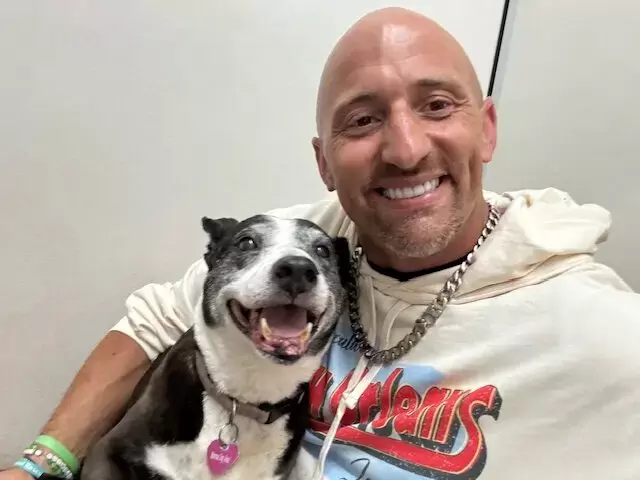
Kristopher Rotonda didn’t set out to build a traditional nonprofit model. His approach is far more immediate and, at times, unpredictable. He shows up at animal shelters across the country and turns fundraising into something people cannot ignore to help forgotten dogs get adopted.
Instead of quiet donation drives, Rotonda hosts high-energy, often chaotic animal shelter fundraising livestreams, complete with costumes, dares, and humor that feels unfiltered and human. And behind all of it, there is a simple goal: get people to care enough to act.
“We have to meet people where they are,” Rotonda says. “If that means doing something ridiculous to get attention, then that’s what we’ll do. Because the dogs need it.”
Rotonda’s method works. While shelters that partner with Jordan’s Way often raise more in a few hours than they typically would in weeks, the money is only part of it. The visibility helps dogs who have long been overlooked suddenly have names, stories, and people asking about them.
The dogs we don’t see
The phrase “longest shelter dog in America” sounds almost like a title, but it points to something harder to sit with. These are the dogs who have spent the most time waiting, the ones who age in kennels and become “too much” for casual adopters. Too big. Too energetic. Too misunderstood.
Rotonda has made it a priority to find them and help them find their forever homes. For him, “What happens to dogs that spend years in shelters?” isn’t a rhetorical question; it’s something he has seen up close, over and over again.
Some shelter dogs shut down. Others become anxious. And some keep hoping every time a person walks by.
Through Jordan’s Way, Rotonda uses his organization’s platform to bring those dogs forward and help give them another chance. And sometimes, that’s all it takes.
Turning attention into participation
What makes Jordan’s Way different is how its initiatives pull people in. These campaigns are built for participation, intended to get people engaged and excited to see what comes next. They feel less like fundraisers and more like shared moments people don’t want to leave.
That same approach was behind the organization’s 2026 national scavenger hunt for “The Dog America Forgot,” which was designed to extend beyond a single shelter or event. A partnership between Rotonda, the famous Dog the Bounty Hunter, and one of the nation’s most famous puzzle-makers set off across the country in a search for the dog that has lived in a shelter for 15 years, culminating on April 30th.
The premise was simple enough to draw people in: follow clues, engage with shelters, and compete for a prize. But underneath it is a larger question: “Can I really win $10,000 while helping a rescue dog?”
The answer was “yes.” But the real win was the exposure each participating shelter received along the way. It created a reason to keep looking, keep sharing, and keep talking about the other dogs who might otherwise remain invisible.
Why adoption matters
When presented with this idea, Rotonda agreed only if the dog everyone was searching for actually got adopted. “No one, not even a dog, should live in a shelter for that long. Every living thing deserves someone to take care of them,” shares Rotonda.
Jordan’s Way helps people feel less anxious about adoption, as many new to the process worry they might not know where to start. Rotonda’s organization highlights individual dogs and partners closely with shelters, making the process feel more immediate and human, not through long guides or complicated steps, but through stories, faces, and moments that feel real enough to act on.
And when someone does adopt, it doesn’t feel abstract or impossible. Instead, it feels as if both the human and the dog have known each other forever.
A growing movement, not just a moment
Efforts tied to initiatives like the National Adopt a Shelter Pet Day campaign have helped bring even more attention to the issue. But Rotonda’s work extends far beyond a single event, viral moment, or day on the calendar.
It’s about building consistency in a space that often relies on urgency, showing up for shelters repeatedly, and creating momentum that doesn’t disappear when the livestream ends.
And most importantly, it’s about continuing to advocate for the dogs who are still waiting after the cameras are off. Because at the center of all of it is still that same moment in the shelter: the pause as a decision is made, and the dog watches another human walk away.
Jordan’s Way exists to interrupt that moment. And, more often than not, to change how it ends.
—

