


—
Most people never think about the moment their money becomes data. A paycheck lands, a mortgage payment clears, a pension fund buys a bond. Behind each of those events, information races through dozens of systems before it settles into a report someone trusts. If a field is dropped or a value is truncated along the way, nobody notices, until a statement is wrong or a regulator asks a question no one can answer.
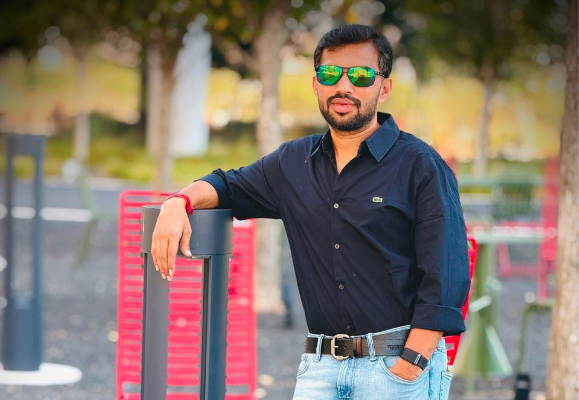
Sasank Aramadaka is one of the people whose job is to notice. For more than sixteen years he has worked in software quality and data engineering, much of it in banking and mortgage finance. Today he works as a senior architect, designing and testing the systems that move financial data onto the cloud. Along the way he has done something many engineers never find time for. He has written down what he has learned.
Since 2019, Aramadaka has published six research studies. They are technical, practical and rooted in the work. But read together, they make a larger point about craft: that being sure is not luck or instinct. It is a discipline that can be designed, taught and shared.
~ Starting at the edges
His earliest research began where systems meet the outside world. Large organizations increasingly route their calls to external services, such as identity checks or document providers, through a single gateway. Aramadaka studied how to hold that gateway to a contract, so that any change on the outside is caught before it ripples inward.
He then followed the data inside, into the web of microservices that has replaced many older banking applications. His research on end-to-end validation showed how to prove that a transaction behaves correctly across a dozen small services, while keeping the kind of evidence regulators expect to see.
~ Teaching machines to compare
The middle of his body of work deals with a problem that sounds simple and is not: checking that data in one place matches data in another. Financial firms often run several database engines at once. Moving data between them, or onto the cloud, means comparing millions of records written in different formats.
Aramadaka’s research proposed a single comparison framework that works across many engines, and a layered approach to checking cloud warehouses tier by tier, from raw landing files through staging to the base tables people actually query. This year he took the idea further, showing how automated comparison can be tied directly into the batch schedulers that run overnight data jobs, so that every scheduled run is checked as a matter of routine rather than as an afterthought.
It is unglamorous work. It is also the reason that a nightly load either becomes a trusted report by morning or a problem someone has to explain.
~ The data everyone depends on
His newest study, published this month, turns to one of the most important and least visible kinds of financial information: reference data about financial instruments. Details such as a bond’s identifier, its maturity, its coupon or its classification are used by trading desks, risk teams, accountants and regulators alike. When that data is vended out to dozens of downstream systems, any error spreads quickly.
Aramadaka’s research looks at how to keep that reference data both accurate and timely, a balance that matters more than ever when markets move quickly and decisions are made in hours rather than days. It reflects his current work consolidating securities and treasury accounting data into a single platform and building data marts for risk management, forecasting and reporting.
~ The tools of a careful trade
Aramadaka’s research is grounded in a wide technical toolkit. In his current architecture role he works across Amazon S3, Redshift, EMR, Lambda, Glue, Step Functions and CloudWatch, supports migrations from on-premises Netezza databases to the cloud, and has implemented a data testing framework that compares Oracle, Netezza, Redshift, Postgres and S3 sources. He schedules and runs Ab Initio workflows through Autosys and validates every step from file to landing to staging to base tables.
Before that, he led quality engineering teams, writing Selenium automation in Java with TestNG and Maven, automating API, load and stress tests in JMeter, testing with Postman, SoapUI and Prism, and monitoring with Kibana and Splunk. He holds AWS Developer Associate, IBM Certified Developer, ISTQB and ITIL certifications.
~ Why it matters beyond the server room
There is a tendency to think of quality work as a final checkpoint, something that happens after the real engineering is done. Aramadaka’s six studies argue the opposite. They show that assurance has to be designed into every layer: at the gateway, between services, across databases, inside the warehouse, alongside the scheduler and at the source of reference data.
The impact reaches well beyond any one institution. As banks and lenders move more of their systems to the cloud, every migration is a chance for data to be lost or changed. Practical, repeatable methods for proving it was not are valuable to the whole industry, and to the customers who depend on it without ever knowing.
There is also something quietly admirable in the work itself. Making sure is rarely celebrated. When it is done well, nothing happens: the statement is right, the report adds up, the regulator’s question has an answer. Aramadaka has made a career, and now a research record, out of making sure that nothing happens. In an industry built on trust, few jobs matter more.
—

