


—
The “Big Dark” isn’t just a catchy name for our winters—it’s a brutal endurance test for every square inch of your home. If you live anywhere from the hills of Issaquah to the rainy streets of Ballard, you know the drill: by mid-November, everything in the backyard is slick, grey, and probably growing a fine coat of neon-green moss.
When you’ve finally had enough of staring at a soggy, unusable patch of grass, you usually find yourself weighing two very different paths: Deck Pavers or Composite Decking.
Both are marketed as the “low-maintenance” dream, but “low maintenance” means something very different when it hasn’t stopped drizzling for sixteen days straight. One of these materials is built to shrug off the Westmoreland wetness, while the other might turn your weekend into a never-ending battle with a pressure washer.
If you’re starting to research composite deck builders in the area, or eyeing those heavy stone slabs at the local hardware store, here is the honest, boots-on-the-ground breakdown of how these surfaces actually perform in our unique corner of the world.
1. The Moisture Factor: Rain vs. Rot
In a climate where things stay damp for weeks at a time, water management is everything.
- Composite Decking: These boards are engineered specifically to stop acting like a sponge. Because they’re a blend of recycled plastic and wood fibers, they don’t rot, warp, or invite wood-boring bugs. While the gaps between boards allow for drainage, the material itself stays stable through our endless wet-dry cycles.
- Pavers: Stone and concrete are incredibly durable, but they sit directly on the earth. If your base isn’t prepped perfectly, our heavy rains can cause “settling,” leading to puddles and uneven stones. In shaded areas (which is most of Seattle), those damp stones quickly become a breeding ground for slick, green algae.
The King County Reality: Composite handles the “perma-damp” with much less fuss. Pavers are tough, but they require a pro-level drainage setup to stay level and safe.
2. The Maintenance Gap
We all want to spend our three months of summer on the patio, not scrubbing it.
- Composite: Your spring “to-do” list is basically a garden hose and some soapy water. There’s no sanding, no staining, and no expensive sealing. It’s designed to look the same in year ten as it did on day one.
- Pavers: You’ll be fighting a constant battle with the cracks. Weeds and moss love the sand between pavers. Over time, you’ll find yourself power-washing the joints and needing to sweep in new polymeric sand to keep things looking tight.
3. Costs and Long-Term Value
Let’s talk about the investment.
| Feature | Composite Decking | Paver Patio |
| Upfront Cost | Higher (Materials + Framing) | Varies (Stone type + Labor) |
| Longevity | 25–30+ Years | Lifetime (if maintained) |
| Resale Value | High (adds “square footage”) | Moderate (enhances landscaping) |
| Winter Safety | Can be slick; dries fast | Can hold ice in low spots |
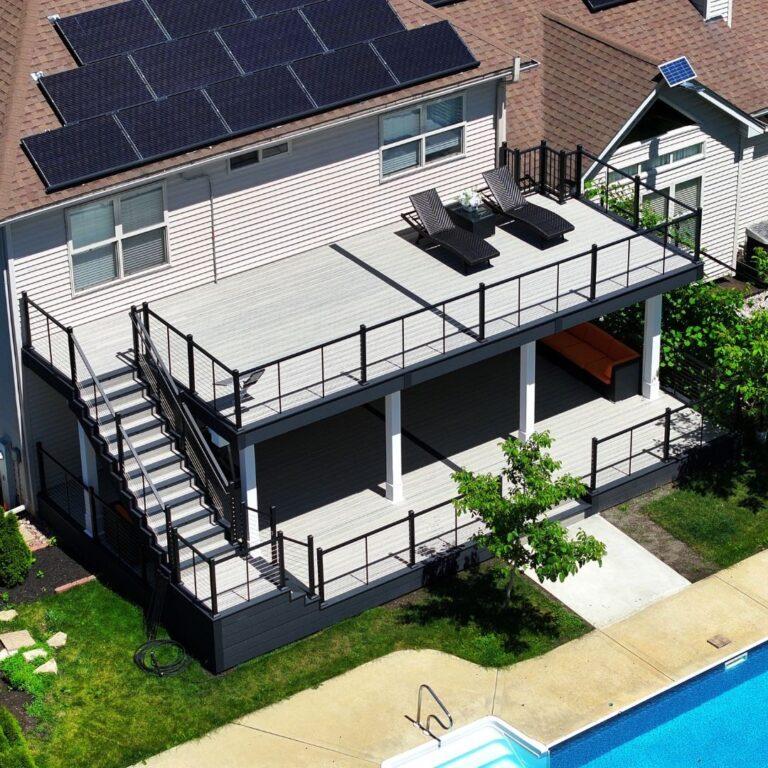
Composite usually costs more upfront because you’re building a structure, but it often yields a better return. In our hilly region, an elevated deck can turn a sloped, useless yard into a flat, functional “outdoor room” that connects directly to your kitchen or living space.
The Final Verdict: Which is better?
Choose Composite Decking if:
- You have a sloped yard or want an elevated view.
- You want a “barefoot-friendly” surface that doesn’t grow moss.
- You want the lowest possible maintenance during the rainy season.
Choose Pavers if:
- Your yard is already flat and you want a ground-level “natural” look.
- You’re planning a heavy feature like a stone fire pit or a pizza oven.
- You don’t mind a little “garden therapy” (aka weeding) once or twice a year.
My Recommendation
If you’re standing in your backyard in the middle of a November drizzle, trying to decide which way to go, here is the honest truth: For the average King County home, composite decking is the runaway winner.
It’s not just about the technical specs; it’s about how you’ll actually feel using the space. In the Pacific Northwest, our “outdoor season” is a moving target. We get those random, beautiful 60°F days in February where the sun peeks out for three hours. On a composite deck, those boards dry out quickly, stay clean, and are ready for a coffee break in minutes. On a paver patio, you’re often dealing with standing puddles, damp moss, and a surface that stays cold and clammy until July.
Think of it this way: * Composite decking feels like an extension of your living room. It’s a “barefoot” surface that bridges the gap between your cozy indoors and the fresh air. It adds that seamless, high-end look that Seattle and Bellevue deck contractors and buyers go crazy for, mainly because it proves you’ve built something specifically to withstand our unique rust-and-rot climate.
Pavers are gorgeous for a winding garden path or a dedicated fire pit “destination” further out in the yard, but as your primary entertaining space? They require a level of grit and maintenance—think weeding and power washing—that most of us just don’t want to deal with during our precious weekends.
The bottom line? If you want a space that stays “guest-ready” year-round with nothing more than a quick sweep, go with composite. It’s an investment that pays you back in time, sanity, and home value. Save the pavers for the decorative accents in your flower beds.
—

