


—
Ask a design team what’s changed most in high-end projects over the past five years, and furniture comes up before flooring, lighting, or even kitchens. Clients used to treat it as the last decision, something picked from a catalog after the real work was done. Now it’s often the first thing specified, built to match a room instead of the other way around.
This article looks at why custom furniture is gaining ground in premium home design, what actually separates it from mass-produced pieces, and where it makes the biggest difference, including in home theaters and media rooms.
Why Is Custom Furniture Becoming Standard In High-End Homes?
Exact fit, material quality, and design coherence are the three problems mass production can’t solve, and that’s precisely why custom furniture keeps gaining ground. High-end homeowners increasingly treat furniture as part of the architecture rather than an accessory added after the fact.
Large furniture purchases are already a major part of renovation spending. Roughly 39% of homeowners who renovated in the past year bought large furniture pieces as part of the project, according to the 2026 U.S. Houzz & Home Study. That figure reflects a broader shift toward treating furniture decisions as central to a renovation, not an afterthought once construction wraps up.
The Shift From Off-The-Shelf To Bespoke
Mass-market furniture is designed for the widest possible audience, which means it’s optimized for average rooms and average bodies rather than any one specific space. Custom furniture flips that logic entirely, starting from the room’s actual dimensions and the homeowner’s actual needs instead of a factory template.
A few forces are driving that shift at once:
- Larger, more unusual floor plans in new luxury builds that standard furniture sizing wasn’t designed for
- Rising renovation budgets that make custom pieces feel proportionate rather than indulgent
- Greater designer involvement in furniture selection, not just wall colors and finishes
- Longer-term ownership expectations, with homeowners planning to stay put rather than furnish for resale
Awkward or oversized spaces make this shift obvious fast. A sectional built for a standard living room rarely fits a curved bay window or an oversized media room without gaps or wasted space, while a custom piece is built to the exact footprint from the start.
What Actually Separates Custom Furniture From Mass-Produced Pieces?
Construction quality, materials, and design intent are what separate the two, not just the price tag. A factory piece is built to a fixed spec at scale, while a custom piece is built to a single brief with far more control over every component.
Build Quality And Materials
Cost efficiency drives most decisions in mass-produced furniture, which usually means lighter frames, lower-density foam, and finishes chosen for consistency rather than durability. Custom furniture makers typically have more flexibility to prioritize heavier frames, denser cushioning, and premium upholstery since each order is priced individually rather than averaged across thousands of units.
That difference compounds over time. A heavier, well-built frame resists sagging and structural wear far longer than a mass-market equivalent, which matters most in pieces that see daily, extended use.
The gap usually comes down to a few specific choices a maker gets to control on a custom order:
- Frame material, such as kiln-dried hardwood instead of particleboard or softer plywood
- Foam density, chosen for recovery and support rather than shipping cost
- Upholstery grade, including full-grain leather or heavier performance fabrics
- Mechanism quality, particularly in recliners, lift chairs, or motorized seating
Fit And Proportion
Nowhere does custom furniture earn its reputation faster than in fit. A piece built to a room’s exact measurements avoids the compromises that come with standard sizing, whether that’s a sofa that’s two inches too deep for a walkway or seating that doesn’t quite match ceiling height in a tiered room.
Comfort follows the same logic as proportion. Custom seating can be built around actual body dimensions and posture needs, which is a meaningfully different outcome than a one-size-fits-most recliner from a big-box retailer.
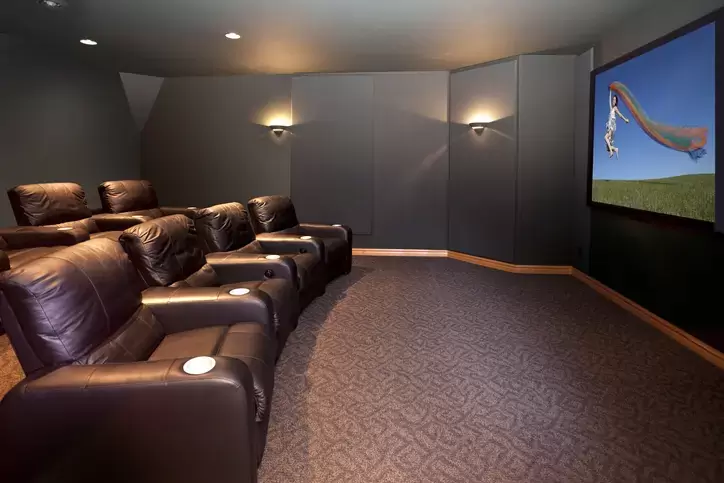
Home theaters make this especially clear. Custom home theater seats can be sized to fit tiered risers, curved rows, or tight sightlines that off-the-shelf recliners were never designed for, while also using heavier frames and higher-resilience foam suited to nightly, hours-long viewing. It’s one of the clearest examples of fit and build quality solving a problem that mass production simply can’t.
Design Coherence
Every piece reading as part of one deliberate plan, rather than a mix of separately sourced items, is what design coherence actually means in practice. Custom furniture makers typically work directly from a room’s finishes, palette, and layout, which keeps materials and proportions consistent across the whole space.
That level of consistency is difficult to replicate by mixing pieces from different manufacturers, since finishes, hardware, and scale rarely line up perfectly across brands.
How Should You Evaluate A Custom Furniture Maker?
Build quality, design flexibility, and long-term support are the three areas to check before committing to a project. A few concrete steps make that evaluation far more reliable than judging on photos alone.
- Ask about frame weight and materials. Request specifics on frame construction and foam density rather than accepting vague terms like “premium” or “heavy-duty” without numbers behind them.
- Check the warranty length. Compare the warranty against industry norms, since a short warranty on a custom piece often signals the maker doesn’t expect the product to hold up long term.
- Review past projects in similar spaces. Look for examples of rooms with comparable layout challenges, such as tiered seating or curved walls, to confirm the maker has handled that complexity before.
- Confirm where the piece is manufactured. Country of manufacture affects labor standards, lead times, and quality control, so get a straight answer rather than a general claim of craftsmanship.
- Ask who designs the piece. Some custom furniture is engineered with input from specialists, such as ergonomic or medical consultants for seating, which is a meaningful differentiator worth asking about directly.
Custom Vs Mass-Produced: A Quick Comparison
| Factor | Mass-Produced Furniture | Custom Furniture |
| Fit to room | Standard sizing only | Built to exact dimensions |
| Materials | Cost-optimized for scale | Selected for durability and feel |
| Warranty | Often 1 to 3 years | Can extend well beyond a decade |
| Design input | None | Tailored to room and homeowner needs |
| Lead time | Immediate or short | Longer, project-based timeline |
What Should You Expect During The Custom Furniture Process?
A defined sequence – consultation, design, material selection, production, and installation – is how nearly every custom furniture project moves forward. Understanding this flow in advance sets realistic expectations for timeline and involvement.
- Consultation: Measurements, room photos, and functional needs are gathered up front.
- Design and approval: Renderings or samples are reviewed and adjusted before production starts.
- Material and finish selection: Fabric, wood, or upholstery choices are finalized, often with physical samples in hand.
- Production: Build time varies widely depending on complexity, sometimes running several weeks longer than a stocked item.
- Delivery and installation: Larger or built-in pieces often require white-glove delivery and on-site setup rather than standard shipping.
Skipping ahead of this timeline is the most common frustration homeowners run into, usually because they assumed a custom order would arrive on the same schedule as an in-stock purchase.
The Real Reason Custom Furniture Keeps Gaining Ground
Custom furniture isn’t primarily a status symbol; it’s a fit-and-durability decision that happens to also look better, and that’s the single strongest insight worth taking from all of this. Homeowners investing in high-end interiors are increasingly unwilling to accept the compromises that come with mass production, whether that’s a sofa that doesn’t quite fit or seating that wears out within a couple of years.
That shift toward furniture as a considered, room-specific investment mirrors the broader move toward treating large furniture purchases as central to a renovation rather than an afterthought. Rooms with unusual demands, like tiered media rooms or curved layouts, tend to benefit the most, since custom furniture is often the only realistic way to get both a proper fit and lasting build quality in the same piece.
Frequently Asked Questions About Custom Furniture
Is custom furniture worth the extra cost compared to buying off the shelf?
For rooms with unusual dimensions or heavy daily use, yes, since the fit and durability gains typically offset the higher upfront price over time. For simple, standard-sized rooms, the value gap is smaller but still noticeable in build quality.
How long does custom home furniture usually take to build?
Timelines vary by piece and complexity, but custom orders generally take several weeks longer than in-stock furniture due to the design, sourcing, and production steps involved. Larger or more detailed pieces, like tiered seating, tend to sit toward the longer end of that range.
Can custom furniture be made to match an existing design style?
Yes, most custom furniture makers work directly from existing finishes, color palettes, and design references to keep new pieces consistent with the rest of the room. This is one of the main reasons designers prefer custom pieces for cohesive, high-end interiors.
Will custom home theater seating actually feel more comfortable than a standard recliner?
In most cases, yes, since custom seating can be built around exact body proportions, recline geometry, and extended-use comfort rather than a generic average. That difference becomes especially noticeable during longer viewing sessions.
What’s the biggest risk with ordering custom furniture?
The biggest risk is underestimating lead time or working with a maker who lacks a track record in similar projects. Reviewing past work and confirming build specifics in writing before ordering significantly reduces that risk.
—

