If you didn’t witness the 1989 Tiananmen Square massacre in central Beijing, China, live on television, shown on sets across the world. You probably have no appreciation for the scope of the massacre. The death toll is still unknown, over a quarter-century later, ranging from several hundred to several thousand. Tiananmen Square is one of the largest public squares in the world, built as a monumental civic space for mass gatherings, national ceremonies, and political symbolism.
Casualties included students, workers, bystanders, and soldiers caught in clashes. Censorship and the destruction of records limit the public domain of photos and official documents. Better photographs are available from the anniversaries held worldwide. While short-memory Americans may forget, the Chinese people never will.
Press enter or click to view image in full size
2009 (Twentieth Anniversary By ryanne lai — originally posted to Flickr as 香港人一條心, CC BY 2.0, https://commons.wikimedia.org/w/index.php?curid=8304194
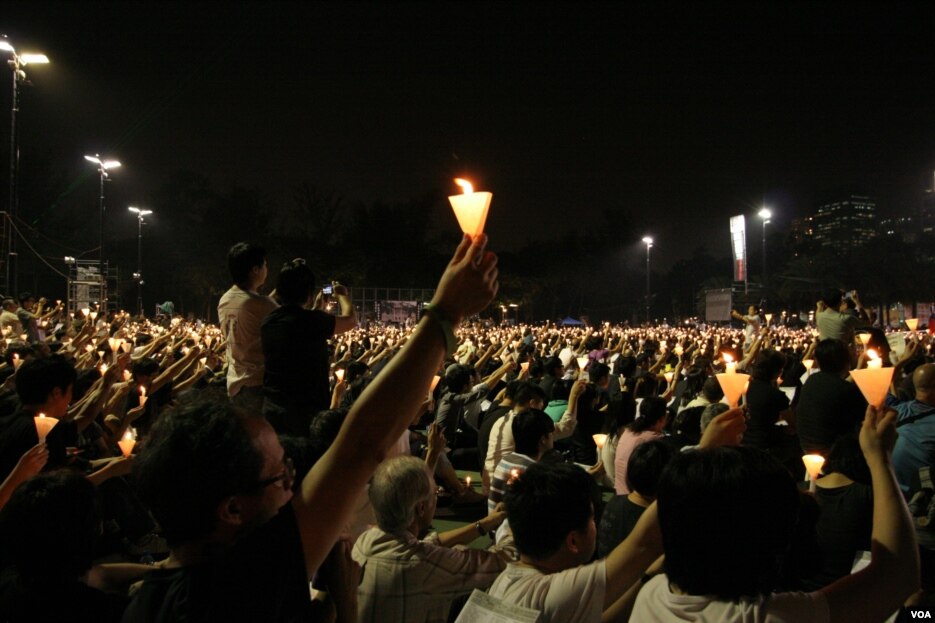
Press enter or click to view image in full size
2012 (23rd Anniversary) By 美国之音 — http://gdb.voanews.com/DF8CF5A8-4369-46EC-B6EB-4DC0CA8A8D70_mw1263_mh623_s.jpg, Public Domain, https://commons.wikimedia.org/w/index.php?curid=26081670
Press enter or click to view image in full size
By dbking — originally posted to Flickr as Tianamen Square Protests of 1989, CC BY 2.0, https://commons.wikimedia.org/w/index.php?curid=10558989
Press enter or click to view image in full size
By Prince Roy — originally posted to Flickr as 烈士们永垂不朽, CC BY 2.0, https://commons.wikimedia.org/w/index.php?curid=10490590
The horrific events in 1989 weren’t the first time students clashed with the Chinese government. On May 4, 1919, around 3,000 students from 13 universities in Beijing gathered to oppose Article 156 of the Treaty of Versailles, which ceded a German possession in China to Japan (the Shandong Problem). This officially sparked the May Fourth Movement.
See page for author, Public domain, via Wikimedia Commons
The seeds of the 1989 protests were planted in the late 1970s and 1980s, when Deng Xiaoping launched sweeping economic reforms known as “Reform and Opening‑up.” These policies introduced market mechanisms, foreign investment, and private enterprise — dramatic departures from Maoist central planning. The reforms produced rapid growth but also significant social stresses:
- Inflation surged, eroding the purchasing power of urban workers and intellectuals.
- A “dual‑track” pricing system allowed officials to buy goods at state prices and sell them at market prices, fueling widespread corruption and public resentment.
- Wealth disparities grew sharply, especially between politically connected elites and ordinary citizens.
At the same time, political liberalization lagged behind economic change. Students and intellectuals increasingly demanded press freedom, due process, and political participation, leading to student demonstrations in 1986 and 1987. This tension — economic opening without political reform — created a combustible environment.
On April 15, 1989, Hu Yaobang, a reform‑minded former Communist Party General Secretary, died. Hu was forced out in 1987 for being too tolerant of student protests, and students regarded him as a symbol of political openness and integrity.
His death triggered spontaneous mourning in Tiananmen Square. What began as memorial gatherings quickly evolved into political demonstrations calling for:
- Freedom of speech and the press
- Government transparency
- Action against corruption
- Dialogue with Party leaders
- Democratic reforms
By late April, tens of thousands of students were marching through Beijing, and the movement spread to cities across China.
The protests grew rapidly in size and ambition. By mid‑May, up to one million people were gathering in Tiananmen Square at peak moments.
Several key events escalated the crisis:
- On April 26, 1989, state media published a harsh editorial labeling the protests a “turmoil” and accusing students of trying to overthrow the Party. This radicalized many students and brought more people into the streets.
- On May 13, thousands of students launched a hunger strike, drawing massive public sympathy and paralyzing Beijing. The hunger strike coincided with the arrival of Soviet leader Mikhail Gorbachevon May 15, forcing the government to move official ceremonies away from Tiananmen Square and embarrassing China on the world stage.
- Inside the Communist Party, leaders were deeply divided:
- Zhao Ziyang,the General Secretary, urged negotiation and warned that the use of force would damage China for decades.
- Li Peng, the Premier, insisted the protests were a counterrevolutionary threat.
- Deng Xiaoping, though retired from formal office, remained the paramount leader and held decisive power.
This split paralyzed decision‑making for weeks, allowing the movement to grow.
- On May 20, 1989, the government declared martial law, deploying 250,000 troops toward Beijing. But residents blocked roads, surrounded military vehicles, and prevented troops from entering the city.
For nearly two weeks, Beijing existed in a surreal stalemate: a massive protest encampment in the square, and tens of thousands of troops stuck outside the city. By early June, hard‑liners convinced Deng Xiaoping that the movement threatened the Party’s survival. Deng approved a plan to clear the square by force.
Many senior leaders had lived through the chaos of the Cultural Revolution and feared instability above all else. Mass movements — especially student‑led ones — were associated with national trauma. Deng and other leaders believed that Western powers sought to undermine Communist rule through ideological infiltration. Student calls for democracy were interpreted not as patriotic reform but as a foreign‑influenced threat.
In 1989, communist regimes in Eastern Europe were collapsing. Chinese leaders saw the protests as part of the same wave and feared China could be next. Economic reforms had created winners and losers. Inflation, corruption, and inequality had eroded public trust. Leaders worried that allowing the protests to continue would expose the Party’s vulnerability.
Deng believed that without the Communist Party, China would fragment. He saw the protests as a direct challenge to Party authority and, by extension, to national unity. The leadership viewed the movement as a “legitimacy crisis” that threatened the entire reform project.
On the night of June 3–4, the People’s Liberation Army moved into central Beijing with tanks and live ammunition. Fighting broke out along major avenues, especially Chang’an Avenue, where some of the worst casualties occurred. The crackdown resulted in a “deadly massacre” on June 4 and 5. The image of one man standing in front of a line of tanks spread across the world as a symbol of resistance. It became known as “Tank Man.”
Press enter or click to view image in full size
.Tank Man Tiananmen Square 1989 Tank Man
The crackdown reshaped China’s political trajectory:
- Reformist leaders like Zhao Ziyang were purged.
- Hard‑liners consolidated power.
- China pursued economic liberalization without political reform, a model that continues to define the country today.
- Discussion of the events remains heavily censored inside China, leading to widespread condemnation.
- Troops reached Tiananmen Square in the early hours of June 4. Contrary to some myths, most student leaders negotiated a peaceful withdrawal — but violence continued throughout the city.
The question in the title is whether an event like the Tiananmen Square in 1989 could happen in the United States. Many of the conditions are the same. There is a general mistrust of government for many reasons, and we’ve already seen millions of people marching in the streets in reaction to the murder of George Floyd, the Women’s March, No Kings Day, with the response to the killing of Renee Good yet to be determined.
34th and Portland after ICE Murder of Renee Nicole Good — Chad Davis and link to chaddavis.photography/ Chad Davis. Creative Commons Attribution 4.0.
The United States in the 2020s and China in 1989 are profoundly different political systems, yet certain structural parallels provide a practical analytical framework. Both societies experienced periods of rapid economic change, rising public frustration, and deepening distrust in political institutions. These similarities do not imply identical outcomes, but they illuminate why large‑scale protest movements emerge and why governments sometimes respond with escalating force.
In 1989, China was undergoing a dramatic transformation. A decade of market‑oriented reforms had produced fast growth but also inflation, corruption, and widening inequality — conditions documented in historical accounts of the Tiananmen protests. Many Chinese citizens, especially students and urban workers, felt that the benefits of reform were flowing upward to politically connected elites. At the same time, political liberalization lagged behind economic change. The Communist Party maintained strict control over speech, media, and public assembly, creating a pressure cooker in which grievances accumulated without institutional outlets.
The United States today is technically not an authoritarian one‑party state, but it is experiencing its own version of structural strain. Economic inequality has reached levels not seen since the early 20th century. Many Americans feel locked out of economic mobility, while others believe political and corporate elites operate with impunity. Public trust in government institutions has fallen sharply, and polarization has created a climate in which each side views the other as an existential threat. Although the U.S. has formal democratic mechanisms, many citizens feel those mechanisms no longer respond to their needs. Congress has abdicated its role, and the Supreme Court has fallen in line with a president who doesn’t mind being a dictator. America has a racist element not present in Tiananmen Square, adding fuel to the fire.
Another parallel lies in generational dynamics. In China, students were at the forefront of the 1989 movement, demanding transparency, accountability, and political reform. Their activism reflected a belief that the older leadership was out of touch with the realities of a rapidly changing society. In the U.S., younger generations — Millennials and Gen Z — are similarly driving movements around racial justice, climate change, reproductive rights, and economic fairness. They often view established political leaders as unwilling or unable to address systemic problems.
A third similarity involves the role of information. In China, the government tightly controlled the media, but the arrival of foreign journalists and new communication channels allowed students to coordinate and amplify their message. In the U.S., the information environment is the opposite — hyper‑abundant, fragmented, and often manipulated. Social media accelerates mobilization but also fuels misinformation, deepening distrust and making consensus more challenging to achieve. Both environments create instability, though for opposite reasons.
Finally, both societies face questions about state power and protest. China’s leadership in 1989 viewed mass demonstrations as a direct threat to regime survival, leading to the military crackdown described in historical sources. In the U.S., state responses to protest vary widely, but recent years have seen increased militarization of policing, federal intervention in local unrest, and political rhetoric that frames protesters as enemies rather than citizens. While the U.S. retains legal protections for assembly, the boundary between maintaining order and suppressing dissent has become increasingly contested.
Beijing’s Tiananmen Square was a location capable of holding a million people at a time. America has a few places capable of holding that number of people. The National Mall in Washington, D.C. has already hosted 1.8 million for Barack Obama’s first inauguration, a Million Man March, and the March on Washington for Jobs and Freedom, along with the annual March for Life. Other potential locations include Central Park in New York and the Las Vegas Strip. Close behind are the Chicago lakefront with Grant Park and the Los Angeles downtown grid.
2009 Obama inauguration on National Mall sneakerdog, CC BY 2.0 <https://creativecommons.org/licenses/by/2.0>, via Wikimedia Commons
America has widespread unrest and a few locations where a million people could gather. The other requirement is a government willing to send the military into the streets to crush protests should they reach the scale of those in 1989 in China. Donald Trump, during his first term, when he was more restrained, was willing to have protesters shot in the legs to impose his will.
“Can’t you just shoot them, just shoot them in the legs or something?”
Donald Trump 2.0 has already flooded multiple American cities with National Guard units, Border Patrol, and ICE agents. Seems more than capable of sending troops and tanks to quell a protest. Ask yourself if Pete Hegseth, Pam Bondi, or Stephen Miller would be able or even willing to stop him.
A nation never imagines itself arriving at the edge of a confrontation it once believed could only happen elsewhere. Americans have long treated Tiananmen Square as a tragedy belonging to another political universe — an authoritarian state, a rigid party hierarchy, a government that saw its own citizens as a threat. But history rarely repeats itself in the same form. It echoes. It rhymes. And the conditions that produce state‑citizen conflict are not unique to any one country. They emerge wherever trust erodes, institutions calcify, and leaders begin to view dissent not as a democratic obligation but as a personal affront.
The United States has constitutional guardrails that are increasingly ignored. Congress is MIA. The Supreme Court routinely overrules the independent courts. The free press is now condensed in the hands of a few billionaires who are less willing to challenge the president. A culture of protest is woven into our national identity. But the right to protest is not self‑executing.
The Tiananmen movement grew from a simple truth: ordinary people believed their government had stopped listening. Inflation soared, corruption spread, and political reform stalled. Students filled the square not because they wanted to overthrow their country, but because they wanted it to live up to its own promises. The tragedy came when leaders interpreted those demands as a threat rather than a warning. Once a government convinces itself that its survival is more important than the rights of its citizens, the path toward violence becomes frighteningly short.
The United States faces its own pressures—economic inequality, political polarization, mistrust of institutions, and a growing belief among many that the system no longer responds to them. These forces do not guarantee a Tiananmen‑like confrontation, but they create the conditions in which one becomes thinkable. When leaders speak casually about using force against protesters, when crowds are described as enemies rather than constituents, when the machinery of the state is framed as a tool for settling political grievances, the line between maintaining order and suppressing dissent begins to blur.
The hope — the real, grounded hope — is that Americans still can pull back from that line. The country has weathered civil wars, mass movements, and constitutional crises because enough people insisted that the nation belonged to them, not to whoever held power at the moment. The lesson of Tiananmen is not that repression is inevitable. It is that silence is dangerous. A society that waits until the tanks are already rolling has waited too long.
An American Tiananmen Square is not destiny. But neither is it impossible. The future depends on whether citizens, institutions, and leaders choose to treat dissent as a threat — or as the lifeblood of a free society. The choice is still ours, but only if we recognize the stakes before the square fills.
Donald Trump has threatened multiple times during his second term to invoke the Insurrection Act, most recently in Minneapolis when he couldn’t stop protests against ICE, after the shooting of Renee Good. It’s a threat he’s made many times before without pulling the trigger. One day, he’s going to do it, and all hell will break loose.
—
This post was previously published on MEDIUM.COM.
—

If you believe in the work we are doing here at The Good Men Project, please join us as a Premium Member today.
All Premium Members get to view The Good Men Project with NO ADS.
Need more info? A complete list of benefits is here.
—
Photo credit: iStock.com