



As a child, films produced by Studio Ghibli are the only ones that can capture my wildest imagination. Now, I go back to them when I’m looking to feel comforted or searching for something that makes me feel warm and fuzzy.
One of my favourites is the 1988 film, “My Neighbor Totoro”. Even though it has already been 30 years, its key message on family, friendship, and most importantly the appreciation of the beauty of the natural world are just as relevant today.
Before going any further, be warned of spoilers!
Synopsis of My Neighbour Totoro

The film takes place in rural Japan located in Satoyama, Saitama Prefecture. It‘s the story of two young girls, Satsuki and Mei, who move to a new home in the countryside with their father to be closer to their mother in the hospital. While exploring their new surroundings, the girls discover Totoro, a giant, friendly forest spirit. As they spend time with Totoro and his magical friends, the girls learn to overcome their fears and embrace the wonders of nature.
Japan’s cultural understanding of nature
Let’s first talk about the film’s rural location. Satoyama translates from ‘Sato’ — village — and ‘Yama’ — mountain or hill.
Satoyama villages are geographically near forests and mountains. The villages and their people have found a way to coexist with nature by maintaining it and keeping it healthy while benefiting from its gifts like food and protection from natural disasters. Satoyama communities see the forests as part of their livelihoods, and the inhabitants live in harmony as custodians and inheritors.

Mei believed in the corn’s magical healing properties
The village’s sustainable practices and respect for nature are apparent throughout the film.
The sacred Camphor tree
One recurring motif in the film is the majestic Camphor tree that towers over Satsuki and Mei’s family home. It was also mentioned at the beginning of the film by their dad that it was the reason he bought this house.
“Trees and people used to be good friends. I saw that tree and decided to buy the house. ” — Tatsuo Kusakabe
It was later discovered that the giant Camphor tree is also home to Totoro and their small Totoro friends after Mei witnessed its magical secret for the first time.

The sacred Camphor tree
When Mei attempted to reveal her discovery to both her sister and father at the Camphor tree, we see that it is uniquely festooned with a rope and paper streamers. In the Shinto religion, these are used to identify sacred trees, known as Shinboku. The Shinto religion believes that divine spirits dwell in shinboku trees, making it forbidden to cut or pollute them. We see the utmost respect for nature represented in the film when Satsuki and Mei’s father takes them to bow before the giant camphor tree.
This mindful act acknowledges the respect they have for nature and their awareness of its mystical and ecological powers that exist within it.

Satsuki and Mei’s father takes them to bow before the sacred camphor tree
The best dad award goes to Mr. Tatsuo Kusakabe
As an Asian kid, I envy Satsuki and Mei for their relationship and openness with their father. Not only does he not dismiss their ‘imaginative’ statements, but he also encourages and believes in his children. It was also he who first introduced the sacred Camphor tree to the girls.
“I also believe that you met the King of the Forest, Mei, and meeting him is a sign of good luck.” — Tatsuo Kusakabe
Throughout the film, we see him listening to the girls’ stories with an open mind as he responds calmly and with insight.
Parents have a huge responsibility in keeping their children’s authenticity and innocence, especially being in a world of economic development and skepticism.
Through Mr. Kusakabe’s words and actions, the appreciation of nature by the girls reinforced their belief in its ecological magic.
Nature is a safe space to heal and seek comfort
As whimsical as the film may be, it still revolves around the absence of their mother who is seriously ill. To an extent, the thought of their mother’s mortality makes us deeply empathise with the young girls. While their dad is away at work, the girls were able to seek comfort in Totoro and the abundance nature has given them. Totoro and the other forest spirits protect and nurture the girls in their absence. There were many instances in the film, here are two of my favourites.
Growing trees
After Totoro gave the girls a pouch of acorns in exchange for their umbrella, they excitedly planted them in their garden bed in hopes to grow a “beautiful forest” for their mother. Even with Mei’s dedicated care in tending to the garden bed, they could not sprout. It was only when Three Totoros visited the garden bed one night and performed a kind of midnight ritual (as seen in the video) that the plants started growing. As the girls joined in, the seeds sprouted a giant new shinboku.
When they awake, it appeared to have been just a dream. However, the girls found that their garden had sprouted. The girls’ enthusiasm is contagious, giving the audience hope that the sacred forest will be reborn through their attentiveness and respect for nature.
Catbus
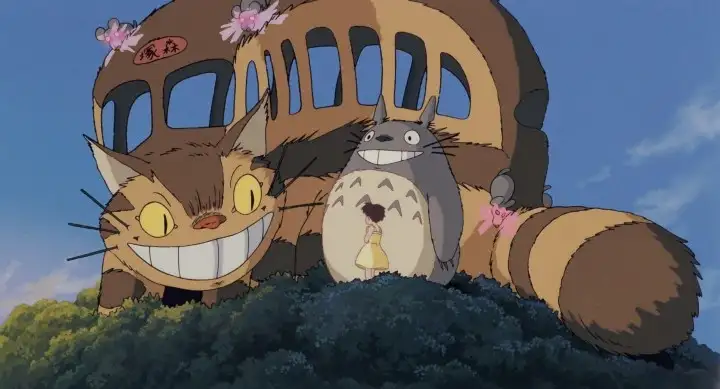
In the final scenes where Mei went missing in hopes of finding their mother, we see Satsuki turned to Totoro in helping to find Mei.
“I don’t know where else to turn.” — Mei
This was when Totoro summoned the Catbus, who reunited the sisters and took them to the hospital.
“Nature is where Satsuki and Mei can take refuge and dream, where they find hope in the moments when they miss their mother.”
…
My Neighbour Totoro is a fantastic movie that I look forward to watching again with my future children. For me, in this time of ambiguity, Totoro’s respect for nature reinforces my appreciation for it both spiritually and mentally. It has reminded me to remain imaginative and full of love like the characters of the show. Hayao Miyazaki is an amazing storyteller with the gifted power to convey different meanings to different people at different stages of their lives.
—
This post was previously published on medium.com.
***
You may also like these posts on The Good Men Project:
 White Fragility: Talking to White People About Racism White Fragility: Talking to White People About Racism |
 Escape the “Act Like a Man” Box Escape the “Act Like a Man” Box |
 The Lack of Gentle Platonic Touch in Men’s Lives is a Killer The Lack of Gentle Platonic Touch in Men’s Lives is a Killer |
 |
—
Photo credit: The Chubby Honu(Author)

