


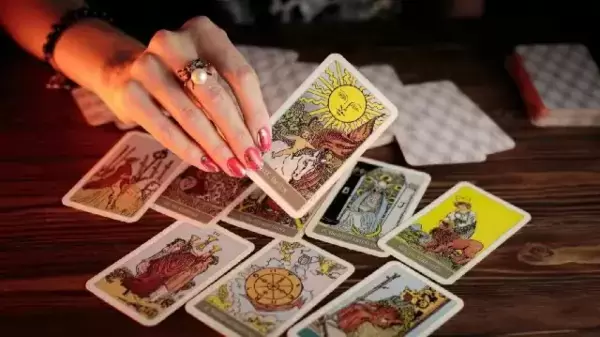
“Until you make the unconscious conscious, it will rule your life, and you will call it fate.” — Carl Jung
“What people commonly call fate is mostly their own stupidity.” — Arthur Schopenhauer
You don’t know much about yourself, and most of what you know is wrong. The person you see when you look in the mirror is a thin, dishonest representative of the infinite soul that lives within you. You don’t get it. You’re even more wrong about yourself than other people are.
That’s just as well, in terms of your day-to-day. You’ve got work to do and bills to pay. And if you knew yourself well, and understood your nearly limitless capacities, your head would explode, which would be inconvenient.
A lot of what happens is not your fault. Most of it has nothing to do with you. Life isn’t “fair” in terms of it being a meritocracy on any level. If you’re in an abusive situation, don’t do or think anything that doesn’t make it easier for you.
Beyond that, though…
If you walk into traffic and get hit, that’s not “bad luck.” If you lose your house in an earthquake, it is. Understand that spectrum. Own your side of it. And know that more stuff falls closer to your side than you care to admit.
Let’s try a thought experiment. What would your life be like if you were entirely responsible for your experience? If everything you know about yourself, everything you feel, everything you see in the world, was in fact your own creation, the result of deliberate processes of decisionmaking and creativity that go down in your own zone? How would things change for you if you adopted that point of view?
From this perspective: If you have something, it means you want it or need it. Everything going on in your life — pain, poverty, loneliness, etc. — has some valuable information for you about the way you think and feel and carry yourself. If it’s here, it belongs here. If it’s happening, it’s for you.
First, forgive yourself, for you know not what you do. But then, see if you can figure out what you do, and why. What unresolved internal drama might have given rise to such conditions?
If people claim they don’t want to suffer, then why does nearly everyone behave in ways that are nearly guaranteed to make them unhappy?
Life is suffering — there are no Noble Truths without that one. You can’t always get what you want, and you will always get plenty of what you don’t want. But you can choose, to some degree, how to interpret those signals.
There’s always a fine line between anxiety and excitement. So, if you must suffer, do it well. Do it on purpose. Suffer like you mean it.
That sounds kinky. Because it is. Kinksters know that pleasure is complicated. The best way to know why we suffer and how we hurt ourselves and each other is to see how we’re getting off on it, and realize consent is essential.
Some people hurt others because they enjoy it. But not all. Others believe they’re so small and insignificant that they don’t know their own strength or understand the damage they can do. They swing helplessly through the lives of those around them like big, lazy wrecking balls.
It doesn’t help you to think too little of yourself. What’s more, it’s irresponsible.
Know your own strength. Keep your power. Become a curator and connoisseur of your own suffering. Hurt others in the ways that most help them.
Become lucid in the waking dream of your life. Enjoy the complimentary continental breakfast.
—
This post was previously published on medium.com.
***
You may also like these posts on The Good Men Project:
 White Fragility: Talking to White People About Racism |
 Escape the “Act Like a Man” Box |
 The Lack of Gentle Platonic Touch in Men’s Lives is a Killer |
 |
—
Photo credit: petr sidorov on Unsplash

