



There seems to be more and more people wanting to Define what men and women are and what masculine and feminine energy are. I understand the world, and relationships are much easier when we make boxes to put things in. Maybe we even feel a sense of control. In most of these essays and posts, men, women, and everywhere in between seem to agree that men are protectors. It is not clear to me why women and children need protectors and what they need protection from. I would like to dive in and explore these questions.
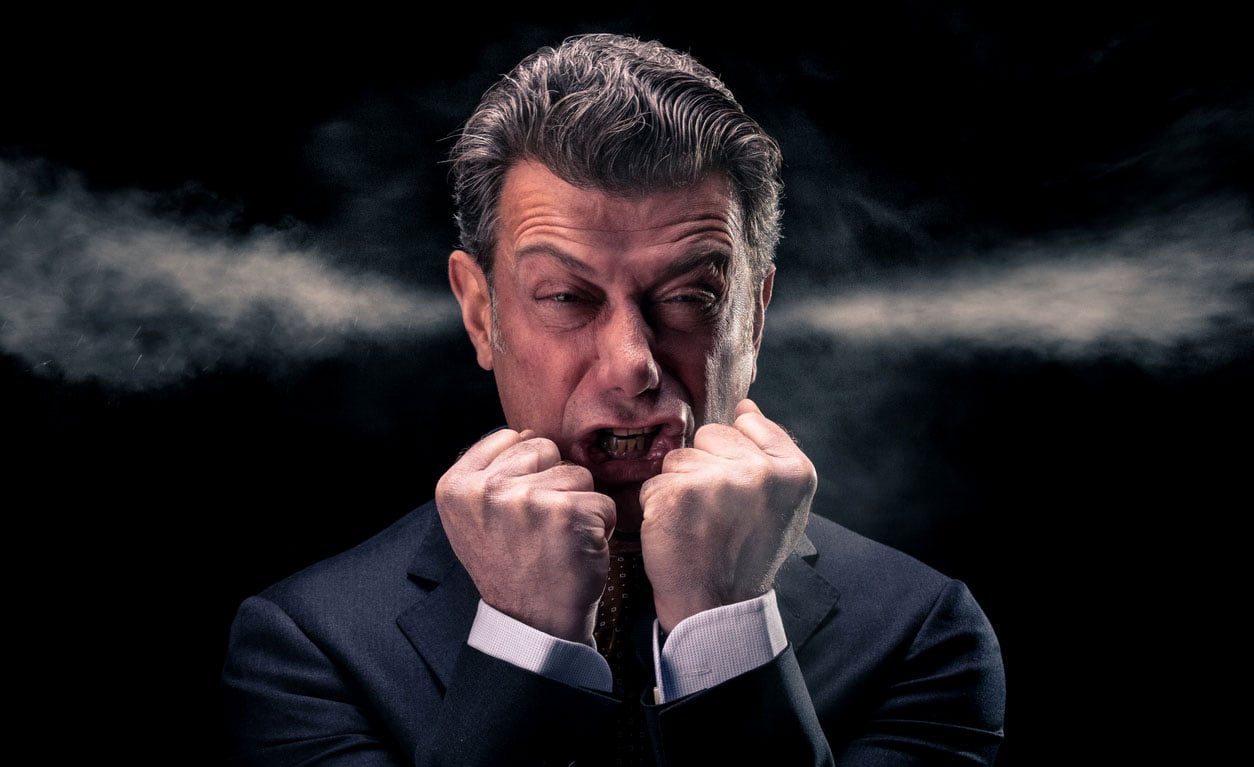
Most people do not need protection from lions, tigers, and bears these days. Most people do not need protection from the village next door, invading for food and animals. Most people do not need protection from the squirrels, mice, and crows hanging out in their neighborhood. Most people do not need protection from women and children. You can see where this is going. When most people talk about needing protection, knowingly or unknowingly, they are referring to protection from us men. Although we know that women and children need protection from men more than other men do, let’s be real: most men take their violence out on other men, whether it be in a bar, a parking lot on the highway, or in a boxing ring. With that said, the men who are violent and aggressive tend to either be violent and aggressive to other men, women, trans, or children; it is less common for them to be aggressive and violent to all kinds of humans.
Most men think the best way to protect women and children is to bulk up their bodies with muscles, which we know is really unhealthy for humans so that they look intimidating and feel more confident. For the men who don’t like to bulk up, when they think of being a protector, they think about owning and mastering various weapons, mostly guns. Of course, some men think as part of being a protector, they have to learn how to fight, injure, or brutally beat/murder another human. In all three of these ways of being a protector, the unspoken problematic premise is that whether it be bulking up, learning how to use weapons, or learning how to use your hands and your feet for battle, the unspoken message is to everybody in your life, “At a minimum, I can injure you, and maximum I can kill you”.
For example, if a man and woman are out on a date. And the woman walks to the bathroom, and along the way, some guy is hassling her. The man who’s on the date with her goes over and attempts to intimidate or threaten the man so that she feels safe. And if he doesn’t, if this other man doesn’t feel intimidated, the situation will probably escalate, and an altercation will ensue. For this conversation, let’s assume that the guy that she is on the date with, whether it be their first date or they’ve been married for 15 years, while he is pulverizing another human being who is probably bigger and stronger than her in the moment, she may feel protected and cared for. But I imagine somewhere in her psyche, her brain is mapping out how violent and destructive he is to this man, and she may ask herself this question, “If he can do this to a man who’s 60 lb bigger than me, what can he do to me if he gets angry with me? Is it worth it for me to challenge him and say no to things in the future, knowing that potentially he could do unspeakable things to me effortlessly?”
That brings me back to my initial question, “What is a protector?” Most people think of protectors as people who either defend people or themselves from external violence or attack people. Or, said differently, peace is the absence of violence.
This is what I am most interested in. I don’t see peace as the absence of violence. I see peace as a state of mind or presence. It is an active choice, not the absence of another one. To me, this is similar to when people say hate is the absence of love. I don’t agree with that either. To me, the absence of Love is neutrality. To me, hate is a conscious decision. Somebody may have a good reason to hate a person or persons, but it is my personal and professional experience that it is still a conscious choice. This statement means that at any moment, we can choose not to hate, like we can choose not to love.
To me, the absence of hate is also neutrality. So, how does this play out in the real world, and what are some ways that a man can be a protector in the absence of hate, aggression, and violence? He can start by not presenting himself as intimidating or aggressive. For example, someone who has a healthy, flexible, and athletic body doesn’t draw the attention of other muscle-bound guys, and he needs to prove his masculinity or toughness. Muscle-bound guys attract a lot of attention from other muscle-bound guys. We know that they built up the muscles to threaten other people and look intimidating because they have so much fear. If there’s nothing to fear, there’s nothing to prove, intimidate, or threaten. Said differently, if you have a goldfish in a bowl and it moves from one side of the bowl to the other, I am not aware of any human being that feels intimidated or threatened enough that they need to do something to prove how strong and tough they are to the goldfish.
For me, in my life, there are years, if not decades, between times when big, bulked-up men are aggressive and threatening to me. I don’t give off that energy; I’m secure in my masculinity, and I don’t need to prove anything to him about who I am as a man. Hence, he has nothing to prove to himself or to defend his masculinity. We can walk by each other, nod hello, and go about our lives. We can chat in line at the grocery store. If one of us accidentally cuts off the other one on a highway, we can look at each other, have a gentle acknowledgment, and go about our lives. For the record, most women have a similar experience with me. They don’t need to do anything with their gaze, body, or energy to create safety for themselves. When I walk by women late at night, and we’re the only ones on the street, they don’t reach into their purses to find their pepper spray, keys, or anything else in case “I’m one of those guys” because they can sense that I’m not. In fact, it’s very common for them to smile and say hello to me.
Men, women, children, and animals all know they don’t have to protect themselves because I am not a threat to them. This is how we protect women! It doesn’t happen in the gym, in the driving range, or in the boxing ring; it happens inside of us. Masculinity and protection come from the inside out, not the other way around.
Here’s the funny part for me. When I was in my twenties, I was a low-level mobster in New Jersey, New York City, and Philadelphia. The reality is that for a lot of my life, I was the thing that everybody and everything needed to be afraid of and needed protection from. Everywhere I went, people flinched and went out of their way to make sure they did not make eye contact with me. If they were walking on the same side of the street as me, they moved to the other side. If they accidentally or intentionally cut me off on the highway, I would accelerate in my sports car and give them a look; they would slow down, let me pass, and get in front of them.
Let’s go back to the bar or a restaurant with the couple on the date and the woman being harassed by some random guy on the way to the bathroom. First of all, does she actually need protection? This is the first question we need to answer. Or said differently, as a mature, healthy adult woman with lots of life experience, is she capable of de-escalating the situation without anybody coming to “help her”? If the answer is no, she does not need help; as a man, I can quietly stand at the table where we are seated and trust that she can take care of herself and be prepared in case she is not able to de-escalate the situation. While I’m indexing in my mind potential scenarios that could go wrong here, I map out the ways that I can support her if she needs it without me the man and having to threaten or intimidate each other. Simply walking over and taking her hand and telling her how much you love her, I think most men will walk away. He will see that the other man is secure, and he doesn’t want to fight him; he just wants to let his date know that he loves her, cares about her, and that he’s present if needed. She can direct how this goes from there, knowing that both men can still make their own choices regarding how they want to handle this. Again, from my framework, peace is not the absence of violence; the absence of violence is neutrality. I think finding neutrality is simple. I think standing in peace is much harder. Most men and people, in general, choose aggression, intimidation, and threats, if not actual violence, whether it be with a sibling, partner, children, staff members, the neighbor whose dog barks all night, the jerk on the highway, etc. It takes significantly more courage, strength, and presence to stand in peace.
The old George Carlin quote comes to mind, “Fighting for peace is like screwing for virginity”.
To all of the men who may read this, I invite and encourage you to choose peace in those moments. If you’re not able to center, ground, and align yourself in those moments, please choose neutrality. As much as you think you need to, you don’t need to threaten or intimidate anyone. I want to remind you that they’re doing what they’re doing and acting that way because they’re scared. Common Sense tells all of us that threatening and intimidating somebody scared typically creates a fight, flight, or freeze response in them. Since most men have not been trained or raised to regulate their emotions, most will choose to fight.
As men, we can do so much better than this.
If you want to learn how to choose peace, learn how to regulate your emotions on a regular basis. Most importantly, when you’re scared or feel threatened, understand it’s not because of what somebody else is doing; it’s because this is how you feel and believe you don’t have any other choices but to feel scared and intimidated. And we do. We have so many other choices besides various forms of fear and anger. If you want to learn how to protect the people in your life, do it by learning how to choose peace, not just violence or a lack of violence. Other strategies for balancing violence are warmth, kindness, thoughtfulness, attentiveness, caring and loving.
If George Carlin’s quote was too silly and playful for you to digest. In that case, I’m going to offer you Dr. Martin Luther King Jr., “The ultimate weakness of violence is that it is a descending spiral, begetting the very thing it seeks to destroy. Instead of diminishing evil, it multiplies it. Through violence you may murder the liar, but you cannot murder the lie, nor establish the truth. Through violence you murder the hater, but you do not murder hate. In fact, violence merely increases hate…Returning violence for violence multiplies violence, adding deeper darkness to a night already devoid of stars. Darkness cannot drive out darkness; only light can do that. Hate cannot drive out hate; only love can do that.”
I will continue to stand as a protector in peace; I invite you to join me.
—
This post was previously published on Michael Swerdloff‘s blog.
***
You may also like these posts on The Good Men Project:
 White Fragility: Talking to White People About Racism White Fragility: Talking to White People About Racism |
 Escape the “Act Like a Man” Box Escape the “Act Like a Man” Box |
 |
 |

If you believe in the work we are doing here at The Good Men Project, please join us as a Premium Member today.
All Premium Members get to view The Good Men Project with NO ADS.
Need more info? A complete list of benefits is here.
Photo credit: iStock

