



The only thing that gave the old woman’s presence away was the scent of cigarette smoke.
It was a chilly night best spent indoors by the fire with a good book, but my Alaskan Kleekai “Nanuk” had other priorities. Namely, a walk around the neighborhood to sniff the pee-mail of other dogs and to leave some messages of his own. And so, after bundling up in my jacket and a beanie cap, I leashed Nanuk and off we went.
I tried to walk briskly, anxious to finish our rounds and get back to my book and warm house. But every time my pace quickened, Nanuk abruptly stopped by a tree, bush, or fire hydrant to sniff thoroughly and then lift a leg.
“Come on, Nanuk, it’s freezing out here,” I told him.
We got to the end of our street and turned right to hike uphill. And that’s when I smelled the scent of cigarettes, even though it was later in the evening and quite dark outside. We continued up the hill, and Nanuk tugged me over to the tall bushes on the right.
As he did his business, I noticed a porch light glowing in the backyard just below us, behind the shrubs.
I generally don’t peer into neighbors’ yards, but I couldn’t help wondering if someone was sitting there in the chill of night. I squinted and made out the form of a small person, wrapped in a blanket. Nearby, a bottle of wine sat on a table beside a glass and a small radio faintly playing orchestral music.
I glimpsed the glow of a cigarette, curls of white hair, and the face of an old woman.
I looked away, realizing that I was not respecting her privacy. I pulled gently on the leash and Nanuk finally ambled out of the bushes and we continued up the street. I don’t know their names, but a man and woman close to my age live in that house. I figured the elderly woman must be one of their mothers.
They probably don’t want cigarette smoke in the house, I assumed, so the poor old lady huddles with a blanket in the backyard and puffs away.
My father’s mother, Ruth, was a chain smoker whose apartment ceiling and lampshades were discolored with a dirty yellowish tinge. So I understood why the couple in that house might want the old woman to smoke outside. Not to mention the dangers of secondhand smoke.
And yet a part of me felt sorry for the old woman.
I sustain myself with the love of family
When the bloom of youth is gone and you’ve lived enough years, unwanted things happen.
For starters, your body starts to betray you. Knees give out. Hips too. Skin starts to sag. Necks disappear. Hair too, although in its place unwanted hair sprouts from ears and nostrils. Those blessed with good genetics, and others who eat right and exercise regularly might stave off these indignities, but sooner or later they visit everyone.
Then comes round two, when essential systems falter.
Vision blurs, thyroids go on the fritz, degenerative disk disease settles into the spine, arthritis limits movement, hearts require stents, and surgeries abound for everything from skin cancer to pacemakers. As the years advance, the cumulative effect of these indignities weighs on a person’s mind and well-being.
I sustain myself with the love of family. — Maya Angelou
Round three is perhaps the cruelest of all. This is when beloved animal companions die, as well as friends. Maybe even one’s spouse. And soon a person must wrestle not only with ailments and infirmity but also loneliness.
My father often cautioned, “Don’t get old, Johnny.”
“Well, what’s the alternative?” I’d say to Dad, adding, “Die young?”
But I understood what he meant, having watched my grandmothers over the years, until they seemed to shrivel up into frail shadows of themselves. But even as my grandmothers faced health challenges in the winter of their lives, one thing always improved their spirits and made the light in their eyes shine brighter.
And that one thing was family.
Despite being widows with medical challenges, deceased husbands, and long-gone friends, my grandmothers at least had their family. Their children and grandchildren.
And in the twilight of life, family is everything.
All they can do is stare blankly
On subsequent evening walks, I grew accustomed to the scent of the old woman’s cigarettes as Nanuk and I strolled by.
A glance confirmed that she was a creature of habit. A bottle of wine, glass, and cigarettes always kept her company, along with that small radio playing soft music from the past. Also, she always had a warm blanket or thick winter coat wrapped around her.
The only thing missing was the company of others.
I’ve never seen grandchildren or other family members visit the house, but hopefully, they do. And compared to many retired folks languishing alone in assisted living centers or nursing homes, I suppose this woman is fortunate to live with family. But then, one never knows what the family dynamics are.
The loneliest moment in someone’s life is when they are watching their whole world fall apart, and all they can do is stare blankly. — F. Scott Fitzgerald
Do they take good care of her? Is she loved? Is it only the secondhand smoke that forces her out onto the cold patio at night?
Or is she out on that porch smoking alone with her wine and radio to escape what’s inside?
A wedge-shaped core of darkness
When my mother was old and nearing the end of life and Parkinson’s disease immobilized her almost completely, she never lost her positive spirit and sense of humor.
Part of this was simply a reflection of her lifelong upbeat attitude. But the other part was family. Living near Mom’s assisted living center, I’d visit her regularly. So did my wife and son. Even my in-laws and sister from out of state would visit when they could.
But family is not defined by blood relations alone.
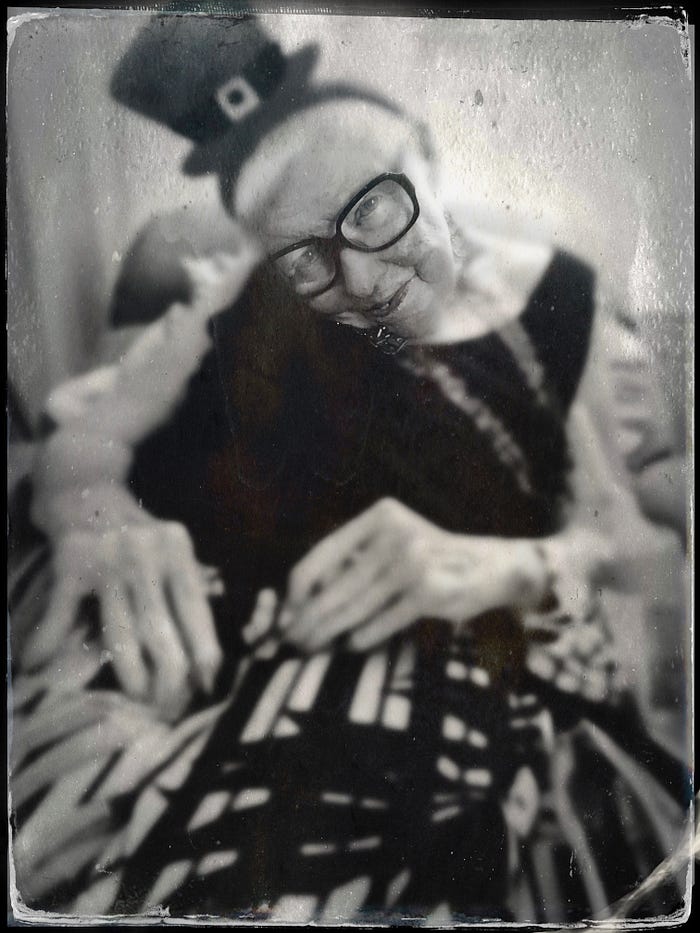
The amazing staff who took care of my mother became a kind of family to her, and she grew to love them. They’d pop into her room and talk with Mom about their families, significant others, hopes, and dreams. Mom always insisted I buy drinks and snacks to stock her room so that her assisted living family felt at home visiting her. And so that she could thank them for their love, support, and kindness.
Mom was lucky.
We lived nearby, and we had the resources for her to live in a wonderful place staffed with caring professionals. But some folks are less fortunate. They may not have children, or even if they do, not all kids stick around to help their parents in old age.
All the being and the doing, expansive, glittering, vocal, evaporated; and one shrunk, with a sense of solemnity, to being oneself, a wedge-shaped core of darkness, something invisible to others. — Virginia Woolf, To the Lighthouse
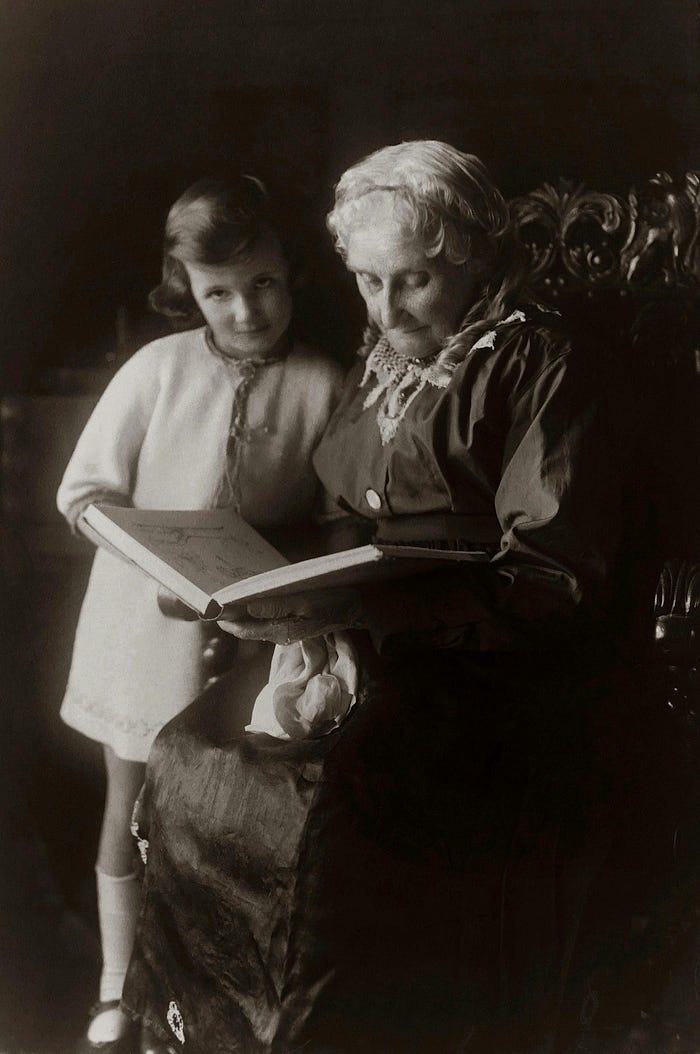
There was a time in the United States, particularly the agrarian years when families stuck together more. It was the only way to keep the farm running. And grandparents got to be with their families. They helped raise the grandchildren, passed on their wisdom, and in return, they enjoyed the energy and love of their family.
Times change.
The agricultural age gave way to the industrial age, then the information age, and I’m not sure where we’re headed now with the rise of social media and artificial intelligence. But what’s apparent is that families seem to splinter more, and older folks often become an afterthought or forgotten altogether.
They seem to disappear.
You can fix it
In the poignant and award-winning documentary The Last Repair Shop,we meet various technicians who repair musical instruments for students in the Los Angeles Unified School District.
One technician, a gay man who repairs wood instruments, shares his story of being bullied as a kid. Another technician is a single mother from Mexico, who tearfully reflects on being poor, and sometimes having no food for her kids. Another technician tells the story of how a violin saved his life. The supervisor for the repair shop is an Armenian piano tuner who fled the Armenian-Azerbaijani conflict of 1987 and came to the United States. All their stories include moving personal accounts of difficulties and struggles. And what they all share is a love for their work, and the desire to help kids play music.
The wood repair technician states:
When wood breaks, it breaks in a unique way. And if you leave a crack open, the instrument buzzes. It can be really frustrating. It’s hard to find that last little buzz in the cello.
People’s wounds are sometimes like a tiny crack in a wood instrument.
When you listen to the instrument, you can tell that something’s not quite right. There’s a wound hidden somewhere. A tiny crack. And finding that crack can be hard. Just like finding the crack in people (the emotional wound) can be difficult.
One of the repair shop technicians says, “A lot of people see a broken thing and think it’s broken.” Then he adds encouragingly, “You can fix it.” And what he says next is most important:
It’s one of the best things humans do.
We can fix things if we put our minds to it. The Los Angeles Unified School District Repair Shop is fixing broken musical instruments for kids in their schools who want to play music. The repair shop technicians know how hard it is to be a kid. And a working musical instrument could potentially change the life of a kid for the better. Because kids are important. They’re the future.
But what about the elderly?
Those lions in winter slowly become invisible to society. Especially “elder orphans,” the ones who don’t have any remaining family.
The elderly are important, too.
Older people carry a tremendous amount of life experience, history, and wisdom. Unfortunately, our society is more youth-focused. And so the aged become increasingly invisible. And if most of their friends have died and/or they have no family, life can become difficult.
Or even desperate.
Now that my parents are gone, and my son will be graduating from university and going off to start his career, my wife and I are becoming empty nesters.
We’ve lost some dear friends these last few years. There was my wife’s breast cancer in 2021, but thankfully she’s now cancer-free. Still, we know the road ahead. Aging doesn’t get easier.
How do we deal with that last little buzz in the cello?
How do we fix ourselves when we’re old and maybe there’s no family or close friends around to hear that crack of despair in our mortal instrument?
One of the best things humans do
During my years in law enforcement, our police department had a citizen volunteer program.
Most of the volunteers who worked in our police department were older retirees. Some were widows and widowers, others were still married. What they all had in common was a desire to contribute, be of value, and feel relevant. They could hear that last little buzz in their cello, and they wanted to fix it.
They didn’t want to disappear.
I always made time to chat with our volunteers, and I always felt like I benefitted from the chats more than they did. Because they shared so much wisdom, advice, and encouragement.
But now that I’m older, I realize how valuable their time in the police department was. We became a kind of extended family for them. And every year, we held a wonderful volunteer dinner. We gave them awards and spoke at the lectern about their contributions. I recall how much our volunteers loved those appreciation dinners, and their time serving at the police department.
I remember one volunteer named Bill who was never married and had no children.
The police department was all the family he had. And when his health declined, one of our dispatchers took Bill under her wing. She helped him get his affairs in order and even took him to medical appointments. She was with him until the end. He wasn’t alone.
When we get older and we start to hear the buzz in our cello, the best way to fix ourselves is to take action.
Volunteerism is an excellent way to make connections and possibly create a new family for yourself. It’s also important to have all your legal affairs (trust/will/health directive) in order so you don’t have to worry. Joining clubs, taking classes, finding a church community (if you’re religious), embracing sports that you can do, creating art, reading literature, playing/enjoying music, and learning how to leverage technology to interact with like-minded folks online can all be helpful. And don’t forget the unconditional love of animal companions.
The key is to keep making connections, and this can apply to younger people who are lonely, too.
Listen to that last little buzz in your cello. Don’t settle for becoming invisible. Whether old or young, there is much we can do to fix ourselves and our circumstances. And we should always be on the lookout to help others do the same.
Because, like that wise technician in the repair shop said, “It’s one of the best things humans do.”
Before you go
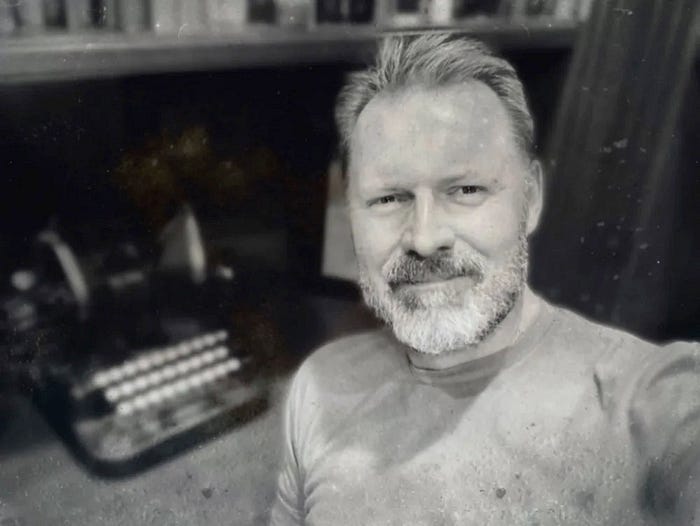
John Patrick Weiss writes stories and essays about life, often illustrated with his black and white photography. Visit JohnPatrickWeiss.com.
—
This post was previously published on Medium.com.
—
The Good Men Project is a mission-driven men’s media platform. A major platform for stories about men, identity, fatherhood, and emotional intelligence—and a trusted home for the national conversation about masculinity.
The Good Men Project accepts paid guest posts and provides bulk guest post packages for SEO agencies and resellers.

If you believe in the work we are doing here at The Good Men Project, please join us as a Premium Member today.
All Premium Members get to view The Good Men Project with NO ADS.
Need more info? A complete list of benefits is here.
Photo credit: Pixabay

