



It would be brazen to assume that companies claiming that “Sustainability is in our DNA” are spending more on their image and less on actual sustainability efforts. But I’ll make that claim.
Why? If you search for the term “sustainability is in our DNA” it generates 53,900 search results on Google, while “sustainability is at the heart of everything we do” has produced 153,000 search results. Similarly, “sustainability is in our core” has resulted in 74,700 search results on the platform. If that many companies professed that sustainability is basically at its core, our world wouldn’t be spiraling towards 1.5°C warmer. It’s time to call bullshit and start holding these companies accountable.
Why the surge in sustainability framing?
The topic of climate change has thankfully, finally entered the mainstream media. Making climate change news more accessible to the mass. I believe this is probably one of the many reasons for the surge in the sustainability framing of thousands of brands.
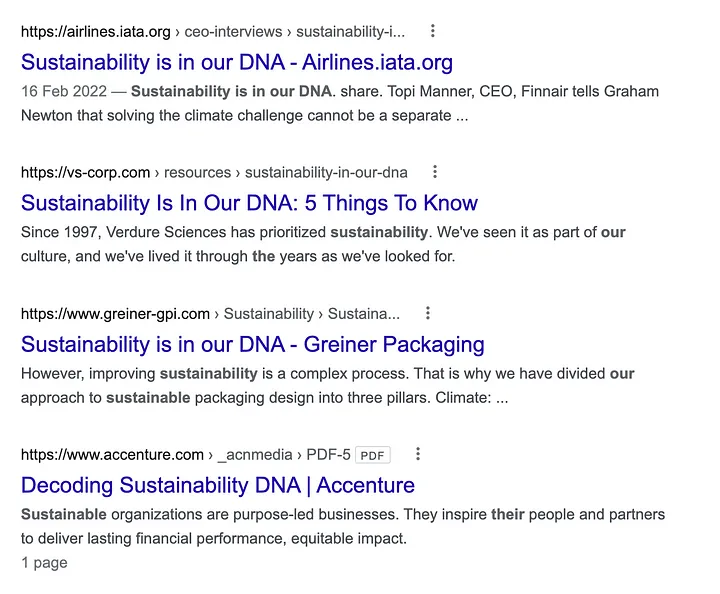
Just a tiny screenshot of my Google search result
Using sustainability as a market differentiator
It’s a fact that once a company doesn’t stay relevant, it would probably die out. A recent report from Aflac said that 77% of consumers are more willing to purchase from a company with a CSR pledge. Additionally, 9 in 10 business leaders said consumers would hold them accountable for the environmental impact they make through their business. Businesses know this. By demonstrating their commitment to sustainability, brands can gain a competitive advantage over their rivals. Consumers are often more likely to choose a brand that they perceive as being environmentally and socially responsible.
Lack of clear regulations
In most cases, there may be a lack of clear regulations or standards that define what constitutes sustainable or eco-friendly practices. This lack of clarity has created an opportunity for companies to make unsubstantiated or exaggerated claims about their products or services. Without being held accountable, these companies can go on misleading consumers with deceptive marketing and improving their reputation by making claims about their environmental credentials.
Just prove it
Am I suggesting that companies should not make any claims about their commitment to sustainability at all?” Well, not exactly.
I may be naive, but I still believe there are companies out there who are doing their best to pivot sustainably. If you are that rare one, just prove it. Instead of preparing for a campaign proving you’re sustainable or working on that self-serving press release, do these instead:
1. Set CLEAR sustainability goals
No, I’m not telling you to pledge net zero and be done with it. Companies should set measurable and meaningful sustainability goals that are relevant to their sector, and align with their existing business values as well as stakeholder expectations. These goals should cover areas that are material to your industry. If you don’t know what are issues your company should prioritise, conduct a materiality assessment.

2. Implement sustainable practices throughout their operations
I’ve always found it iffy if any company decides to place its sustainability professional in its marketing or communications department. Sustainable practices should be implemented throughout their operations.
3. Report on their sustainability performance
Be honest. Even if your progress is currently against your goals, report it. Move forward, explained the challenges your company is currently facing and how you would move on and improve from there. Sustainability reports are currently being normalised, but it beats the whole purpose if you’re only reporting the shiny and great things.
4. Engage with stakeholders
Don’t just engage your investors, talk to your employees, suppliers, and customers to get feedback on how to improve your sustainability performance.
…
If you take a moment to consider brands that have truly integrated sustainability into their operations, such as clothing brand Patagonia and confectioner Tony’s Chocolonely, you’ll notice that they are able to articulate their purpose with their actions, and without resorting to vague phrases like “sustainability is at the heart of everything we do.” That should say a lot.
—
This post was previously published on medium.com.
***
You Might Also Like These From The Good Men Project


—
Photo credit: Brian Yurasits on Unsplash

