



Many years ago, when I was younger and my father was alive in this world, I found him sitting quietly on the patio bench in the front yard.
A glass of iced tea and an Austrian history book lay beside him on a wrought iron end table. He had set them aside to gaze at the cerulean summer sky.
He was very still, his face placid and expressionless.
“So what are you up to?” I said as I strolled over to join him.
“Productive daydreaming,” he said.
“I thought maybe all that history about the Habsburg Monarchy anesthetized you,” I joked, failing to lure a response.
“And what the heck is productive daydreaming? Sounds like an excuse to be lazy,” I said with a smile. I enjoyed poking the lion, knowing that I was no match for his capacious intellect. But Dad held his skyward gaze as if hypnotized by unseen angels.
We sat there a few moments, and then he broke his heavenly gaze, leaned toward me a little, and said, “Sometimes, Johnny, you need to do nothing to get things done.”
“I tried that a few times last semester at school, but it didn’t help my grades,” I said with a smirk.
“Beer busts,” he replied in his steady baritone, “aren’t the same thing as productive daydreaming.”
Yep, I shouldn’t have poked the lion.
Peace, awe, and wonder
Most people come to Las Vegas for the gambling and shows, not the wild, bighorn sheep.
Sin City is an adult playground offering lights, attractions, casinos, and an escape from the sometimes dull rhythms of work life. The food, shows, and excitement help burned-out folks escape work and responsibility.
But do they return to work refreshed, recharged, and more productive?
Barely thirty minutes outside the Vegas Strip sits Hemenway Park, with its sloping lawns and beautiful views of Lake Mead shimmering in the background. But the park’s best attraction is the wild bighorn sheep who regularly come down from the surrounding mountains to graze on the park lawns, and pose for photographs.
My wife, who always knows about magical places, introduced me to Hemenway Park and its bighorn sheep. She knew I fixated too much on my creative work and needed to restore my spirit.
Moments after we parked and strolled past the playground, BBQs, covered pavilion, and basketball courts, we saw a large group of bighorn sheep emerge from the hillside and make their way to the green lawns.
They are majestic and tranquil animals, and I fumbled excitedly with my rangefinder camera to capture the experience.
The travel and photography blog “Try Something Fun” shared the following information about the park and bighorn sheep:
The Conservation Education Supervisor for the Nevada Department of Wildlife Doug Nielsen said, ‘It’s the only place in the lower 48 that I know of where a person can go and get that close to that animal and just observe. Those same animals there in the park, if you try to walk up to them out in the wild, it ain’t gonna happen.’ He also said at the dedication ceremony of Hemenway Park that the bighorn sheep are one of Nevada’s crown jewels. They’re actually Nevada’s state animal. The Parks and Recreation Department found that the sheep had value in maintaining the manicured grass, helping to keep it fertilized and that people really enjoy watching them. They hope that people will understand the sheep better and the importance of wildlife as a whole.
Not long after I started photographing the sheep, tourists emerged from the parking lot and joined me. Some women began taking photos of the sheep from a safe distance.

A group of men joined the women, and began taking selfies with the sheep grazing behind them.

And then we all put our cameras and cellphones down, as if something divine whispered in our ears, “Stop trying to record the moment, learn how to be in the moment.”
There was a slight breeze, the sun was shining, and the sheep had a kind of hypnotic effect on us. I sat down on the grass, along with others, and we became a silent little community transfixed by fresh air and nature.
I think what we all felt was a bit of peace, awe, and wonder.
My wife had been to this park before and knew about the sheep and the enchantment of the place. She found a park bench to relax and take it all in.

Eventually, I emerged from my nature-induced, transcendental stupor, and made my way back to my wife. She looked as peaceful as my Dad did, so many years ago, daydreaming on his patio bench.
And maybe for the first time, I finally understood what my father meant about productive daydreaming.
Soul-sapping hustle culture
Georgetown University computer science professor and best-selling author Cal Newport has a new book coming out, titled “Slow Productivity: The Lost Art of Accomplishment Without Burnout.”
His website offers the following book introduction:
Our current definition of ‘productivity’ is broken. It pushes us to treat busyness as a proxy for useful effort, leading to impossibly lengthy task lists and ceaseless meetings. We’re overwhelmed by all we have to do and on the edge of burnout, left to decide between giving into soul-sapping hustle culture or rejecting ambition altogether. But are these really our only choices?
Newport’s book is timely. There have been an increasing amount of stories lately about social media and YouTube influencers who are quitting. They’re exhausted and burned out from endless content creation. And there are folks in plenty of other professions who are equally exhausted chasing more customers, sales, etc.
Before pre-ordering the book, I read some free sample pages, which include Newport’s description of slow productivity:
A philosophy for organizing knowledge work efforts in a sustainable and meaningful manner, based on the following three principles:
1. Do fewer things
2. Work at a natural pace
3. Obsess over quality
Newport’s slow productivity philosophy “…rejects busyness, seeing overload as an obstacle to producing results that matter, not as a badge of pride. It also posits that professional efforts should unfold at a more varied and humane pace, with hard periods counterbalanced by relaxation at many different timescales, and that focus on impressive quality, not performative activity, should underpin everything.”
In an age where we’re all increasingly subsumed in a culture of digital immersion, distractions, hustle, and exhaustion, perhaps we should reevaluate how to spend our time.
A term that Cal Newport shares in his new book is “languid intentionality.” Sounds a lot like “productive daydreaming.”
My father knew that productive daydreaming sets your mind free, in a kind of liminal space between chaos and heaven, away from the hurly-burly of work life and frenetic living. Its restorative power often results in epiphanies, creative breakthroughs, and better focus.
Make more time for park benches
What do you think?
Are you ready for more productive daydreaming? More languid intentionality? If so, here’s my advice.
Make more time for park benches.

There’s a cement bench along the walking path above my house.
I often sit on the bench during my daily dog walks. I close my eyes, channel my father’s wisdom, and practice productive daydreaming.
How about you?
Find a park bench. Get out in nature. Dig your hands in garden soil. Swing in a hammock. Fly a kite. Walk the dog. Gaze at the sky and try a little productive daydreaming. A bit of languid intentionality.
Do these things and they will restore your spirit, improve your productivity, and expose you to moments of peace, awe, and wonder.
This is the gift of productive daydreaming.
Before you go
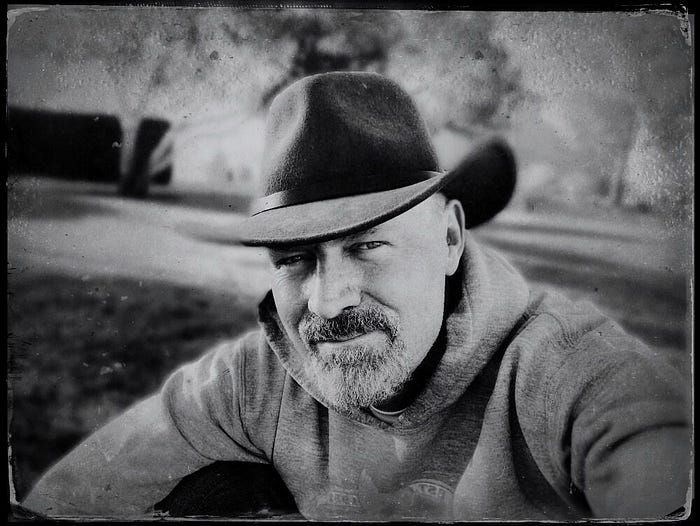
John Patrick Weiss writes stories and essays about life, often illustrated with his black and white photography. Visit JohnPatrickWeiss.com.
—
This post was previously published on Medium.com.
—
The Good Men Project is a mission-driven men’s media platform. A major platform for stories about men, identity, fatherhood, and emotional intelligence—and a trusted home for the national conversation about masculinity.
The Good Men Project accepts paid guest posts and provides bulk guest post packages for SEO agencies and resellers.

If you believe in the work we are doing here at The Good Men Project, please join us as a Premium Member today.
All Premium Members get to view The Good Men Project with NO ADS.
Need more info? A complete list of benefits is here.
Photo credit: John P. Weiss

