


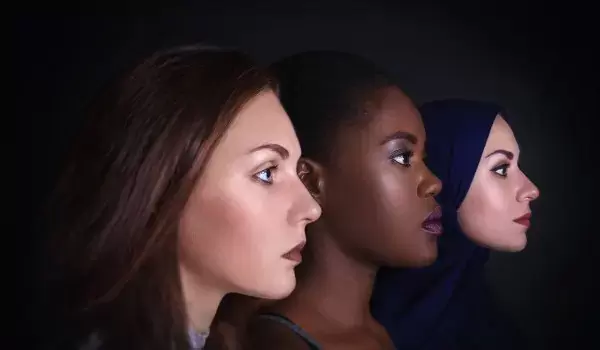
Even though my immediate family and many in our extended Latino family were very fair, with hair from brunette to auburn to dishwater blonde, great grandparents, grandparents, aunts, uncles, and cousins came in all colors. My maternal grandmother had golden skin, her sister a darker cinnamon color. Her brother’s skin was a rich chocolate that at times looked almost purple. My paternal grandmother’s and my father’s ruddy complexions made a striking contrast against their gleaming white hair. Because these differences were never an issue, except for calling the occasional extremely fair person with blonde locks a “huera” or “huero,” a person’s skin color never figured into calculating anyone’s comparative worth. Relationships and affection had no color barrier.
However, growing up in a neighborhood that was very ethnically diverse, I heard both positive and negative comments about various races and ethnic groups, with groups sometimes identified by skin color. At a very young age, I found one particular discrepancy at first curious and, over time, disturbing. The very people who used their “white” skin as a marker, often subtle and covert, of their superiority over people of color, were those who trotted off to the beach in the summer to acquire a deep tan which they felt enhanced their beauty. As a child, I found this confusing and hypocritical. However, after pondering this for many decades, I have come up with a different analysis.
The apparent hypocrisy at first just kept me from becoming “beautifully tan” during the summer months; I couldn’t bear the thought of joining their ranks. But in my early twenties I developed a new perspective that has made me cringe at the very concept of “a beautiful tan.” First, the most obvious, only White people can obtain a “beautiful tan,” be it on the beach, in a tanning bed, or with a spray. The assumption: Only they can acquire the most beautiful color of skin. The second, more subtle assumption is the rejection of the beauty of a person’s skin color just the way it is, that is, people can be “too light” or “too dark” to be considered beautiful. And so, when I see someone with an obvious tan, my first thought is aren’t they ridiculous in this age of rampant skin cancer, and second, that they are a walking symbol of the covert racism in our society, because whether they are aware of it or not, they have bought into the racist assumptions that led them to choose rather than accept, much less appreciate, the color of anyone’s skin just the way it is. Although the concept of a “beautiful tan” is a minor issue, it offers an example of the multitude of racist assumptions that need to be identified and examined in our society. the Trump administration’s ban on Critical Race Theory and diversity training removes the opportunity for individuals to become aware of racist assumptions which may underlie more significant areas of their thinking and their behavior.
As a child, Crayola told me that “flesh” was name of a pinkish-white crayon, I think it was no accident that the only color available to color darker skin was called “tan.”
***

If you believe in the work we are doing here at The Good Men Project and want a deeper connection with our community, please join us as a Premium Member today.
Premium Members get to view The Good Men Project with NO ADS. Need more info?
A complete list of benefits is here.
—
Photo credit: iStockPhoto.com

