


We are on a steep descent from Jerusalem to Jericho, heading toward the Jordan border. When my driver asked where I was from, I told him I was from America. His face lit up.
“You have a good president now,” he said. “Trump. He is saving your country.”
I waited for the joke, expecting an ironic smile. It didn’t come. He was genuine. Over the next hour, as we crossed borders, he explained his view: Trump knows how to get things done. He doesn’t bow to the establishment. He says what he means.
During my flight from Amman to my next destination, I sat next to a talkative Kurdish businessman. Same conversation. Same conclusion. “Your president,” he said, “he knows how to deal with power. He understands strength.”
A few days later, in a coffee shop in Istanbul, I struck up a conversation with a man who was working as a tour guide between clients. When the topic of American politics came up—it always does these days—he shared his opinion. Trump, he said, can’t be bought off. “He’s already rich. He doesn’t need anyone’s money.”
Three men. Three countries. Three very different economic situations and national identities—a Palestinian under occupation, a Kurd betrayed by every major power in the region, and a Turk under Erdoğan’s increasing control. Yet, they share this surprising common ground: admiration for Donald Trump.
I pushed back, as one does in this part of the world. I challenged their assumptions and offered counterarguments. They engaged thoughtfully, conceded a point here and there, but held their ground. They weren’t defensive. They seemed genuinely curious about my perspective, even as they remained unmoved by it.
At the end of my conversation with the tour guide in Istanbul, after I had voiced all my objections and nearly fallen into despair, he laughed. Not cruelly. Almost tenderly.
“I hear this from Americans a lot these days,” he said. “All this angst about what’s happening to your country. I just laugh, because now you get to experience what we’ve been dealing with for a hundred years.”
This essay isn’t really about Trump. Or rather, it isn’t only about him. It’s about a phenomenon that extends beyond any single person, namely the enduring appeal of the strongman leader, and what that attraction reveals about masculinity, the human mind, and the challenges facing democratic societies.
Why do men (and yes, this is an essay primarily about men) around the world, across different cultures, religions, and economic backgrounds, feel drawn to figures who project dominance, break norms, and promise to cut through complexity with the sharp edge of willpower? What is it about the strongman that connects with something deep inside the masculine soul?

To understand the appeal of the strongman, it helps to consider the work of Robert Moore, a Jungian analyst who dedicated his career to exploring the deep structures of the masculine psyche. In King, Warrior, Magician, Lover, Moore identified four core archetypes of mature masculinity. Each has a shadow version: an immature, destructive form that emerges when the archetype is wounded or underdeveloped. (Archetypes are inherited, universal patterns within us that shape human experience. We recognize them through the images and instinctual responses they evoke across all cultures and individuals.)
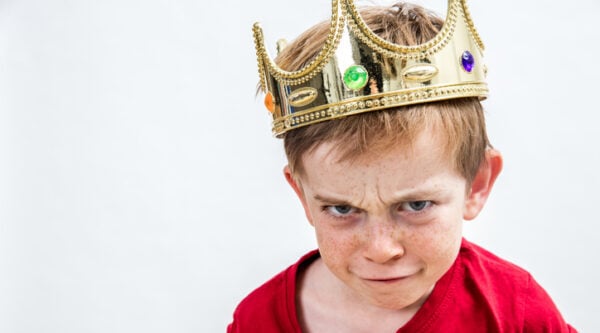
Most relevant here is the King archetype and its shadow. The mature King represents calm authority, the ability to bless others, and the power to bring order to the realm. We see this in the school principal who leads with fairness and dignity. Or the respected football coach who leads young men with integrity and likability. But the shadow of the King is the Tyrant—grandiose and terrified, unable to bless others because he can’t tolerate their vitality. He dominates because he can’t lead. He destroys because he can’t create.
Moore’s provocative insight was that what we often call “patriarchy” is not mature masculinity but its opposite—wounded boy psychology masquerading as strength. “The tyrant hates, fears, and envies new life,” Moore wrote, “because that new life, he senses, is a threat to his slim grasp of his own kingship.”

Apply this framework to the strongman phenomenon, and a troubling picture emerges. The strongman presents himself as the wise King, who will restore order, protect the nation, and embody the strength the people need. But look closer, and you’ll see the traits of the Tyrant: grandiosity, intolerance of criticism, paranoia about rivals, and the desire to dominate instead of uplift.
Ruth Ben-Ghiat, a historian of fascism, has documented this pattern over a century of strongman rule. These leaders “use masculinity as a symbol of strength and a political weapon. Taking what you want, and getting away with it, becomes proof of male authority.”
This is the seduction: For men who feel threatened, displaced, or humiliated—whether by economic forces, cultural change, or geopolitical instability—the strongman offers a fantasy of regained power. He acts out what they cannot. He says what they dare not.
But here’s the trap: the strongman can only offer a fake initiation. He cannot guide his followers into mature masculinity because he’s never completed that journey himself. He can only lead them deeper into grandiosity and rage, into the endless hunt for enemies, into the illusion that strength equals domination.

The three men I talked to during my recent travels were not, as far as I could tell, “authoritarian personalities” in any clinical sense. They engaged in real debate. They welcomed pushback. They joked about themselves. So, what were they really saying when they praised Trump?
“He knows how to get things done” reflects a weariness with systems that seem to accomplish nothing. Many of us have experience with endless negotiations, bureaucratic paralysis, and talk with no action. For people who have watched Western powers make promises and break them for generations, the appeal of a leader who cuts through the diplomatic fog is not hard to understand.
“He can’t be bought” expresses disgust with widespread corruption. In places where political leaders routinely enrich themselves at the public’s expense, the idea of a leader who is already wealthy and, at least in theory, immune to bribery makes sense, even if it might be naive in practice.
And beneath it all, perhaps there’s a desire for recognition. For decades, American presidents have lectured the world on democracy while backing authoritarian regimes, called for human rights reforms while arming dictators, and promoted international law while exempting themselves and their allies from its rules.

How, then, shall we respond?
There is both a personal and a communal response. First, it starts within ourselves. You’re probably tired of me saying this, as I have for many years: the work begins inside. We each have a responsibility to become mature men and women. You can’t lead others—children, students, parishes, employees—unless you’re doing your own work. The man or woman who hasn’t wrestled with their inner tyrant is poorly prepared to resist the outer one.
Second, within our communities and political systems, democratic institutions exist precisely to check the tyrant. This was a core belief of the American democratic revolution in the 18th century. Founders intentionally designed a system with checks and balances. Their religious and philosophical convictions led them to a deep understanding of human behavior. People without accountability are tempted to abuse their power. Civic education, coalition-building, and the work of maintaining institutions that can outlast any single leader—these are the unglamorous tasks of democratic resilience. They rely on the belief that ordinary people, working together, can govern themselves.

The strongman isn’t going away. He’s an archetype, a pattern in the collective psyche that shows up whenever fear and woundedness create the conditions for his appearance. The question isn’t how to eliminate him. It’s how to outgrow him and help others do the same.
The Christian tradition, at its best, offers resources for this work. Walter Brueggemann, in his classic The Prophetic Imagination, provides a framework that speaks directly to our moment. He describes what he calls the “royal consciousness”—the dominant culture’s way of maintaining power by numbing people to suffering, denying death, and blocking any imagination of alternatives. The royal consciousness asserts that the current arrangement is the only possible one, that nothing can ever change, so why bother hoping for something different?
The strongman embodies the royal consciousness. He presents a view of the world in which only his future seems possible, enemies must be defeated rather than understood, and complexity is seen as a weakness. His power relies on keeping people numb, tired, cynical, or too afraid to imagine anything different.
Against this, Brueggemann introduces the prophetic imagination. The prophet’s task is twofold: first, to criticize, not complain, but to guide people through genuine grief for what has been lost and broken. Second, to energize and awaken hope by imagining alternatives. The prophet insists that the future remains open and refuses to accept that the strongman’s version of reality is the only one.
“It is the vocation of the prophet,” Brueggemann writes, “to keep alive the ministry of imagination, to keep on conjuring and proposing future alternatives to the single one the king wants to urge as the only thinkable one.”
This isn’t naive optimism. The prophets were wilderness people. They had experienced devastation and betrayal firsthand. What they offered wasn’t cheerfulness but clarity: a refusal to accept numbness, a willingness to grieve, and the steadfast conviction that God’s future isn’t dictated by the tyrant’s current rule.
The servant-king model that challenges worldly ideas of authority. The reminder that the first shall be last and the last shall be first. These are not naive prescriptions for a world without power. They are guides for navigating power without being consumed by it. This is the recipe for outgrowing the tyrant within and resisting the one without.
More to Come
Previously Published on substack
iStock featured image

