


CPR, or Cardiopulmonary Resuscitation, stands as a vital skill every healthcare provider must master. This life-saving procedure can mean the difference between life and death in emergency situations. However, when it comes to the youngest patients—infants and children—the approach to CPR needs special consideration. The physical autonomy of little ones work differently from adults, and so do the techniques to save their lives. This blog explores the variances and adjustments needed for Pediatric CPR, a specialized form of CPR for healthcare providers.
Why is pediatric CPR so important?
Cardiac emergencies in children and infants, though less common than in adults, present a significant concern. These emergencies can lead to severe outcomes if not addressed promptly and effectively. This fact underlines the importance of pediatric CPR as a critical skill for healthcare providers.
Compared to adults, children and babies are at risk of emergencies. The top reasons they may require CPR include choking on objects, complications from drowning and sudden illnesses such as cardiac arrest..
These incidents impact families each year underscoring the importance of healthcare providers being proficient in CPR. This expertise does not save lives. Also offers comfort and hope to anxious parents and caregivers. Being familiar with and ready for these situations ensures that medical professionals can react confidently and compassionately in moments.
What sets pediatric CPR apart from adult CPR?
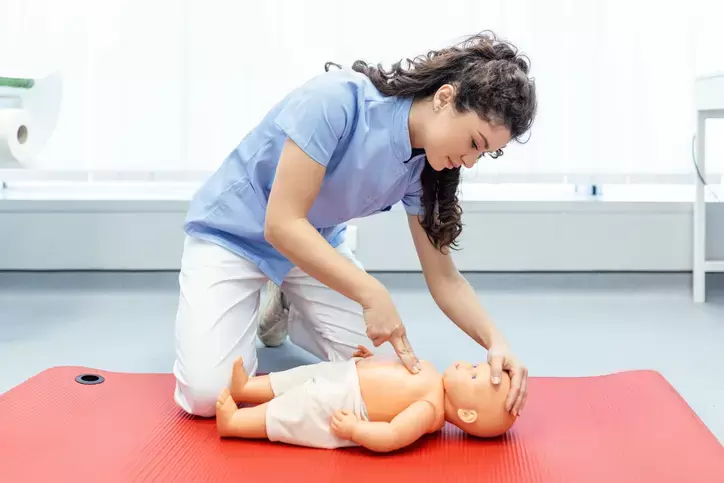
When it comes to CPR, one size does not fit all. The anatomical and physiological differences between children, infants, and adults require healthcare providers to adjust their CPR techniques accordingly. For starters, the size of an infant or child’s body is smaller, and their bones are more fragile. This reality demands a gentler approach. In infants, for example, rescuers use just two fingers placed in the center of the chest to deliver compressions, while for children, one or both hands may be used, depending on the child’s size.
Moreover, the depth of chest compressions differs significantly. For adults, the recommended depth is at least two inches, but for infants, it’s about 1.5 inches, and for children, it’s about 2 inches or one-third the depth of the chest. This adjustment ensures effective circulation without risking injury to the child’s more delicate body.
Breathing techniques also vary. Given the smaller lung capacity of children and infants, rescue breaths should be gentle and less forceful than those for adults, enough to see the chest rise, ensuring not to over inflate the lungs.
Pediatric CPR techniques for healthcare providers
Performing CPR on infants and children requires healthcare providers to use specific techniques tailored to their size and physiological needs.
For infants (Under 1 year):
- Chest compressions: Use the two-finger technique. Place two fingers in the center of the infant’s chest, just below the nipple line. Press down about 1.5 inches deep, ensuring the compressions are quick and consistent, at a rate of about 100 to 120 compressions per minute.
- Rescue breaths: After 30 compressions, give 2 gentle rescue breaths. Cover the infant’s mouth and nose with your mouth and blow gently to make the chest visibly rise. These breaths should be soft, avoiding excessive air to prevent lung damage.
For children (1 Year to puberty):
- Chest compressions: Use one or both hands, depending on the child’s size. Place the heel of your hand(s) on the center of the child’s chest, keeping your arms straight. Compress the chest about 2 inches deep, maintaining a rate of 100 to 120 compressions per minute.
- Rescue breaths: Similar to infants, after 30 compressions, deliver 2 rescue breaths. Pinch the child’s nose shut, place your mouth over their mouth, and blow gently to raise the chest. Ensure the breaths are mild to avoid overinflation.
Avoiding excessive ventilation: Both infants and children are susceptible to lung injury if too much force is used during rescue breaths. It’s crucial to provide just enough air to make the chest rise, ensuring oxygen is delivered without causing harm.
These methods underscore the need for precision and attentiveness when performing CPR. By adjusting their approach medical professionals can provide emergency assistance to babies and young children greatly improving their chances of survival in scenarios.
Conclusion
Being proficient in Pediatric CPR is a component of CPR for healthcare providers. This article has emphasized the considerations, methods and obstacles associated with delivering CPR to infants and children.
From understanding the variances that require adjusted compression techniques to acknowledging the significance of utilizing AEDs specifically designed for use, healthcare providers are empowered with the expertise to make a meaningful impact, in emergency situations. The emotional and practical challenges of pediatric CPR underscore the need for specialized training and certification.
As healthcare providers, the responsibility to seek out training and stay updated with the latest guidelines in pediatric CPR cannot be overstated. Doing so not only enhances their skill set but also significantly improves the survival chances of their youngest patients in critical moments.
–
This post brought to you by Atif Sharif
Photo: iStock

