


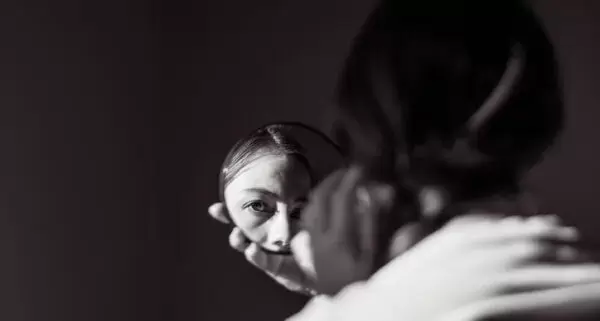
I was standing in the corner of a birthday party, holding a drink I barely touched.
The room was full of laughter.
Someone across from me was telling a story that had everyone smiling. Music drifted through the background. People were hugging, laughing, interrupting each other the way close friends do.
It should have been one of those evenings you remember because you felt completely present.
Instead…
I wasn’t there at all.
I was wondering if I’d smiled enough.
If I seemed awkward.
If I’d talked too much.
If I should’ve stayed longer in the last conversation.
If the joke I made landed the way I hoped it did.
I replayed a conversation that had happened twenty minutes earlier while another one was happening right in front of me.
Then I looked around the room.
Everyone else seemed to be living the moment.
I was busy watching myself live it.
That realization stopped me.
I had spent years believing I was becoming more self-aware.
I’d learned about attachment styles, trauma, boundaries, nervous systems, emotional regulation. I journaled almost every day. I could explain exactly why I reacted the way I did.
I genuinely believed I was healing.
But standing in that crowded room, I wondered something I’d never asked before.
What if I wasn’t becoming more self-aware?
What if I had simply become really good at monitoring myself?
I didn’t have the words for it then.
Now I do.
Self-awareness is powerful — until it becomes self-surveillance.
Looking back, I can see how quietly it happened.
At first, self-awareness gave me answers.
Why certain comments hurt me.
Why I struggled to trust people.
Why I kept abandoning my own needs to keep everyone else comfortable.
It was freeing.
Understanding myself helped me forgive parts of me I’d spent years judging.
But somewhere along the way, curiosity became inspection.
Every emotion became something to analyze.
Every difficult day became evidence that I still wasn’t healed.
Every uncomfortable feeling sent me searching for another lesson.
I wasn’t simply experiencing my emotions anymore.
I was supervising them.
It followed me everywhere.
On the drive home after dinner with friends, I’d replay every conversation.
“Why did I say that?”
“Did I interrupt too much?”
“Did they notice I seemed anxious?”
But it didn’t stop there.
I’d climb into bed, hoping sleep would quiet my mind.
Instead, the room would go dark while my thoughts got louder.
I’d replay conversations from hours earlier as if I were watching security footage.
The pause before I answered a question.
The joke that didn’t land quite the way I imagined.
The expression on someone’s face after I spoke.
I’d convince myself there had to be something I’d missed.
Something I should have explained differently.
Something I should’ve said instead.
Morning would come.
Everyone else had already moved on.
I hadn’t.
The strange part is that I thought this constant monitoring meant I was emotionally intelligent.
I thought I was being mindful.
I thought this was growth.
But growth doesn’t feel like being afraid of yourself.
One afternoon, while journaling, I noticed something that made me put my pen down.
Every page began with the same question in a different disguise.
“Why am I like this?”
Not once had I written,
“What do I need?”
That broke my heart a little.
Because there was nothing wrong with wanting to understand myself.
The problem was that I had started treating myself like a problem that always needed solving.
I had become both the detective and the suspect.
Always looking for evidence.
Always trying to uncover the next flaw.
No wonder I felt exhausted.
Imagine spending every day with someone who questioned every decision you made.
Someone who second-guessed every conversation.
Someone who reminded you that you still had more work to do before you could finally relax.
That someone was me.
The turning point wasn’t another breakthrough.
It wasn’t another book.
Or another podcast.
Or another journal prompt.
It was a quiet realization.
Maybe I don’t need another explanation.
Maybe I need permission.
Permission to have a bad day without turning it into a personality assessment.
Permission to feel anxious without assuming I’ve failed.
Permission to enjoy a conversation without reviewing it afterward like game footage.
That felt terrifying at first.
Because if I stopped analyzing myself…
Who would keep me safe?
Then I realized something.
My constant self-monitoring had never actually made me feel safe.
It had only made me feel responsible for preventing every possible mistake.
That’s an impossible job.
These days, I still believe in self-awareness.
It helped me understand patterns that were hurting me.
It helped me stop blaming myself for wounds I didn’t create.
It helped me take responsibility for the choices that were mine to make.
I would never want to lose that.
But I’ve learned there’s a quiet line between paying attention to yourself…
and constantly watching yourself.
One creates freedom.
The other creates fear.
Now, when I catch myself slipping back into old habits, I ask a different question.
Not,
“What’s wrong with me?”
But,
“Can I trust myself here?”
That question has changed more than any journal prompt ever did.
Because trust doesn’t demand perfection.
It simply asks me to stay present.
Last week, I found myself at another gathering.
Someone told a terrible joke.
Everyone laughed.
So did I.
For a moment, I caught myself waiting for the familiar voice.
“Was that laugh too loud?”
“Did I say enough tonight?”
“What does everyone think of me?”
But it never came.
The conversation moved on.
So did I.
I drove home with the radio on instead of replaying the evening in my head.
The party ended.
And, for the first time in years…
So did the party.
That might not sound like healing.
No dramatic breakthrough.
No profound realization.
No perfect version of myself waiting on the other side.
Just one ordinary evening that stayed exactly where it belonged —
in the past.
To anyone else, that might seem insignificant.
To me…
It felt like freedom.
Because healing, I’ve learned, isn’t becoming better at watching yourself.
Sometimes…
it’s finally joining the party.
—
Previously Published on Medium
iStock image


Thank you Good Men Project for publishing my article! I hope readers will enjoy it!