



CDC recommends that people wear masks in public settings, at events and gatherings, and anywhere they will be around other people. Effective February 2, 2021, masks are required on planes, buses, trains, and other forms of public transportation traveling into, within, or out of the United States and in U.S. transportation hubs such as airports and stations.
How to Select
When selecting a mask, there are many choices. Here are some do’s and don’ts.
DO choose masks that |
DO NOT choose masks that |
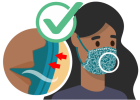 Have two or more layers of washable, breathable fabric Have two or more layers of washable, breathable fabric |
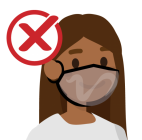 Are made of fabric that makes it hard to breathe, for example, vinyl Are made of fabric that makes it hard to breathe, for example, vinyl |
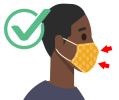 Completely cover your nose and mouth Completely cover your nose and mouth |
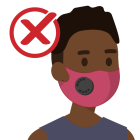 Have exhalation valves or vents which allow virus particles to escape Have exhalation valves or vents which allow virus particles to escape |
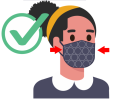 Fit snugly against the sides of your face and don’t have gaps Fit snugly against the sides of your face and don’t have gaps |
 Are intended for healthcare workers, including N95 respirators Are intended for healthcare workers, including N95 respirators |
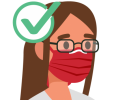 Have a nose wire to prevent air from leaking out of the top of the mask Have a nose wire to prevent air from leaking out of the top of the mask |
DELETE
Special Considerations
Gaiters & face shields
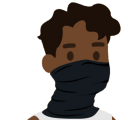 Wear a gaiter with two layers, or fold it to make two layers Wear a gaiter with two layers, or fold it to make two layers |
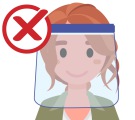 Not recommended: Evaluation of face shields is ongoing, but effectiveness is unknown at this time. Not recommended: Evaluation of face shields is ongoing, but effectiveness is unknown at this time. |
Children
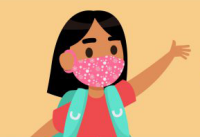 Find a mask that is made for children to help ensure proper fit Find a mask that is made for children to help ensure proper fit |
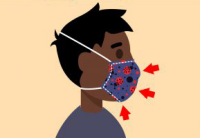 Check to be sure the mask fits snugly over the nose and mouth and under the chin and that there are no gaps around the sides Check to be sure the mask fits snugly over the nose and mouth and under the chin and that there are no gaps around the sides |
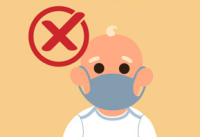 Do NOT put on children younger than 2 years old Do NOT put on children younger than 2 years old |
Cold weather gear
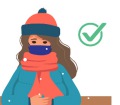 Wear your scarf, ski mask or balaclava over your mask Wear your scarf, ski mask or balaclava over your mask |
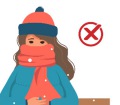 Scarves, ski masks and balaclavas are not substitutes for masks Scarves, ski masks and balaclavas are not substitutes for masks |
For more information on evidence for effectiveness of masks, other types of face protection, and mask alternatives, see Considerations for Wearing Masks
How to Wear
Wear a mask correctly and consistently for the best protection.
- Be sure to wash your hands or use hand sanitizer before putting on a mask.
- Do NOT touch the mask when wearing it. If you have to often touch/adjust your mask, it doesn’t fit you properly, and you may need to find a different mask or make adjustments.
For more information, visit our How to Wear Masks web page.
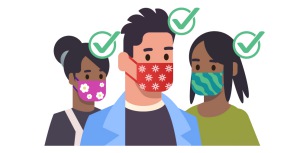
Do wear a mask that
 |
|
How NOT to wear a mask
|
|
|
|
|
|
|
|
|
Don’t like ads? Become a supporter and enjoy The Good Men Project ad free |
 Around your neck
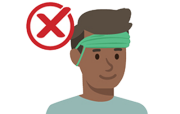 On your forehead
 Under your nose
 Only on your nose
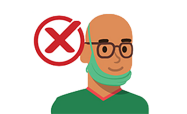 On your chin
 Dangling from one ear
 On your arm
How to take off a mask
|
|
|
|
|
|
 1. Carefully, untie the strings behind your head or stretch the ear loops
 2. Handle only by the ear loops or ties
 3. Fold the outside corners together
 4. Be careful not to touch your eyes, nose, and mouth when removing and wash hands immediately after removing
How to Clean
 Reusable masks should be washed regularly. Always remove masks correctly and wash your hands after handling or touching a used mask.
- Include your mask with your regular laundry
- Use regular laundry detergent and the warmest appropriate water setting for the cloth used to make the mask
- Use the highest heat setting and leave in the dryer until completely dry
For more information, visit our How to Wash Masks web page.
—
This post was previously published on Centers for Disease Control and Prevention.
***

If you believe in the work we are doing here at The Good Men Project and want a deeper connection with our community, please join us as a Premium Member, today.
All Premium Members get to view The Good Men Project with NO ADS. Need more info? A complete list of benefits is here.
—
Photo credit: iStock

